Iraq's Al-Sudani: US and Iran repeatedly violate airspace, Washington struck PMF


Shafaq News- Baghdad (Updated at 17:14)
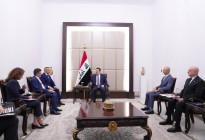
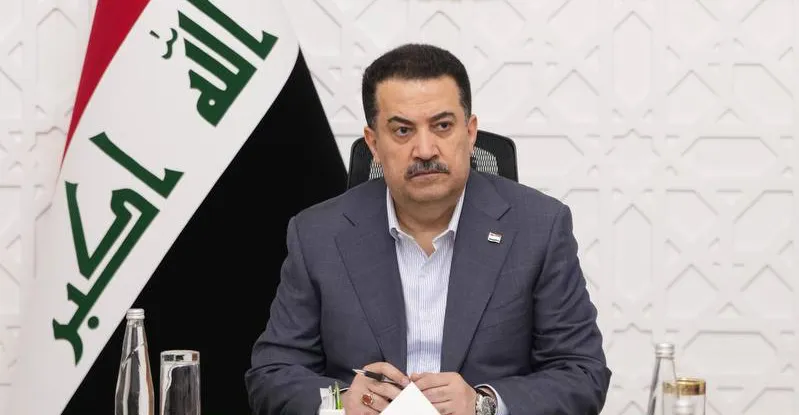
Iraq’s caretaker Prime Minister, Mohammed Shia Al-Sudani, said on Monday that both the United States and Iran are repeatedly violating Iraqi airspace, accusing Washington of carrying out strikes against the Popular Mobilization Forces (PMF).
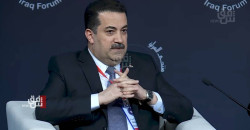
In an interview with the Italian newspaper Corriere della Sera, Al-Sudani said Iraq faces no immediate threat of internal conflict or a resurgence of large-scale terrorism, noting that only limited extremist cells remain and are being actively pursued.
“The problem now is the violation of Iraqi airspace by US aircraft, as well as Iranian missiles and drones,” he stressed, adding that US strikes on PMF positions had resulted in casualties, which he described as strongly condemned.
Al-Sudani also accused Israel of fueling regional conflicts and disregarding international law, saying Iraq is closely monitoring the escalation given its location in a region shaped by overlapping international and regional interests.
He stated that Baghdad seeks to avoid being drawn into any conflict and will not allow the country to become a battleground for rival powers. “The Iraqi government is working to strengthen internal stability while also engaging in diplomatic efforts to bridge differences between opposing sides,” he vowed, emphasizing that Baghdad maintains good relations with both Iran and the United States, “which enables us to play a mediating role,” he said.
Addressing armed factions that have claimed responsibility for hundreds of attacks on US sites since March 1, the prime minister said security forces continue efforts to contain such activity and prevent further strikes. Authorities have disrupted numerous operations and pursued political measures to curb funding networks. Still, he noted that “the issue remains complex,” rooted in the formation of armed groups during the fight against ISIS alongside US forces, with some now viewing foreign troops as an occupying force.
Al-Sudani said an agreement between Baghdad and its partners to end the Global Coalition’s mission by September 2026 could help ease efforts to dismantle armed groups operating outside state control. He also reaffirmed Iraq’s commitment to ensuring the safety of foreign missions and encouraged European embassies to remain open.
The prime minister also highlighted the economic strain caused by regional tensions, noting that Iraq has lost around 70% of its oil exports over the past three weeks —exports that account for roughly 90% of state revenues. He added that any disruption to navigation through the Strait of Hormuz would violate international law.
Baghdad will not join any military action to secure shipping routes, al-Sudani confirmed, arguing that armed intervention would likely escalate tensions rather than ensure safe passage.