Iraq’s former “Grand Mufti” faces legal action over incitement and sectarian speech


Shafaq News – Baghdad
An adviser to Iraq’s Prime Minister, Diaa al-Ameeri, has filed a lawsuit against Rafi al-Rifai, the self-proclaimed “Grand Mufti of Iraq,” accusing him of inciting violence against security forces and spreading sectarian rhetoric.
In a statement, al-Ameeri said he submitted a complaint before the Dhi Qar Court of Appeals over al-Rifai’s “sectarian and misleading discourse,” which “contributed to tens of thousands of victims among the dead, wounded, and displaced.” He urged the judiciary to hold those responsible accountable and encouraged others to file similar complaints through legal channels.
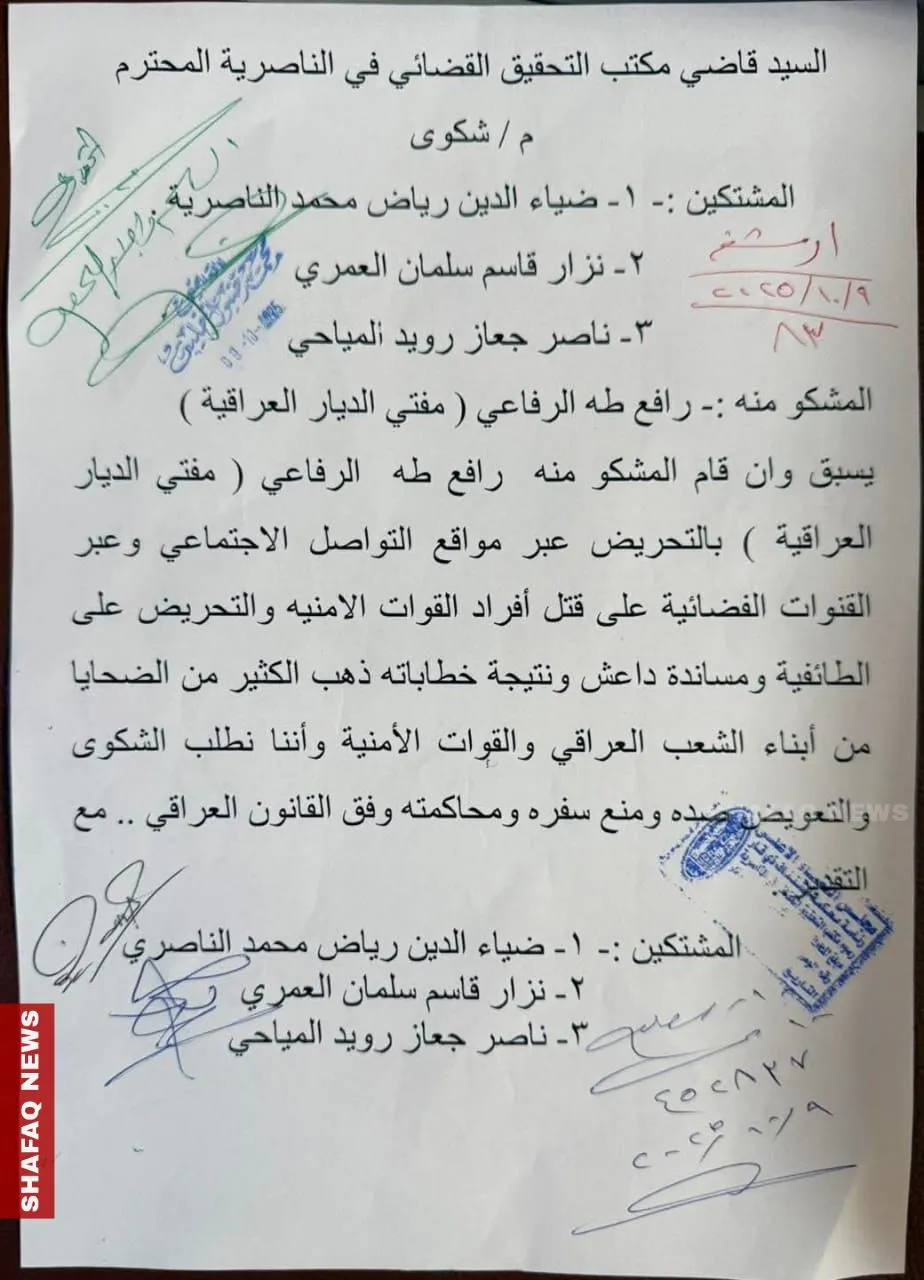
According to a legal document obtained by Shafaq News, the case was filed by al-Ameeri along with Nizar Qassem Salman al-Omari and Nasser Jahaz Ruwaid al-Mayahi. The plaintiffs accuse al-Rifai of using media platforms to incite violence against security personnel, promote sectarian division, and express support for ISIS. They also requested a travel ban and compensation under Iraqi law.
Al-Rifai returned to Baghdad on Wednesday after years abroad. He was welcomed by National Security Adviser Qassem al-Araji and several religious and social figures. His return followed the dismissal of terrorism-related charges under what sources described as a political understanding that has not been publicly detailed.
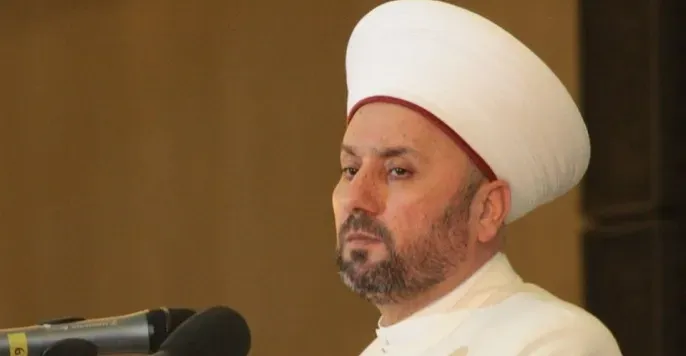
A prominent Sunni cleric, Rafi Taha al-Rifai, served as Grand Mufti during former Prime Minister Nouri al-Maliki’s first government. He left Iraq in 2013 during the Al-Anbar protests and settled in Amman, Jordan, where he remained active through media appearances.
Al-Rifai’s return has stirred mixed reactions. Critics accuse him of inciting attacks on security forces, particularly Shiite members, and recall statements in which he allegedly praised ISIS and denounced Grand Ayatollah Ali al-Sistani’s 2014 “jihad fatwa,” claiming it targeted Sunnis.
Supporters, meanwhile, say he was unjustly targeted during a period of deep sectarian polarization and view his return as part of a broader effort at national reconciliation.
Al-Rifai remains known for his controversial religious rulings, including a fatwa banning trade in Iranian goods — a decision criticized by Sheikh Mahdi al-Sumaidaie, head of the Sunni Fatwa Council, as “hasty and ill-timed.”