Disarming factions requires political accord, not government decree, says al-Sudani


Shafaq News – Baghdad
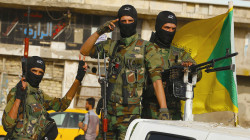
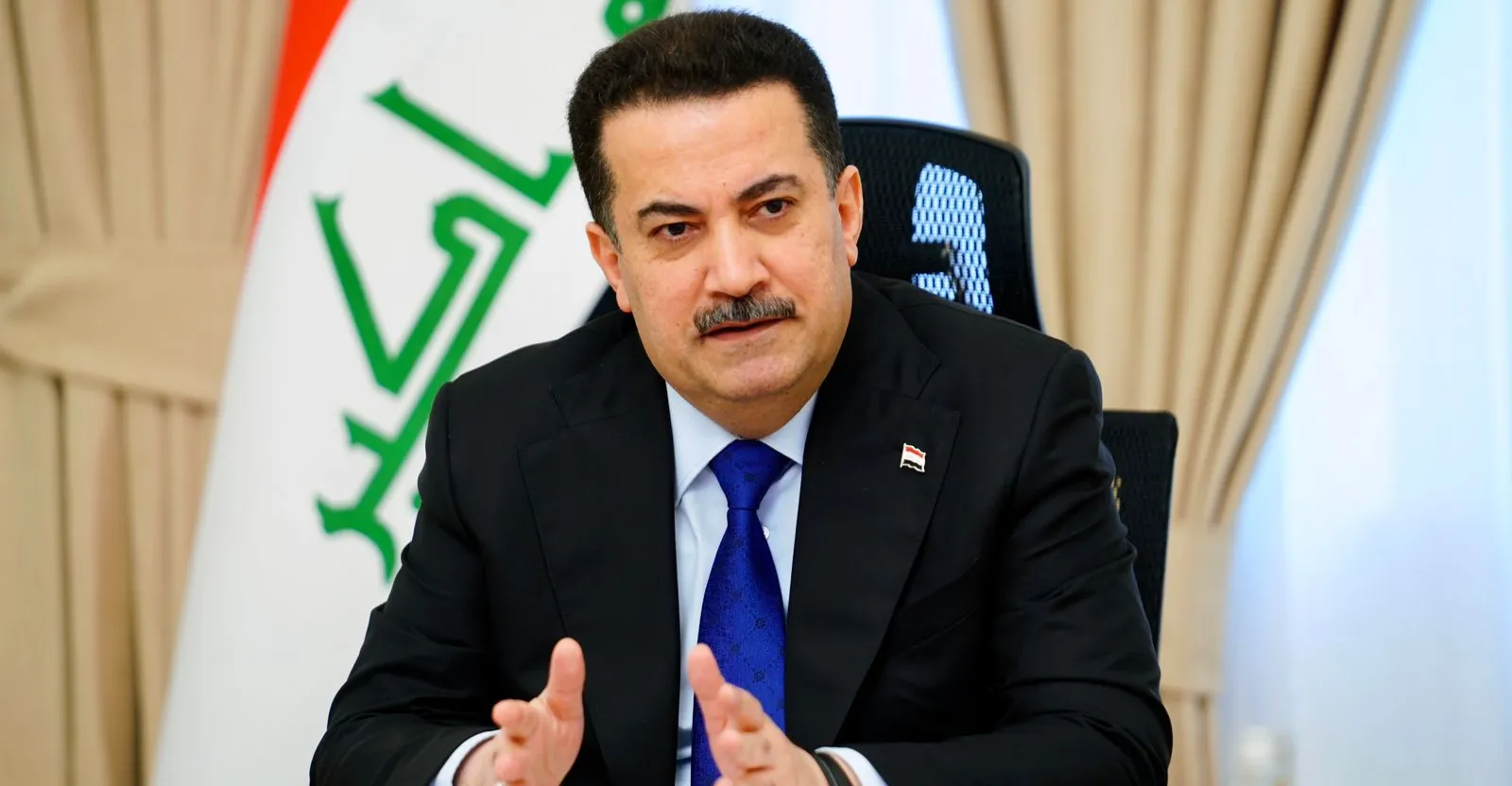
Disbanding armed groups operating outside Iraq’s formal state institutions cannot be enforced by executive order and must be settled through a broad political agreement and responsible national dialogue, caretaker Prime Minister Mohammed Shia al-Sudani said on Sunday.
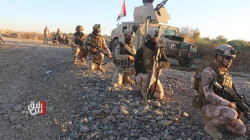
In a televised interview, al-Sudani said the weapons issue is “political in nature and requires consensus on how it should be addressed, not unilateral government action.” He added that Iraq is currently experiencing its most stable security phase in the last three years, citing coordinated operations by the army, the Peshmerga, and the Popular Mobilization Forces (PMF), alongside sustained intelligence support from the US-led coalition against terrorism.
Read more: Why Iraq’s PMF disarmament is a different battle from Lebanon’s Hezbollah
Al-Sudani also confirmed receiving a direct phone call from US President Donald Trump following the end of the 12-day war between Israel and Iran, during which he thanked Washington for the ceasefire and urged that the war in Gaza also be halted. During the call, Trump expressed hope that Iraq would support his nomination for the Nobel Peace Prize, a move al-Sudani said came within the broader context of regional de-escalation efforts, including Gaza.
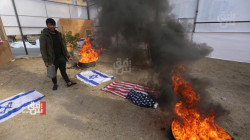
The prime minister firmly denied reports that Iraq had taken steps to designate Lebanon’s Hezbollah or Yemen’s Houthis (Ansarallah) as terrorist organizations, describing the claims as “exaggerated and politically motivated.” He said no decision was issued by either the Council of Ministers or the National Security Council.
According to al-Sudani, the controversy stemmed from a procedural error after a technical committee forwarded a batch of international correspondence to the official gazette. These communications, he said, routinely include names of individuals and entities listed under UN Security Council sanctions, including Hezbollah and the Houthis, alongside ISIS and Al-Qaeda affiliates that Iraq has dealt with for years.
He stressed that the full list was published due to an administrative lapse and does not reflect any shift in Iraq’s long-standing political position. “Iraq has consistently supported liberation causes and opposed aggression,” al-Sudani said, adding that the episode had been inflated far beyond its actual scope.