Syria's borders signal economic revival


Shafaq News – Damascus
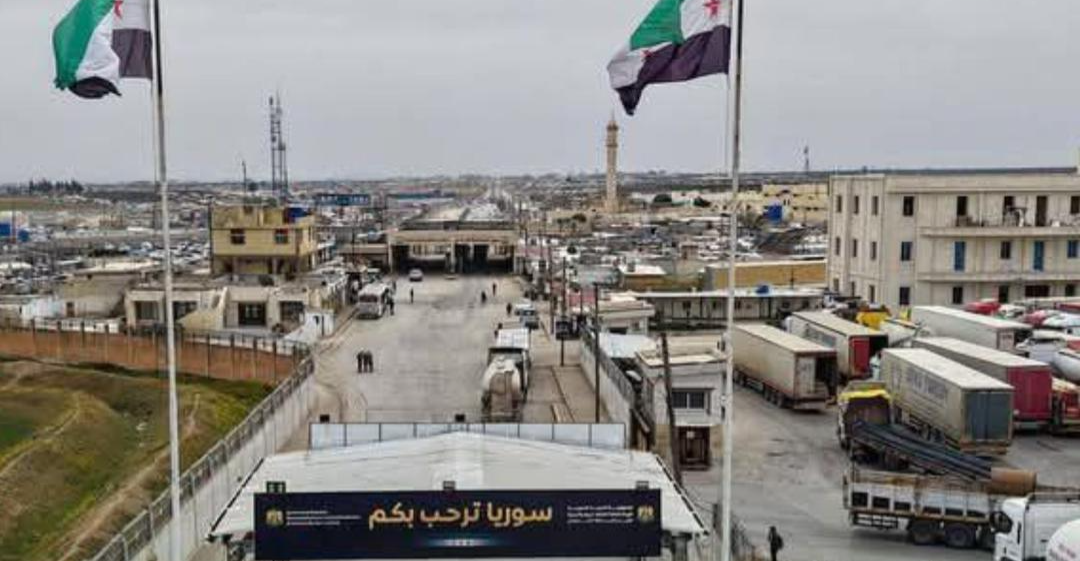
Syria’s border crossings and ports have handled more than 6.5 million passengers since December, the General Authority for Syrian Land and Sea Ports said on Sunday.
The Head of External Relations at the Authority, Mazen Alloush, said in a statement that 350,000 trucks passed through Syria’s land borders for imports and exports, while 850 ships docked at its ports carrying millions of tons of cargo.
Alloush confirmed that Syria has signed contracts with France’s CMA CGM to operate the Latakia container terminal and with Dubai Ports World to invest $800 million in expanding Tartous port, adding that more than 500 investment opportunities have been announced, while activity at the Syrian–Jordanian free zone near the Nasib crossing has doubled compared with last year.
The Authority is investing in human capital through maritime schools and institutes in Latakia and Tartous, as well as the General Institute for Maritime Training, he said, adding that three central laboratories are being established in Latakia, Tartous, Aleppo, and Damascus to test imports and exports under international quality standards, covering radiation, veterinary, agricultural, and chemical inspections.
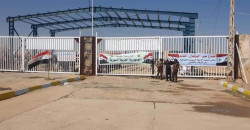
Economist Ayman al-Homsi told Shafaq News that renewed activity at crossings and ports reflects Syria’s efforts to reconnect with regional markets, stressing that Jordan and Iraq remain the country’s main outlets for exports, with the Nasib and al-Bukamal crossings handling the bulk of agricultural and industrial trade.
“The revival of the Syrian–Jordanian free zone demonstrates an effort by Damascus and Amman to restore their role as a key land corridor between the Gulf and the Levant,” he added.
On seaports, al-Homsi highlighted Tartous and Latakia as gateways linking the Mediterranean with Iraq and Lebanon, noting that official data show Tartous port has received more than 550 ships carrying nearly 3 million tons of goods since liberation. Latakia handled more than 300 ships with 1.5 million tons, while Baniyas was reserved for oil imports, receiving about 70 tankers with over 2.5 million tons of fuel.