Better rainfall pushes Syria's wheat output closer to domestic needs


Shafaq News- Damascus
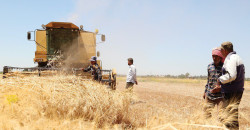
Syria's wheat harvest will exceed 3.5 million tonnes this season, with improved rainfall boosting production and encouraging farmers to return to cultivation after last year's severe drought, the Syrian Agriculture Ministry reported on Saturday.
Saeed Ibrahim, director of the Ministry's Agricultural Economics and Planning Directorate, told Shafaq News that about 2.7 million tonnes have so far been delivered to the Syrian Grain Establishment, with farmers continuing to bring in their crops.
"Better rainfall allowed farmers to cultivate most of the planned wheat-growing areas, particularly rain-fed fields, while April rains helped improve yields during the final stages of crop growth," he explained, pointing out that higher water reserves in irrigation dams and increased inflows provided further support for irrigated farming.
Syria needs about 4 million tonnes of wheat each year, Ibrahim estimated, noting that a harvest of more than 3.5 million tonnes would cover most of domestic demand and reduce the need for imports.
Longer-term production will also depend on agricultural research centers developing higher-yielding wheat varieties that can withstand environmental stresses, while farmers need prices that encourage them to continue planting, potentially bringing the country closer to full self-sufficiency.
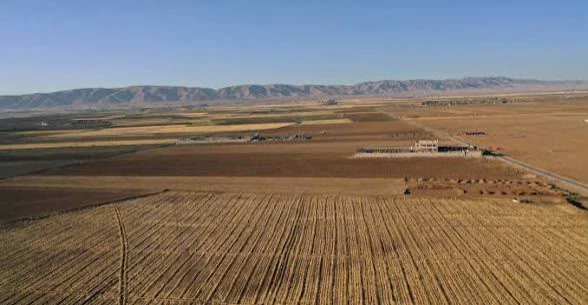
On Hasakah, he indicated that the province remains the country's leading wheat-producing area, with about 200,000 hectares of irrigated land and 363,000 hectares dependent on rainfall. Those 563,000 hectares account for 37.3% of Syria's total wheat-growing area. The province is expected to produce about 1.3 million tonnes, or 38% of national output, and has so far delivered about 1.16 million tonnes, representing roughly 42% of all wheat received nationwide.