Water shortage in Basra: Upstream violations end agriculture, endanger fish


Shafaq News – Basra
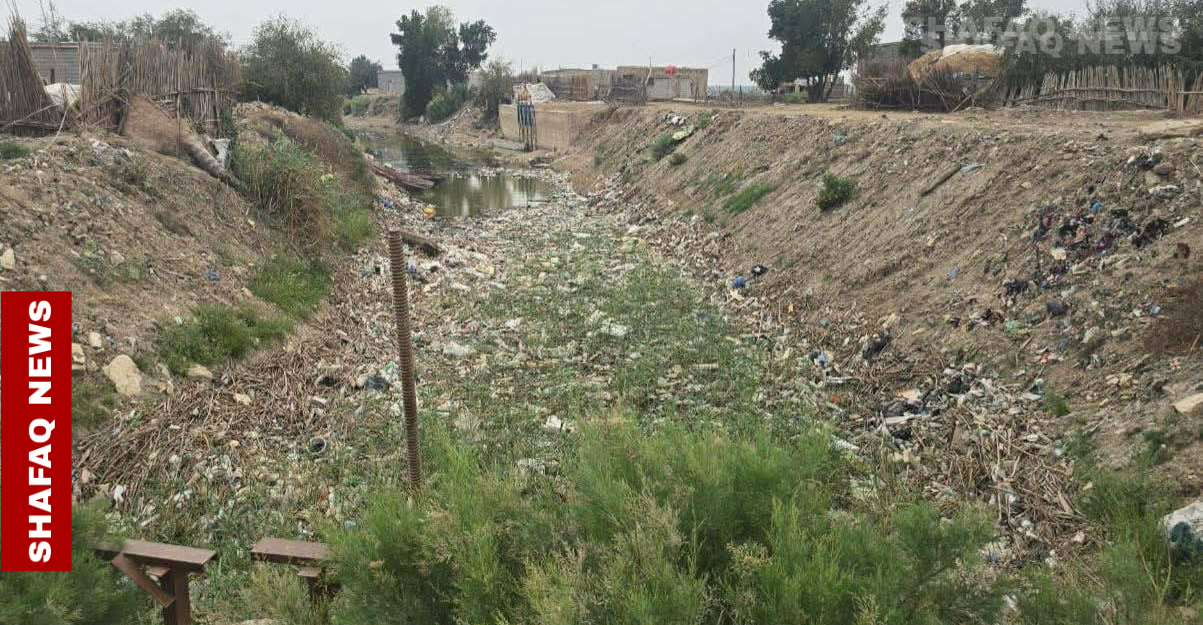
Basra is facing a severe water crisis that threatens its food security and environmental stability, local officials warned on Monday.
Citing a sharp decline in freshwater supplies from central Iraqi provinces and rising salinity levels in the Shatt al-Arab waterway, the agricultural authorities stated that unauthorized water use by neighboring provinces has "worsened the situation," leading to the collapse of thousands of acres of farmland and a sharp decline in livestock and fish production.
Official data indicates the province now receives only half its allocated water share, prompting urgent calls for government intervention to ensure equitable distribution.
“As the last province on the river system, Basra simply doesn’t receive the full amount,” Hadi Hussein, Director of Agriculture in Basra, stated to Shafaq News.
Hussein pointed to clear violations from Wasit and Maysan provinces, and more extensive ones from Dhi Qar, particularly affecting the Bad’ah Canal, Basra’s main source of drinking water.
He noted that Maysan alone has 367 licensed fish ponds, ranging from 5 to 500 dunams (a local unit of area), while unlicensed ponds exceed 2,000 in number, some as large as 1,000 dunams. These operations consume vast amounts of water, contributing to shortages in Basra.
The water allocation for Basra is officially set at 107 cubic meters per second, but actual flow at the Qal’at Saleh regulator falls below 57 cubic meters per second, over 50 cubic meters short. Hussein said most of that loss occurs in Maysan, leading to higher salinity and further degradation of water quality.
Stressing that neighboring provinces directly impact Basra’s water crisis, Hussein clarified that “if we received our full share, the province would not be facing such shortages or the saltwater intrusion from the Shatt al-Arab.”
In 2023, a government order mandated the removal of 64 unauthorized fish ponds in Basra’s Qitayban and Musahib areas of al-Hartha district. Hussein confirmed the ponds were dismantled in coordination with local authorities and security forces, and that no illegal ponds currently remain, based on local agricultural department reports.
However, 44 licensed fish ponds have ceased operations entirely due to saltwater encroachment, affecting both production volume and market prices.
“The administrative process for licensing fish ponds is simple,” Hussein explained, “but current ministry guidelines prohibit issuing new permits,” which has led some individuals to build unlicensed ponds, placing additional stress on Basra’s water share.
Meanwhile, the province’s fish farming industry has suffered significantly from both reduced water flow and increased salinity. Hussein warned of further production declines and rising prices, noting that Basra was once a major fish producer in Iraq.
In past years, Basra cultivated over 2,000 dunams of watermelon in the Luhais area, along with 1,700 dunams of cantaloupe, in addition to okra and other vegetables. These lands will lie fallow this summer as a result of the suspended plan.