“Ignore the Warnings”: US cultural platform urges travelers to rediscover Iraq’s living history


Shafaq News – Baghdad
Iraq should be approached not as a high-risk destination but as a “living museum” that embodies thousands of years of human achievement, resilience, and cultural continuity, according to a new travel-focused assessment.
The assessment was published by the US-based culture and history website The Collector, which called on prospective visitors to move beyond long-standing travel warnings and instead engage with Iraq through curiosity and historical wonder—particularly those drawn to ancient and modern civilizations.
Read more: Legacy of the ‘Two Rivers’: Iraq races to save the remains of Mesopotamia
In a comparison between federal Iraq and the Kurdistan Region, the platform said cities such as Baghdad, Basra, and Mosul sit at the heart of Islamic history and ancient Mesopotamian civilizations but have also endured decades of war and some of the region’s most destructive bombardments. That legacy, it noted, has produced a degree of what it described as “chaotic character.”
Read more: A race against time: Restoring Iraq's lost history
As a result, the report said, parts of federal Iraq require greater caution due to lingering political instability. Still, it added that travelers can safely navigate much of the country by following a designated “safe tourist corridor,” running along Highway 1 from Basra to Mosul.
By contrast, the Kurdistan Region was described as relatively safe, easier to travel, and offering greater freedom of movement. While visitors in federal areas may be required to tour certain historical sites with licensed guides, the report said no such restrictions apply in the north.
Recommended destinations:
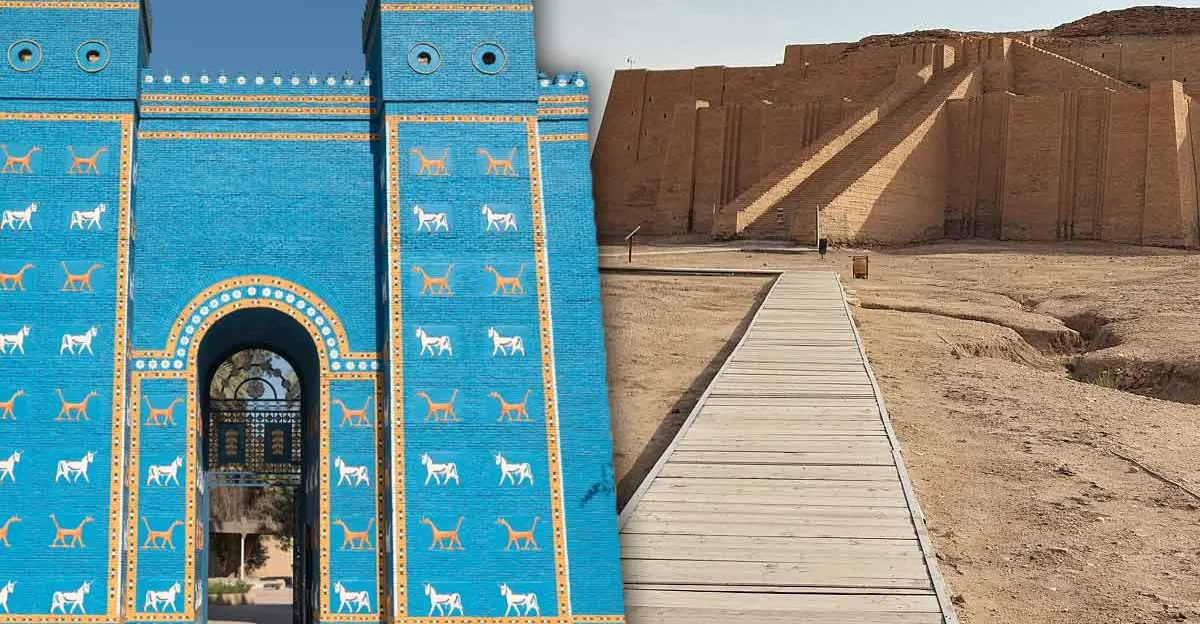
Babylon
The report described Babylon as a political and cultural center of ancient Mesopotamia nearly 4,000 years ago, noting ongoing debate over whether it was home to the legendary Hanging Gardens. It praised Babylonian advances in architecture and urban planning, as well as foundational contributions to mathematics and astronomy, including early systems for tracking the movement of stars and planets.
Babylonians, the report added, also developed one of the world’s earliest legal systems—the Code of Hammurabi—which enshrined principles of justice that later influenced multiple civilizations.
The report then turned to the early 2000s US-led invasion, when Babylon re-entered global headlines after coalition forces established Camp Alpha within the ancient site. Tanks damaged sacred roads and hills, trenches cut through archaeological layers, and widespread looting followed, with artifacts later discovered in countries including the United States, Britain, Germany, France, and Japan.
Saddam Hussein’s Summer Palace
The report highlighted Saddam Hussein’s summer palace, built in the 1980s on a hill overlooking Babylon and the Euphrates River. The structure blends traditional and modern Iraqi architecture, featuring expansive halls, marble interiors, and ornate tilework.
Historians, it said, believe Saddam sought to symbolically link his rule to Nebuchadnezzar II and Mesopotamia’s ancient empires as part of a broader propaganda strategy. Once inaccessible to civilians, the palace is now open to visitors, though it stands damaged and neglected, marked by graffiti, decay, and overgrown gardens—conditions that, the report said, do little to diminish its visual impact.
Erbil Citadel
The Erbil Citadel was described as one of the world’s longest continuously inhabited sites, dating back to the Neolithic era and shaped by successive civilizations, from the Assyrians and Persians to the Ottomans.
Now a UNESCO World Heritage Site, the citadel is presented as a priceless symbol of Kurdish heritage, combining careful restoration with ongoing archaeological excavation. Its elevated position offers sweeping views of modern Erbil, creating a striking contrast between the ancient interior and the vibrant city below.
Ur
The ancient city of Ur was described as one of the most important urban centers in southern Mesopotamia. Though now surrounded by arid desert, it was once a fertile wetland rich in agriculture and wildlife.
According to religious and historical traditions, Ur is the birthplace of Prophet Abraham, revered in Islam, Christianity, and Judaism. Beyond its religious significance, Ur functioned as a major religious, cultural, and commercial hub, reaching its peak around 2000 BC before declining after shifts in the Euphrates River and prolonged drought around 400 BC.
Hatra
The ancient city of Hatra, located in Nineveh and dating back 2,000 years to the Parthian Empire, was described as one of Upper Mesopotamia’s most formidable fortresses. Thanks to its strategic location and impressive defenses, it emerged as a key trading center and withstood multiple Roman assaults.
Despite damage sustained during recent conflicts, Hatra remains a UNESCO World Heritage Site and one of Iraq’s most important historical locations, distinguished by its rare blend of Greco-Roman and Eastern architectural styles.
Mosul and Al-Nuri Mosque
The report portrayed Mosul as a city with deep Assyrian roots that long served as a cultural and economic crossroads. While its recent history is closely tied to war, ongoing reconstruction efforts have breathed new life into what the site described as a resilient and remarkable city.
Among Mosul’s most iconic landmarks is Al-Nuri Mosque, famed for its leaning minaret, Al-Hadba. The mosque, which played a central role in the city’s identity, was destroyed in 2017 during the battle to liberate Mosul.
Visitors, the report said, can still expect a powerful and inspiring experience, even as full recovery remains years away. It recommended visiting the partially destroyed Bash Tapia Castle and the bustling central market, adding that while hiring a guide is not mandatory, it is strongly advised. Travelers should approach Mosul—and Iraq as a whole—with cultural sensitivity and respect for ongoing recovery.