Al-Dora clash highlights Iraq’s 3.5 million informal settlement crisis


Shafaq News- Baghdad
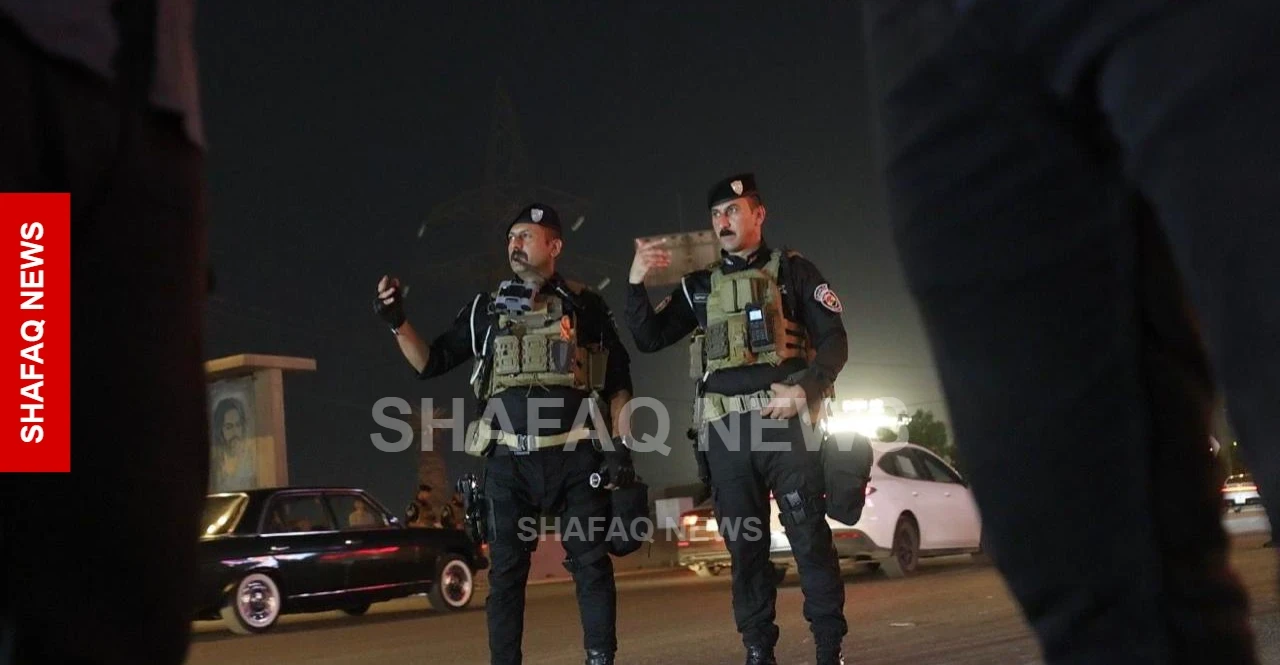
A deadly armed clash during a campaign to remove unauthorized homes in Baghdad’s southern Al-Dora district has brought Iraq’s long-running housing and informal settlement crisis back into focus, after the operation left a brigadier general and a security officer dead and four others wounded.
Official data and comments from lawmakers and experts indicate that the issue, which has accumulated over more than two decades, is tied to housing shortages, land ownership, urban planning, public services and enforcement of the law, as well as the protection of state teams carrying out removal orders.
According to Iraq’s Ministry of Construction and Housing, the country has more than 4,000 informal settlements housing about 3 million people. Four successive governments have failed to pass legislation specifically addressing informal settlements. The Ministry of Planning, meanwhile, puts the number of registered settlements at 4,679, with a population of about 3.5 million.
Baghdad has the highest number, with more than 1,000 settlements, accounting for about 23% of the total, followed by Basra. Survey data show that about 87% of the encroached land belongs to the state, while 13% is privately owned.
The term “encroachments” also extends beyond the narrow statistical definition of informal settlements. Iraq’s latest population census found that irregular and uninhabitable housing, including mud houses, reed huts and tents made from animal hair, accounts for about 1.3% of more than 8 million housing units nationwide.
The broader encroachment problem includes homes and neighborhoods built on government or agricultural land, as well as areas outside designated land uses and urban plans.
Read more: Iraq's housing deficit outlasts another government plan
Mohma Khalil Agha, head of the Parliamentary Services and Reconstruction Committee during the fifth parliamentary term, said Iraq needs about 5 million housing units to meet population demand, describing the encroachment issue as a problem inherited from previous governments that remains unresolved.
Speaking to Shafaq News, Khalil added that the government of Prime Minister Ali al-Zaidi should pursue a humanitarian solution that provides legal protection for people who have no land or housing, provided their homes are not built on prime plots, restricted areas, or sites designated for public projects.
“The Services Committee had previously prepared legislation to address the humanitarian aspect of the crisis without harming the state or citizens, but the former government of Mohammed Shia al-Sudani withdrew the bill.”
Khalil also pointed to the Kurdistan Region of Iraq (KRI) as a different model for addressing housing shortages, saying the region does not face the same level of housing crisis and that resolving Iraq’s problem requires political will to guarantee citizens’ right to housing.
Successive governments have sought to combine the regularization of some encroachments with the provision of alternative housing. Among the measures is Resolution 320 of 2022, concerning encroachments on agricultural land, followed by Resolution 20 of 2025 on encroachments involving land belonging to municipal institutions.
One proposed approach would regulate and transfer ownership of eligible properties under specific conditions, while excluding land within oil and archaeological restricted zones, railway corridors, power transmission lines and sites designated for vital or public-benefit projects.
Economic expert Safwan Qusay said the problem begins with violations involving the designated use of land, stressing that changing land use from agricultural to residential, or from residential to commercial or semi-commercial, without the required legal approvals constitutes a “fundamental violation.”
He noted that the violations expand when construction proceeds without official permits, when building materials enter sites without proper approvals, and when water and electricity connections are provided to housing units built outside legal requirements.
Qusay described the informal settlements that have expanded across Baghdad and other provinces as requiring “correction,” proposing legislation to allow the state to acquire certain structures and compensate their owners with fixed amounts enabling them to relocate elsewhere.
He called for comprehensive legislation defining responsibility for the “first violation,” namely the unauthorized change in land use, as well as identifying the authorities that allowed the homes to be built. Depending on each case, he proposed either removing the structures or imposing fines on those responsible.
The impact of encroachments extends beyond land use. On August 23, Eco Iraq Observatory said about 55% of electricity generated in Iraq is lost during transmission and distribution due to encroachments, unauthorized connections and the absence of metering systems.
Legal expert Mohammed Jumaa placed part of the responsibility on government institutions, arguing that the state and its agencies have “a duty to prevent encroachment from the moment the first brick is laid.”
Jumaa told Shafaq News that land in Al-Dora had been divided, fenced off, and sold several times before homes were built and families moved in, after which removal campaigns began.
He pointed to the responsibility of institutions that allowed the fencing, subdivision, construction and sale of the land, as well as real estate offices involved in selling encroached plots.
The legal expert distinguished between administrative negligence, which can lead to disciplinary penalties, and collusion, which may constitute a criminal offense carrying penalties that could include imprisonment.
He said that the presence of encroachments visible to relevant authorities throughout the stages of fencing, subdivision, construction, and sale suggests possible failures in official duties and warrants investigations into the employees and institutions responsible for stopping the violations at an early stage.