Iraq’s oil lifeline under pressure: US-Iran war reshapes Baghdad’s economic calculus


Shafaq News
The intensifying confrontation between the United States and Iran is rapidly transforming from a military showdown into a strategic economic test for Iraq, whose oil-dependent economy sits directly in the path of the region’s energy disruptions.
Ten days after hostilities erupted between Washington and Tel Aviv on one side and Tehran on the other, Baghdad is attempting to remain officially outside the battlefield. Yet the war is already reverberating through Iraq’s economic arteries. Turbulence in global energy markets, rising insurance costs for shipping, and disruptions to navigation in the Strait of Hormuz threaten the country’s ability to sustain the oil exports that generate more than 90 percent of state revenues.
For Iraq, the stakes go beyond market volatility. The country exports the majority of its crude through Gulf routes tied to Hormuz —one of the world’s most critical energy corridors. Roughly 20 million barrels of oil per day, nearly 20 percent of global supply, pass through the strait’s narrow 21-mile navigable channel, making any disruption there an immediate risk to Iraq’s fiscal stability.
Baghdad has so far pursued a cautious political posture, avoiding direct involvement in the war while attempting to shield its economy from the fallout. But the structure of Iraq’s energy sector leaves little room for insulation.
Read more: Iraq braces for financial meltdown amid Hormuz closing threats
Political science professor Issam Al-Feyli of Al-Mustansiriya University told Shafaq News that the trajectory of the conflict points toward deeper escalation, arguing that hardened positions in Washington and Tehran leave limited room for a quick diplomatic exit.
According to Al-Feyli, Iran has rejected conditions proposed by the United States to halt the war, while Washington appears determined to continue military pressure until it achieves strategic objectives inside Iran —either weakening the current political system or reshaping the country’s political landscape in line with US interests.
Such a trajectory raises the possibility that regional actors could be drawn into the confrontation. Armed factions in Iraq and Lebanon’s Hezbollah could intensify their involvement, he warned, “widening the conflict and complicating efforts to contain it.”
For Baghdad, the risk is security escalation but also economic paralysis if the Gulf energy corridor becomes unstable. Early signs of disruption have already emerged inside Iraq’s oil industry.
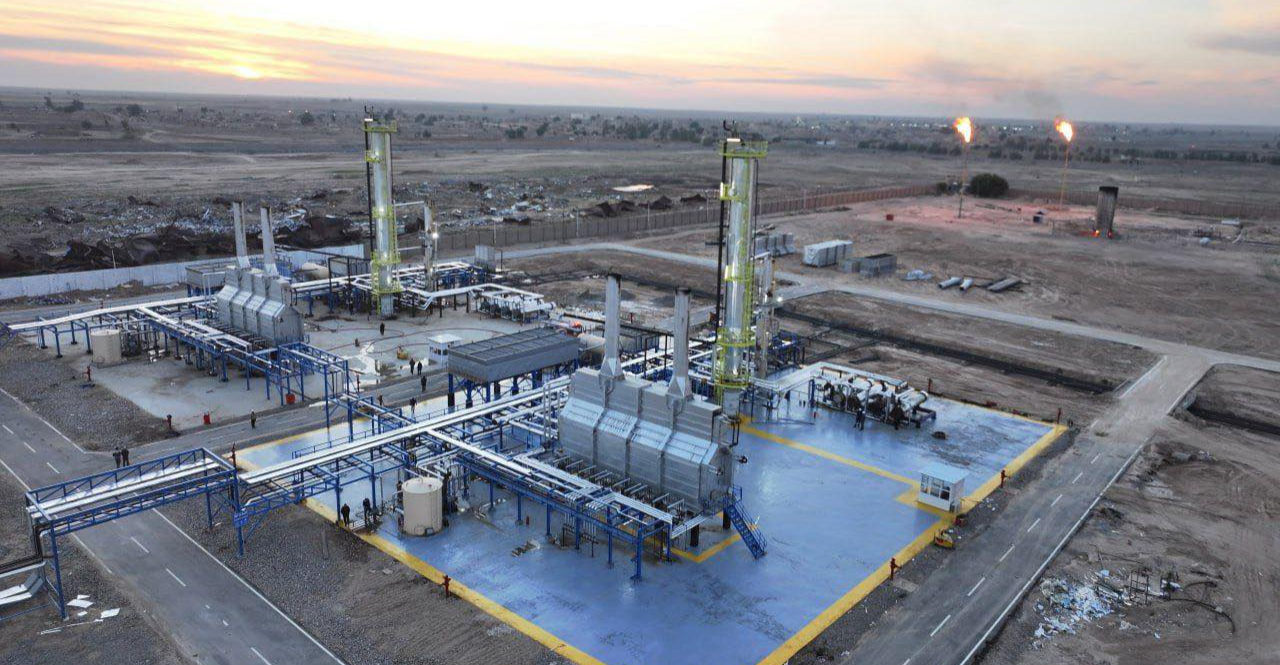
Field reports indicate that several foreign oil companies have begun evacuating staff from oil fields in Basra toward Kuwait, citing security concerns. Iraqi officials also reported that production has effectively halted at the giant Rumaila field and several fields in the Kurdistan Region, leading to daily losses estimated at 1.6 million barrels of oil.
The shutdown reflects growing uncertainty about the safety of export routes and the operational risks facing international companies working in southern Iraq.
The Eco Iraq Observatory estimates that the halt in production at Rumaila and fields in the Kurdistan Region is already costing the country around $128 million per day, placing additional strain on public finances that rely overwhelmingly on oil revenues.
These disruptions are unfolding as global energy markets enter a period of extreme volatility.
Economist and energy researcher Ahmed Eid said the war has pushed oil markets into a phase of “volatility and uncertainty,” driven largely by fears surrounding the Strait of Hormuz.
Threats to navigation in the Gulf have increased shipping costs and maritime insurance premiums, creating bottlenecks in energy flows and unsettling international markets.
Market data suggest that just one week of disruptions in Hormuz could withhold around 140 million barrels of oil from global markets, tightening supply and accelerating price increases.
As a result, oil prices climbed around 25%, the highest since mid-2022. Brent crude surpassed $119 per barrel. Regional energy companies —including Kuwait Petroleum Corporation and QatarEnergy — have declared force majeure, signaling the severity of logistical disruptions.
Some Iranian parliamentary projections suggest that if the crisis persists, oil prices could surge to between $150 and $200 per barrel, levels that could reshape global energy markets and dramatically alter the fiscal outlook for oil-producing states.
For Iraq, higher prices offer both opportunity and risk.
Iraqi caretaker Prime Minister’s financial and economic adviser Mudhhir Mohammed Salih outlined the government’s calculations as it navigates the unfolding crisis.
Salih told Shafaq News that Iraq may need to implement precautionary shutdowns at certain oil fields if exports through the Strait of Hormuz become impossible.
Such a scenario could reduce Iraq’s production capacity by 50 to 60 percent, equivalent to roughly 1.5 to 2 million barrels per day.
However, the surge in global oil prices could offset part of those losses through what economists describe as the “opportunity cost” effect, where reduced output is compensated by significantly higher prices.
“The full financial impact of a prolonged closure of the Strait may only become clear after about 60 days,” Salih explained.
The government is therefore exploring alternative export routes to maintain oil flows if Gulf shipping routes deteriorate.
One option involves expanding shipments through the Iraq–Turkiye pipeline linking northern fields to the Mediterranean port of Ceyhan, which can transport approximately one million barrels per day. Additional volumes could be moved via tanker trucks or alternative logistical arrangements if maritime routes become unsafe.
Another factor shaping Iraq’s calculations is the role of China, the largest importer of Iraqi crude.
Read more: Without oil: Iraq's economic future hanging in the balance
Salih noted that Beijing’s extensive maritime fleet and long-term energy contracts with Baghdad could help maintain a portion of Iraq’s exports even if security conditions in the Gulf worsen.
China already accounts for a substantial share of Iraq’s oil purchases, making the stability of those trade channels a key variable in Baghdad’s economic resilience during regional crises.
Maintaining those flows could cushion Iraq’s fiscal position even if broader energy markets remain unstable.
Beyond the immediate impact on oil exports, economists warn that a prolonged war between Washington and Tehran could unleash wider economic shocks across the Middle East.
Disruptions to trade routes could raise shipping costs, food prices, and insurance premiums, amplifying inflation across the region. Oil-dependent economies such as Iraq would face the dual challenge of managing revenue volatility while maintaining domestic spending commitments.
For Baghdad, the crisis underscores a long-standing structural vulnerability: the country’s overwhelming dependence on oil.
More than 90 percent of Iraq’s state revenues come from crude exports, leaving government finances highly sensitive to external shocks in global energy markets.
If the confrontation escalates further, Iraq may find itself navigating a difficult balance —benefiting from rising oil prices while simultaneously confronting the possibility of export disruptions and economic instability.
The widening US-Iran confrontation has once again placed Iraq at the intersection of regional power struggles and global energy markets.
Baghdad’s attempt to remain politically neutral may keep the country outside the direct battlefield, but its economic lifeline remains tightly connected to the very routes and markets now under threat.
Whether the crisis evolves into a prolonged regional war or gradually stabilizes through diplomatic channels will determine how severe the economic shock becomes.
For Iraq, the conflict has already delivered a clear warning: the country’s future economic security remains inseparable from the stability of the region that surrounds it.
Written and edited by Shafaq News staff.