Baghdad drowning in waste: A growing environmental and economic crisis


Shafaq News
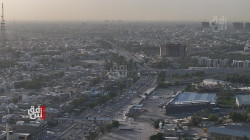
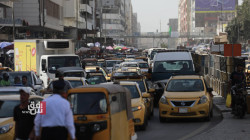
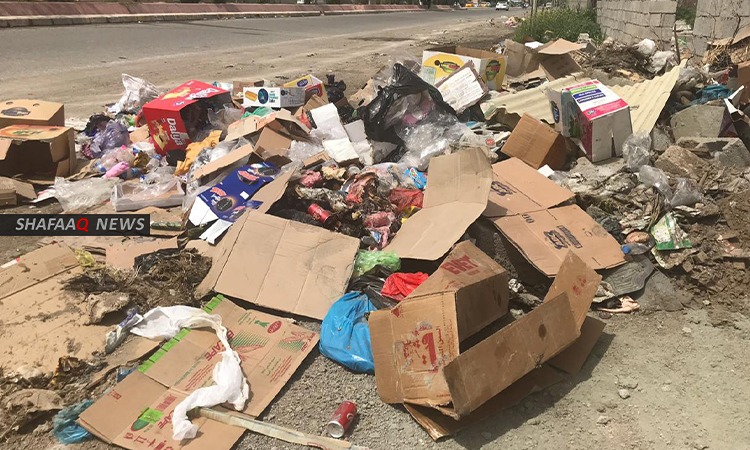
Every day, Baghdad wakes up under a blanket of its own waste. Streets and alleys are buried beneath mountains of trash, turning the city into a living symbol of neglect. But this is more than an eyesore—it is a ticking environmental and economic time bomb, threatening public health and the capital’s future.
Uncontrolled burning, unsafe landfills, and stalled waste-to-energy projects weigh heavily on the city, turning what could be a valuable resource into a growing crisis. Transforming this burden into energy and opportunity has become Iraq’s urgent challenge.
Lost Wealth Buried
Environmental expert Ahmed Al-Saleh highlighted that official landfills are major sources of pollution, releasing gases and smoke that drive up carbon emissions. While countries around the world turn such sites into hubs for investment and recycling, Iraq’s efforts are limited to sorting small quantities of materials such as plastic and aluminum, leaving vast amounts of reusable waste to be discarded.
“These wastes represent lost wealth that investors, traders, and workers alike could benefit from,” Al-Saleh explained to Shafaq News. He noted that landfills abroad generate electricity, recover investable gases, and even supply hot water for heating. In Iraq, however, the issue remains neglected despite repeated reports from the Ministry of Environment to municipalities and health authorities.
Baghdad produces roughly 10,000 tons of waste daily—about 300,000 tons each month—with spikes during religious events and large-scale visits. Each resident generates between 1.25 and 1.5 kilograms per day, the highest per capita rate in the world.
The Baghdad Municipality operates just 12 compactors to compress waste before transporting it to landfills, which are scattered across the city. The capital further hosts 221 landfill sites, 149 of which are unregulated, and only 17% meet environmental standards.
Read more:Could Cleaning the Tigris River Help Repair Iraq’s Damaged Reputation?
Turning Trash to Power
Currently, the capital lacks specialized recycling plants. Waste-to-energy projects are under negotiation with two companies to build electricity facilities on the outskirts of the city, though pricing discussions are ongoing. Operations are expected to begin in roughly two years.
“Baghdad Municipality continues daily operations to collect waste, compress it at municipal compactors, and transport it using specialized metal containers,” Adi Al-Jandil, the municipality spokesperson, explained, noting that the municipality owns two official, environmentally safe landfills outside the city: one in al-Nabaa, north of Baghdad, and the other in Nahrawan, east of the capital.
Al-Jandil confirmed that a Chinese company has been contracted to burn around 3,000 tons of waste daily, converting it into electricity with a capacity of 100 megawatts. The company has received the land, completed the infrastructure, and installed the plant. The municipality is also exploring recycling options.
Data indicates that solid waste can generate between 6 and 12 gigajoules of energy, equivalent to 1.7–3.3 megawatt-hours, while plastic and rubber waste can produce 30–40 gigajoules, or 8.3–11.1 megawatt-hours.
Earlier this year, Prime Minister Mohammed Shia Al-Sudani launched a waste-to-energy project in Nahrawan, with Electricity Minister Ziyad Ali Fadel later reporting that the contract was signed with Shanghai-based SUS for $498 million, granting the company a 25-year investment right.
Poison Next Door
Omar Abdul Latif, of the Green Iraq Observatory, highlighted to Shafaq News that waste continues to attract scavengers who collect materials before burning, a major source of pollution in the city.
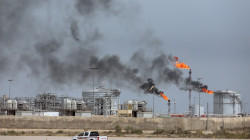
Uncontrolled burning poses serious environmental and health risks, particularly near landfill sites. Once located on the outskirts, many landfills are now just a few hundred meters from residential neighborhoods due to rapid urban expansion, increasing exposure to toxic emissions.
Residents increasingly rely on private collection services, paying daily fees or monthly subscriptions of 10,000–15,000 Iraqi dinars (approximately $6–$9) per household, adding financial strain. “The cost of private waste collection is squeezing families already struggling with rising living expenses,” Abdul Latif noted.
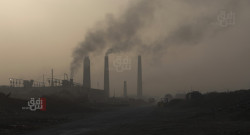
Landfills release toxic gases and large amounts of methane, a greenhouse gas 25 times more potent than carbon dioxide. Leachate seeps into groundwater, spreading toxic substances and heavy metals. Thousands of workers manually sort waste without protective gear, putting them at risk of severe respiratory and skin illnesses, while nearby residents—particularly children and the elderly—endure smoke and foul odors daily.
International examples offer guidance for safer and more productive waste management. In Sweden, imported waste fuels energy plants, while Turkiye’s Koktece Koy facility converts landfill methane into electricity for tens of thousands of homes.
Germany captures landfill gas to heat buildings and power local grids, and Japan relies on controlled incineration with strict emission standards to reduce landfill dependency.
Read more:Waste in Iraq: a significant untapped resource lacking investment
Solutions Need Spine
Despite the magnitude of the problem, Baghdad’s waste management remains mired in bureaucracy and a lack of enforceable regulations. The Ministry of Environment submits repeated reports, yet the absence of coordination among municipalities, health authorities, and strategic plans for recycling or energy utilization allows the
crisis to worsen year after year.
Experts maintain that solutions are within reach if political will and investment are applied. Biogas units can be established, local and foreign companies encouraged to enter the recycling sector, and source separation programs introduced in homes and institutions. Modern engineered landfills can prevent leachate leakage while also enabling gas collection for electricity and heating.
Read more:Poisonous time bomb: Iraq's struggle with medical wastes
Ultimately, Baghdad faces two paths: continue bearing an escalating environmental and health burden from waste, or transform it into an economic resource that boosts energy supply, generates jobs, and protects the environment. The challenge does not lie in a lack of resources—they exist—but in management.
Written and edited by Shafaq News staff.