A century of promises: Iraq’s water diplomacy with Turkiye and Iran


Shafaq News
When Iraqi Prime Minister Mohammed Shia al-Sudani welcomed Turkish President Recep Tayyip Erdogan to Baghdad in April 2024, the two leaders announced a ten-year water framework agreement hailed as a turning point in Iraq’s bid for its “fair share” of the Tigris and Euphrates. Yet it was far from the first such promise.
For nearly a century, Iraq has struck treaties and memoranda with both Turkiye and Iran — agreements that pledged cooperation but often failed to deliver.
Shafaq News traces this long history, from early treaties in the 1930s to today’s frameworks, revealing a cycle of ambition, crisis, and unfulfilled commitments.
Early Treaties and Border Waters (1930s–1970s)
The first attempts to regulate Iraq’s shared rivers came not with Turkiye but with Iran, and not over the Tigris or Euphrates but over the Shatt al-Arab.
In 1937, under the auspices of the League of Nations, Baghdad and Tehran signed agreements establishing navigation and territorial control over the channel, which serves as the confluence of Iraq’s great rivers before reaching the Gulf.
The accords were framed as border demarcation treaties, but they held deep water implications. Whoever controlled the Shatt al-Arab controlled not just shipping but the delicate balance of salinity and irrigation flows in Basra and the south.
Iraq soon turned its attention northward, and on March 29, 1946, Iraq and Turkiye concluded the Treaty of Friendship and Neighbourly Relations. While broad in scope, it included provisions specific to the Tigris and Euphrates: Ankara committed to consult and notify Baghdad about any “conservation works” or hydraulic projects that might affect downstream flows.
For Iraq, this represented an early safeguard against unilateral action; for Turkiye, it enshrined its position as custodian of the headwaters. Yet the treaty avoided binding quotas, relying instead on goodwill and consultation — a principle that would be tested as dam construction accelerated.
By the mid-1970s, Iraq and Iran returned to the negotiating table. On March 6, 1975, former President Saddam Hussein and Iran’s Shah Mohammad Reza Pahlavi, brokered by Algeria’s Houari Boumediene, signed the Algiers Agreement. Its primary purpose was to settle border clashes and insurgencies, but water was central.
The main treaty was supplemented by a Protocol on the Delimitation of the River Frontier (June 13, 1975) and an Agreement Concerning the Use of Frontier Watercourses (December 1975). These instruments set rules for “optimal utilization” of rivers straddling the frontier, procedures to prevent harm, and committees to resolve disputes. While the Algiers Agreement is remembered mainly for shifting sovereignty of the Shatt al-Arab, its annexes stand out as some of the most detailed legal texts on Iraq’s shared rivers.
Yet implementation faltered almost immediately. The Iranian Revolution of 1979, followed by the Iran–Iraq War of 1980–1988, rendered the water protocols dormant.
But Iraq’s concerns soon shifted northward, as Turkiye’s control of the Tigris and Euphrates headwaters became impossible to ignore.
Dams and Power Politics (1970s–2000s)
Even as treaties were signed, physical infrastructure was reshaping Iraq’s water reality. In 1974, Turkiye completed the Keban Dam on the Euphrates. This was followed by the Ataturk Dam in 1992, the centerpiece of Turkiye’s Southeastern Anatolia Project (GAP). With the capacity to store 48 billion cubic meters, Ataturk granted Ankara unprecedented control over downstream flows.
In Iran, parallel projects transformed the hydrology of Iraq’s southern frontier. The Karkheh Dam, inaugurated in 2001, created a reservoir of nearly six billion cubic meters, reducing flows to Iraq’s marshes. The series of Karun dams further diminished inflows to the Shatt al-Arab, intensifying salinity and fueling discontent in Basra.
By the turn of the century, Iraq’s predicament was clear: treaties spoke of consultation, but dams decided reality.
Fragile Cooperation (2009–2020)
The late 2000s brought drought across the region, prompting Iraq, Turkiye, and Syria to seek a cooperative reset. In September 2009, the three states signed a Memorandum of Understanding on the Euphrates and Tigris. The MoU called for data sharing, joint measurement stations, and technical collaboration on drought management. Officials hailed it as a breakthrough — a shift from political disputes to technical cooperation.
But the MoU was non-binding. Without defined quotas or enforcement, it depended on goodwill. As the Syrian conflict escalated after 2011, the tripartite initiative unraveled, leaving little institutional legacy.
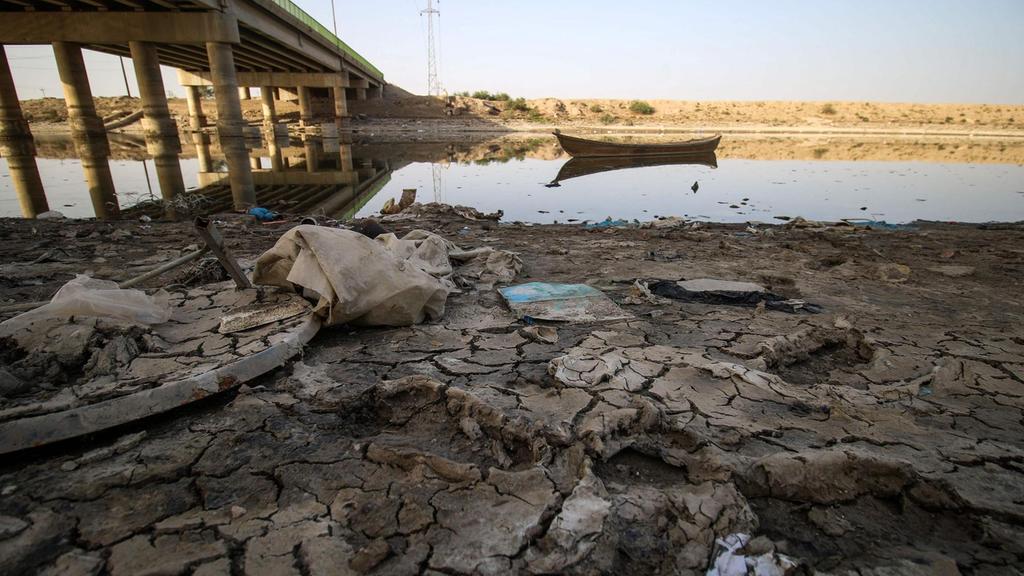
The vulnerability of Iraq’s position was exposed a decade later. In 2019, Turkiye began filling the reservoir of the Ilısu Dam on the Tigris. With a storage capacity of over seven billion cubic meters, Ilısu dramatically altered downstream flows. By 2020, the dam’s turbines were operational. For Iraq, the consequences were immediate: reduced river levels in Mosul, salinity spikes in Basra, and social protests across the south.
The Ilısu episode highlighted the limits of earlier frameworks. Consultation clauses and data-sharing promises offered no real buffer against the unilateral filling of massive reservoirs.
This crisis pushed Baghdad back to the table, hoping once again that new promises could succeed where old ones had failed.
New Promises and Ongoing Struggles (2021–present)
Facing acute shortages, Iraq’s Ministry of Water Resources sought renewed commitments. In March 2021, Turkish officials pledged to provide Iraq with its “fair share” of the rivers. Ministers in Ankara and Baghdad portrayed this as a breakthrough. Yet no treaty text was released, no volumes were specified, and no monitoring mechanisms were established. The phrase “fair share” became a political slogan, welcomed in Baghdad but unverifiable in practice.
Three years later, Iraq turned another page. In April 2024, during Erdogan’s high-profile visit to Baghdad, the two countries announced a ten-year framework agreement on water. Unlike earlier deals, it offered a multiyear horizon and a promise of automatic extension unless either side opted out. Iraqi officials celebrated it as historic, emphasizing that for the first time, water management was explicitly tied to broader trade and security partnerships.
Yet skepticism lingers, and the agreement’s details remain unpublished, with no release schedules or transparent data-sharing platforms available. The framework risks becoming another promise on paper, never felt downstream in a long cycle of unmet expectations.
As Iraq confronts a hotter and drier future due to climate change, history shows that consultation and goodwill alone cannot secure water downstream. Unless future agreements include binding quotas and real enforcement, Iraq’s shelves will keep filling with treaties — while its rivers run dry.
Written and edited by Shafaq News staff.