Syria plans pipeline, rail projects to reduce reliance on Strait of Hormuz


Shafaq News- Damascus
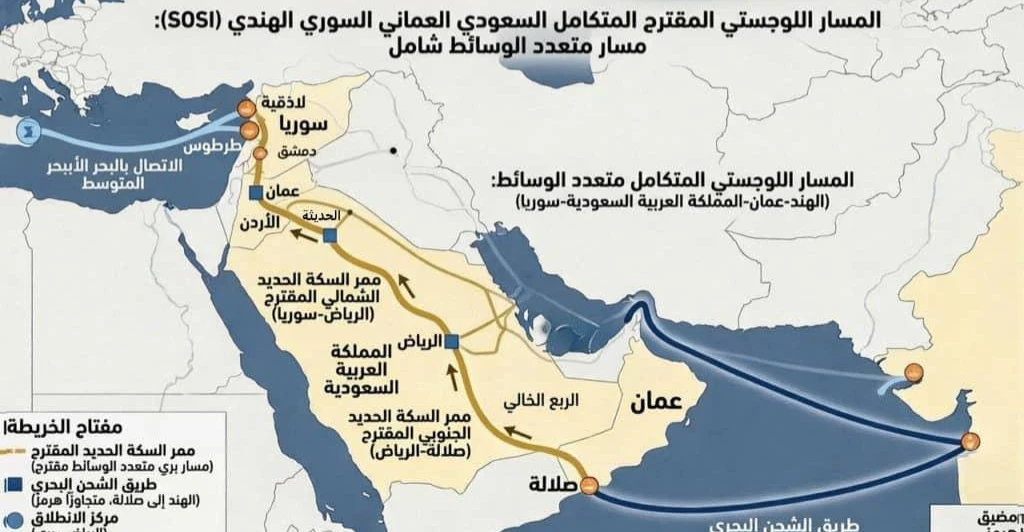
Syria is studying a plan to reroute the Trans-Arabian Pipeline (Tapline) to its Mediterranean coast as part of broader projects aimed at reducing reliance on the Strait of Hormuz, Osama al-Qadi, an adviser at the Ministry of Economy and Industry, told Shafaq News on Wednesday.
The proposal involves modifying the 1,664-kilometer pipeline to transport crude from Qaisumah in northeastern Saudi Arabia to the Syrian ports of Baniyas or Latakia, through a new line capable of pumping up to four million barrels per day (bpd). The plans also include extending a Qatari natural gas pipeline through Syria to Turkiye and then to Europe, with the possibility of establishing a branch line to a Syrian Mediterranean port, alongside developing liquefied gas infrastructure in coastal areas.
The projects further include a high-speed railway linking Saudi Arabia to Syria via Jordan, with trains operating at speeds between 200 and 300 km/h, building on the extension of Saudi railways to Al-Haditha near the Jordanian border. The railway would also support a proposed “fast food security corridor” starting from Arar in northern Saudi Arabia toward Syrian cities, allowing the transport of food and goods within hours.
In addition, work is underway to rehabilitate the Kirkuk–Baniyas oil pipeline and increase its capacity from about 300,000 bpd to nearly one million bpd using modern pipelines.
Al-Qadi said implementing these projects would reduce reliance on the Strait of Hormuz and enhance energy and trade security for Arab countries, while supporting the global economy with stable oil and gas supplies. He added that investment in these five projects would significantly impact the geopolitical and economic landscape of the region for decades and called for their inclusion among development priorities, particularly in Gulf countries.
Read more: Hormuz lockdown: Iraq’s economic lifeline under threat