Syria: Currency replacement targets market order


Shafaq News– Damascus
Syrian officials and economists have described the currency replacement as a technical measure aimed at organizing cash circulation and strengthening financial stability, distancing the move from any direct attempt to address inflation.
Speaking to Shafaq News on Thursday, Osama Al-Qadi, senior adviser at the Ministry of Economy and Industry, stressed that the currency replacement has no connection to price levels or inflationary pressures, explaining that the measure is designed to address liquidity shortages, facilitate daily transactions, and rebuild public confidence in banks by ensuring sufficient cash is available in the market.
Al-Qadi said the process also enables tighter oversight of illicit financial activities, including money laundering, while improving monitoring of real estate and gold markets, reducing counterfeiting, and limiting speculative trading. While informal and black-market activity cannot be eliminated in one step, he emphasized, greater control over the monetary mass can significantly curb its scale and influence.
Turning to the broader economic environment, Al-Qadi linked any lasting improvement in the Syrian pound’s value to structural factors beyond currency reform, notably improved liquidity flows and the easing of sanctions, particularly the Caesar Act, which the United States repealed in December 2025.
From an academic perspective, Ziad Ayoub Arbache, a lecturer and adviser at Damascus University, framed the currency replacement as “a strategic choice rather than a sudden or isolated intervention,” arguing that it must be managed with a high degree of caution to avoid public uncertainty.
Arbache clarified, in an interview with our agency, that the primary objective lies in regulating the monetary market without harming household savings or triggering abrupt changes in economic behavior. If implemented effectively, he added, the step could contribute to encouraging domestic investment and preparing the ground for broader financial reforms, particularly in digitalization and the modernization of the banking sector.
He warned, however, that weak communication, limited transparency, or mismanagement of liquidity could provoke resistance or short-term instability, stressing that clarity with economic and social stakeholders remains essential to minimizing potential negative effects.
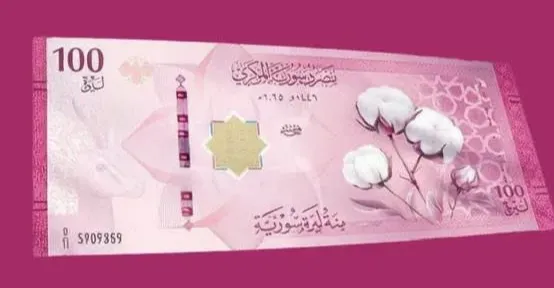
Syria will begin exchanging old banknotes for redesigned currency on January 1, 2026, Central Bank Governor Abdul Qader Al-Hassriya announced in late December last year, as part of a plan to replace banknotes issued during the Bashar Al-Assad era and support currency stability.
Transitional President Ahmed Al-Sharaa described the step as the start of a new phase of confidence and potential economic growth, conditional on responsible financial behavior during the exchange period.