Six pipeline routes offer Arab oil alternatives to Hormuz


Shafaq News
Arab oil producers are turning to six pipeline routes to maintain crude exports outside the Strait of Hormuz, with three operational and three under development or consideration, according to a report by the Washington-based Attaqa Research Unit.
Existing alternatives include Saudi Arabia’s East-West pipeline, the UAE’s Habshan-Fujairah link, and the Iraq-Turkiye Kirkuk-Ceyhan system, while future projects comprise Iraq’s Kirkuk-Baniyas corridor, the UAE’s West-East pipeline, and Oman’s Ras Markaz project.
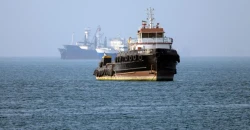
The search for alternatives has gained urgency since fighting between Iran and the United States disrupted Hormuz, which normally handles roughly 20% of global oil flows. Kpler recorded 10 commodity-carrying vessels crossing the Strait on Aug. 26, below the 10-day average of about 15.
Saudi Arabia has the largest pipeline capacity among the six routes, followed by the UAE and Iraq, although several function mainly as contingency outlets and cannot necessarily operate at their maximum capacity during a disruption.
Saudi Arabia’s East-West Pipeline
Saudi Arabia has relied heavily on its East-West pipeline, or Petroline, since shipping through Hormuz was disrupted in late February 2026.
Built in the 1980s, Petroline stretches 1,200 kilometers from oil facilities around Abqaiq in the east to the Red Sea port of Yanbu, with a capacity of up to seven million barrels per day (bpd).
The shift was quickly reflected in Yanbu shipments. Bloomberg vessel-tracking data put volumes at 700,000 bpd on Mar. 5, rising to 3.4 million on Mar. 17 and 4.1 million by Mar. 20.
In the first seven months of 2026, Saudi crude exports averaged more than five million bpd, down from 5.9 million during the same period last year.
UAE’s Habshan-Fujairah Pipeline
The UAE already has direct access to the Gulf of Oman through the 370-kilometer Habshan-Fujairah pipeline, allowing Abu Dhabi crude to bypass Hormuz entirely.
Completed in 2012 after four years of construction, the route can move between 1.5 million and 1.8 million bpd, equivalent to more than half of Abu Dhabi’s roughly 3.5 million bpd of crude exports.
Fujairah has also served as a transfer hub during the disruption, with tankers linked to Gulf producers, including ADNOC, conducting ship-to-ship transfers off the emirate and Oman’s Sohar to maintain energy shipments.
Iraq-Turkiye Kirkuk-Ceyhan pipeline
The 970-kilometer Kirkuk-Ceyhan system carries northern Iraqi crude to Turkiye’s Mediterranean port of Ceyhan. Its contribution remains relatively small because northern fields account for only around 10% of Iraq’s shipments, while most barrels leave through Basra.
Although designed for around 1.5 million bpd, the two-line network was operating at roughly 500,000 bpd before flows stopped in 2023 after an international arbitration ruling ordered Turkiye to pay Baghdad $1.5 billion in compensation.
Shipments resumed on Mar. 18, 2026, at 250,000 bpd, giving Baghdad a limited northern outlet as southern flows came under pressure.
The northern outlet offers only partial protection from disruptions in Hormuz, which handled about 95% of Iraqi crude exports before the war. Basra shipments, previously above 3.3 million bpd, plunged to about 100,000 in May and 500,000 in June before recovering to roughly 1.4 million in July and two million bpd in August.
For OPEC’s second-largest producer, the disruption also threatens state finances, with oil generating roughly 90% of federal revenue. Prime Minister Ali Al-Zaidi has pushed for faster pipeline upgrades and alternative outlets.
Read more: Iraq pushes new oil routes beyond Hormuz
Iraq’s Kirkuk-Baniyas Project
A more substantial alternative lies in Iraq’s plans for Mediterranean access through Syria, although the project would take years to materialize. The former Kirkuk-Baniyas connection has been out of service since 2003.
Baghdad and Damascus signed a US-sponsored memorandum of understanding in July to examine its revival, with technical and financial studies assessing the existing infrastructure. Chevron is involved through an international consortium.
Read more: Preparatory studies begin on Kirkuk-Baniyas pipeline rehabilitation
Oil Minister Basim Al-Abadi put the potential capacity of the broader network at up to 2.25 million bpd on Aug. 29. The plan envisages one corridor running from Basra through Haditha to Fishkhabur in northern Iraq and another extending from Haditha to Baniyas on Syria’s Mediterranean coast, with Chevron, TI Capital, and Qatar’s UCC involved.
With an estimated cost of at least $15 billion and a construction period of about four years, the Syrian corridor offers Baghdad a long-term hedge against dependence on Hormuz rather than relief from the current disruption.
Read more: No exit but Hormuz: Iraq's economic vulnerability exposed
UAE’s West-East Pipeline
The UAE is planning a second major oil route to Fujairah, with the proposed West-East pipeline designed to carry up to 1.5 million bpd from Jebel Dhanna to the emirate’s export terminal on the Gulf of Oman.
Plans call for a 520-kilometer network comprising three lines between ADNOC’s Jebel Dhanna terminal and Fujairah. Once completed, it would complement the existing Habshan-Fujairah pipeline and further reduce the UAE’s reliance on Hormuz.
ADNOC is seeking to accelerate construction with operations targeted for 2027, potentially doubling the volumes the company can export through Fujairah.
Oman’s Ras Markaz Pipeline
Oman, meanwhile, is developing a new pipeline linking its inland oil fields with Ras Markaz and the storage and export facilities at the Port of Duqm, providing another direct outlet to the Arabian Sea.
The proposed line would stretch between 400 and 440 kilometers and transport up to 700,000 bpd. The project remains under development, with technical studies still underway.
Oman Tank Terminal Company (OTTCO) has been preparing since February to launch an international tender for construction, with investment estimated at between $800 million and $1.4 billion.
Beyond adding export capacity, the development forms part of Oman’s effort to establish Ras Markaz as a regional crude storage and trading hub, capitalizing on its location outside Hormuz and proximity to major international shipping routes.