Kirkuk sword trade down to two Iraqi craftsmen


Shafaq News- Kirkuk
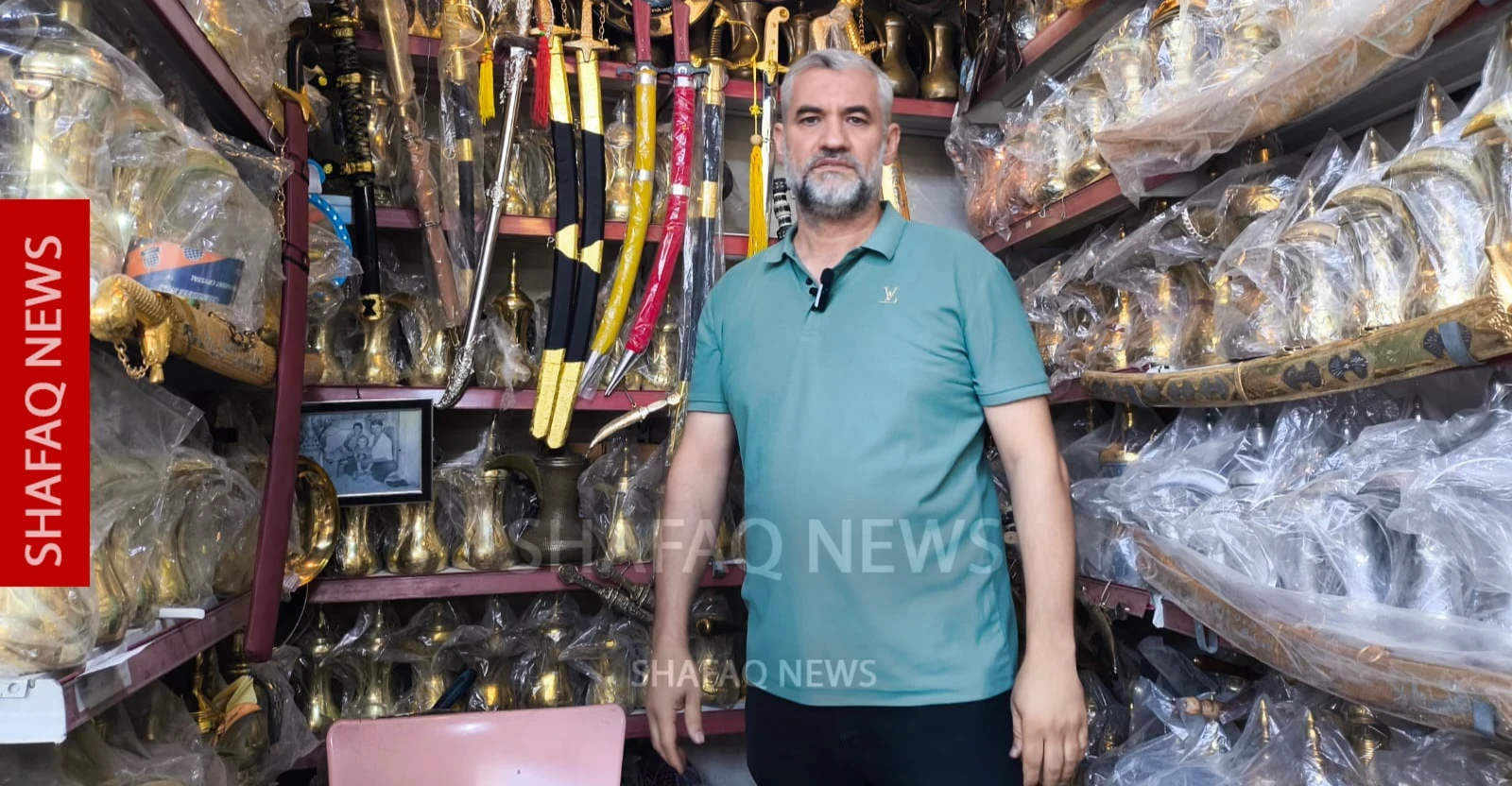
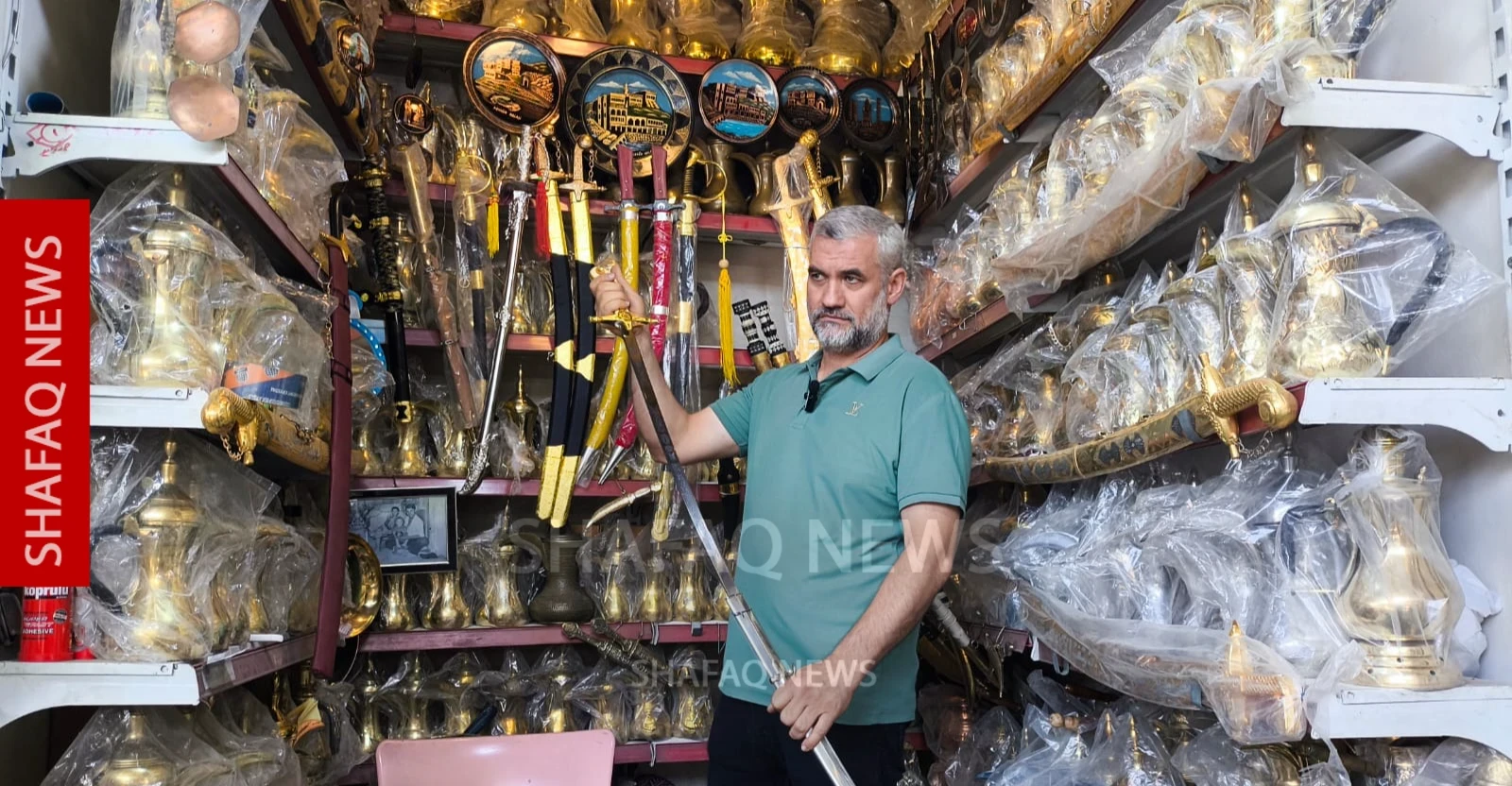
Two craftsmen are all that remain of the sword trade in Kirkuk's Grand Bazaar, where rising production costs, falling demand, and imported blades have closed most of the workshops that once made the market one of Iraq's best-known centers of sword and dagger making, according to craftsmen who spoke to Shafaq News.
The bazaar previously held dozens of
workshops employing blacksmiths, engravers, and specialists in handles and
scabbards, serving customers from across Iraq's provinces and traders arriving
from abroad.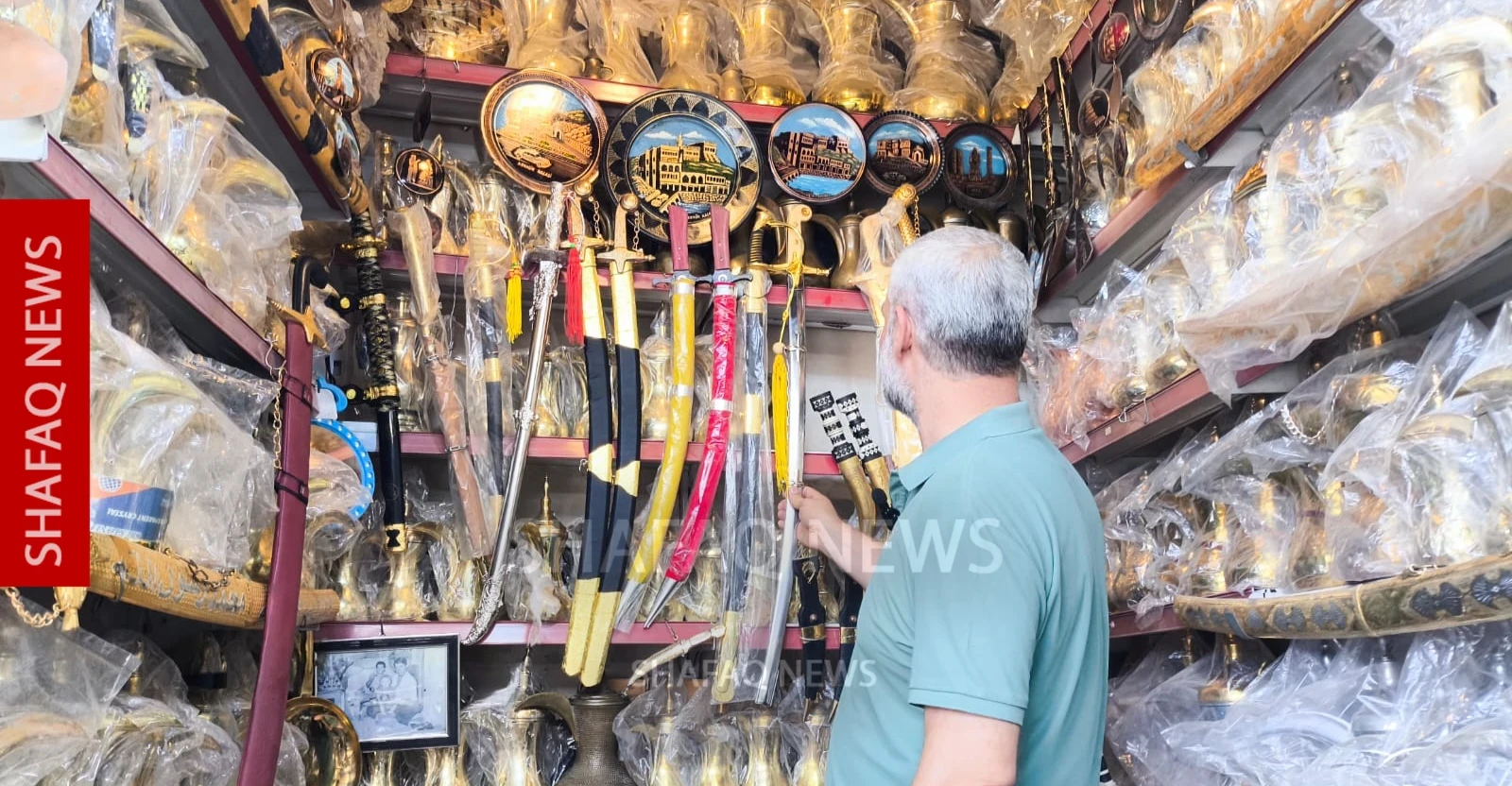
Imad Al-Bayati, one of the oldest sword makers in the market, told Shafaq News that the Iraqi sword has become “an object of heritage,” bought by collectors as a gift at official and tribal occasions, and carried in some Sufi religious rites and folklore festivals.
“The sword most in demand across Iraqi markets remains that of Imam Ali [first Imam in Shia Islam], known as the Zulfiqar. It carries religious and historical symbolism for Shia, hung in homes and guest halls or given as a gift. Arab and Ottoman swords follow, still sought by those drawn to heritage pieces.”
Furnaces that burned firewood for
decades now run on gas and electricity, but the fire remains the measure of the
work, determining the hardness of the blade, and the blacksmith's experience
determines whether the finished sword combines strength with the appearance the
buyer wants, Al-Bayati said, warning that young people are not entering the
trade and that traditional crafts receive no support, leaving the survival of
the profession dependent on whether the few remaining craftsmen can pass on
what they know.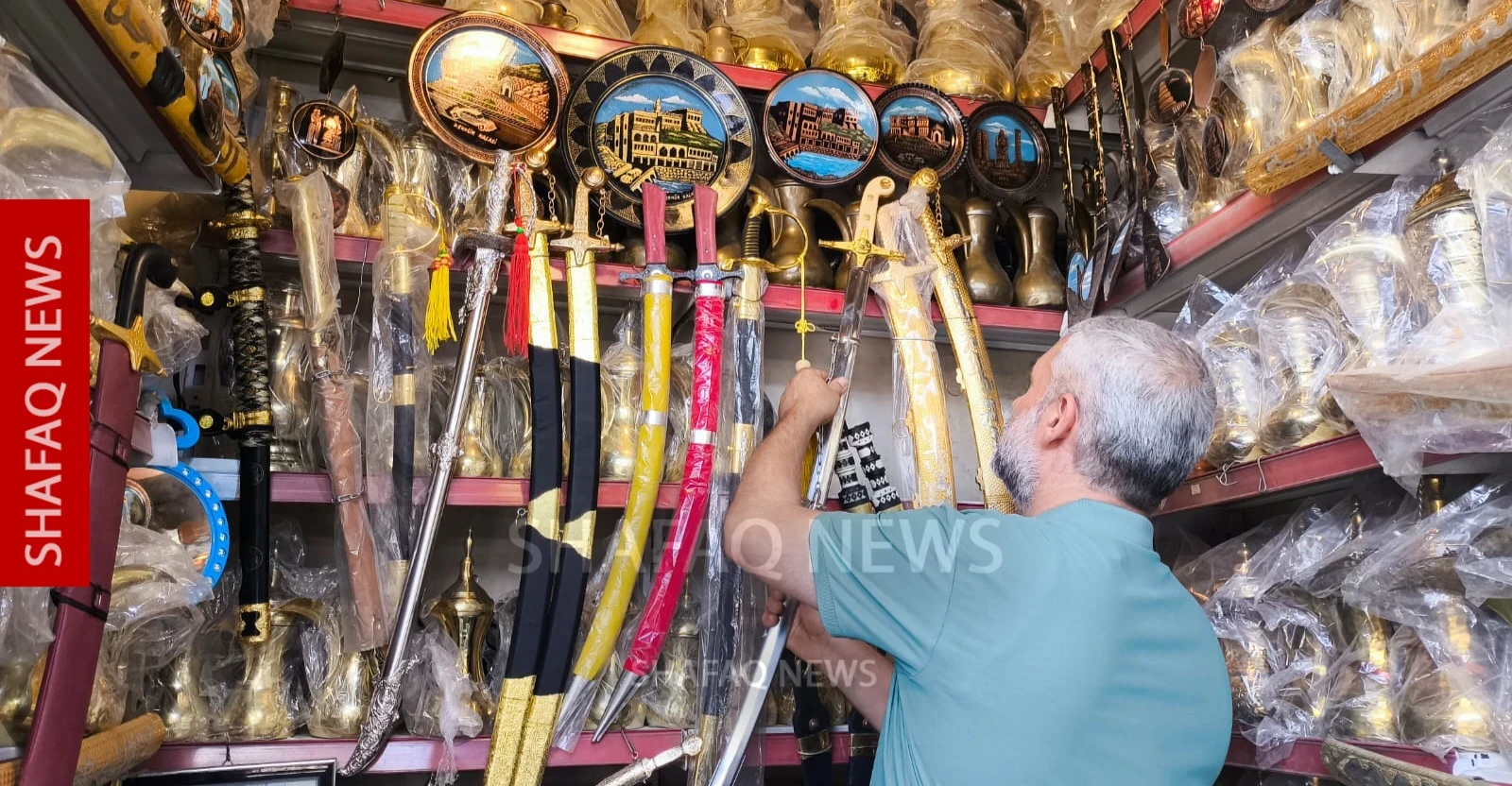
The heavier problem, according to Kamil Abbas, a sword maker in the same bazaar, is not the shortage of customers but the hold that imported swords have taken on the Iraqi market, after local production led it for decades. He said Turkish and Pakistani swords are now the most requested, valued for the quality of their manufacture, the precision of their finishing, and the range of designs and sizes available.
“A premium Turkish or Pakistani sword can reach about $600, while Iranian and Syrian swords run between $300 and $400,” Abbas said, with cheaper models selling for less depending on the steel, the ornamentation, and the work in the handle and scabbard.
The reputation of Turkish and
Pakistani blades rests on the raw materials rather than the name, said
historical researcher Mohammed Shakir, pointing to high-hardness steel that
gives the sword strength and a longer life. The advantage extends to the handles,
cut from high-grade natural woods, bone and horn, including gazelle bone, and
finished with fine metal ornamentation that gives the piece an artistic value
collectors respond to.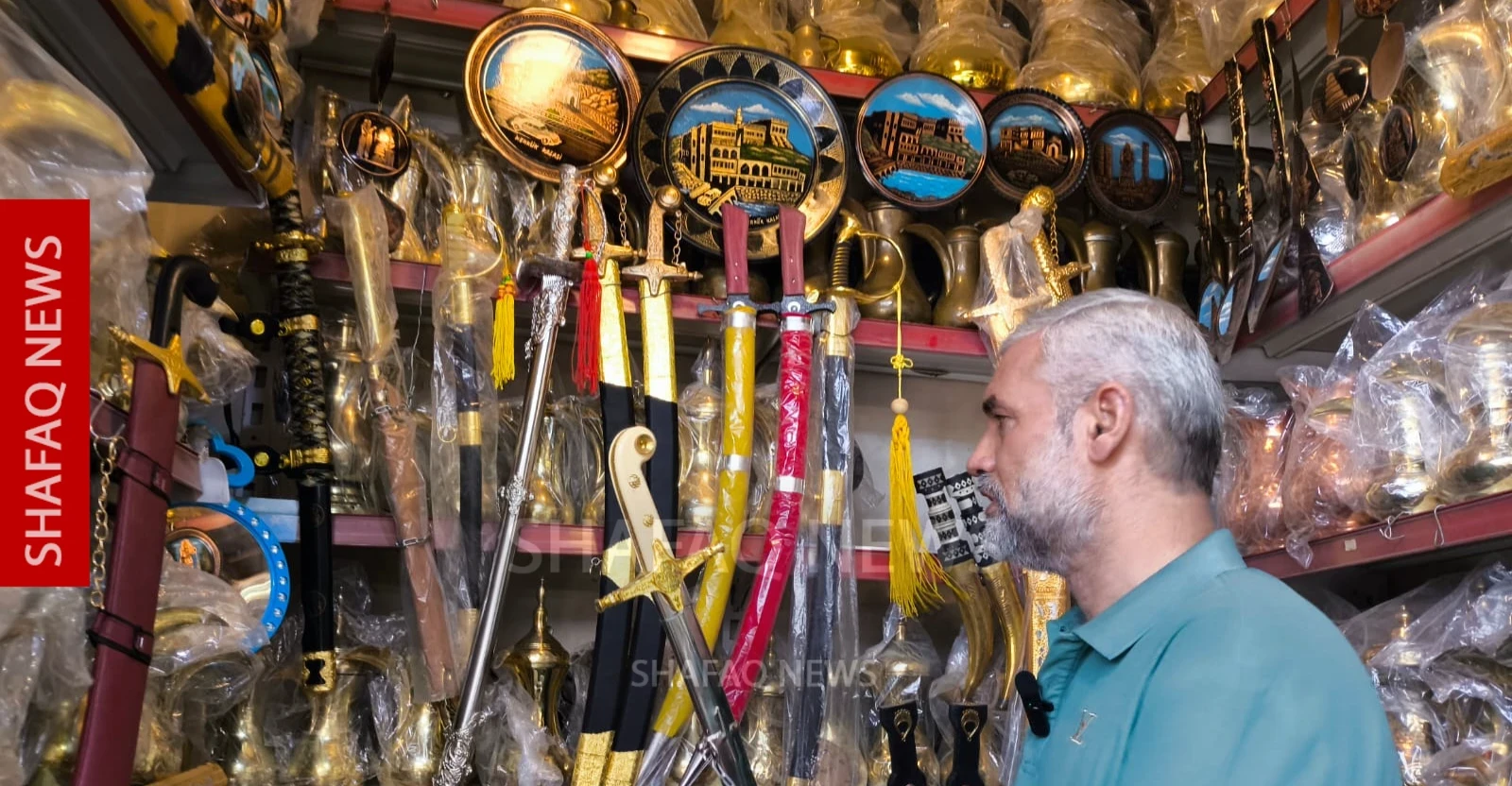
“Iraq once held deep traditions in sword making, with skilled craftsmen in Kirkuk and other cities producing blades known for their quality,” Shakir said, before an opening to global markets, rising local production costs, and a shrinking pool of skilled labor pushed the industry into gradual decline.
The craftsmen say saving the
profession requires government support for traditional crafts and their
inclusion in intangible heritage protection programs, alongside dedicated
exhibitions and festivals and an effort to draw young people into learning the work.