Iraq salary delays spark market slowdown, family hardship


Shafaq News- Baghdad
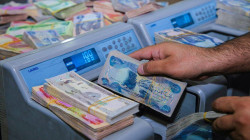
A crisis over delayed salary payments to Iraqi state employees has now stretched into its fifth week, leaving a wide segment of public-sector workers still waiting for their pay amid mounting living expenses and growing economic strain that has begun visibly rippling through Iraqi markets.
Government-acknowledged liquidity shortages have turned the salary delay from an internal Finance Ministry matter into a daily problem affecting buying and selling activity and families' ability to meet basic needs, with concerns mounting that markets could slide into a prolonged slowdown if pressure on government spending continues.
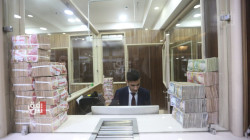
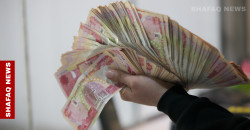
Falling oil revenues and disrupted exports have placed growing pressure on Iraq's budget, even as operating expenses continue to climb. Monthly salary obligations total roughly 7.8 trillion Iraqi dinars (approximately $5.95 billion), and the government has so far been unable to secure the full amount required. The Finance Ministry has made available around 3.2 trillion dinars (approximately $2.44 billion) to cover part of these obligations, while government estimates point to a significant cash gap that has affected the timing of payments to several ministries and public agencies.
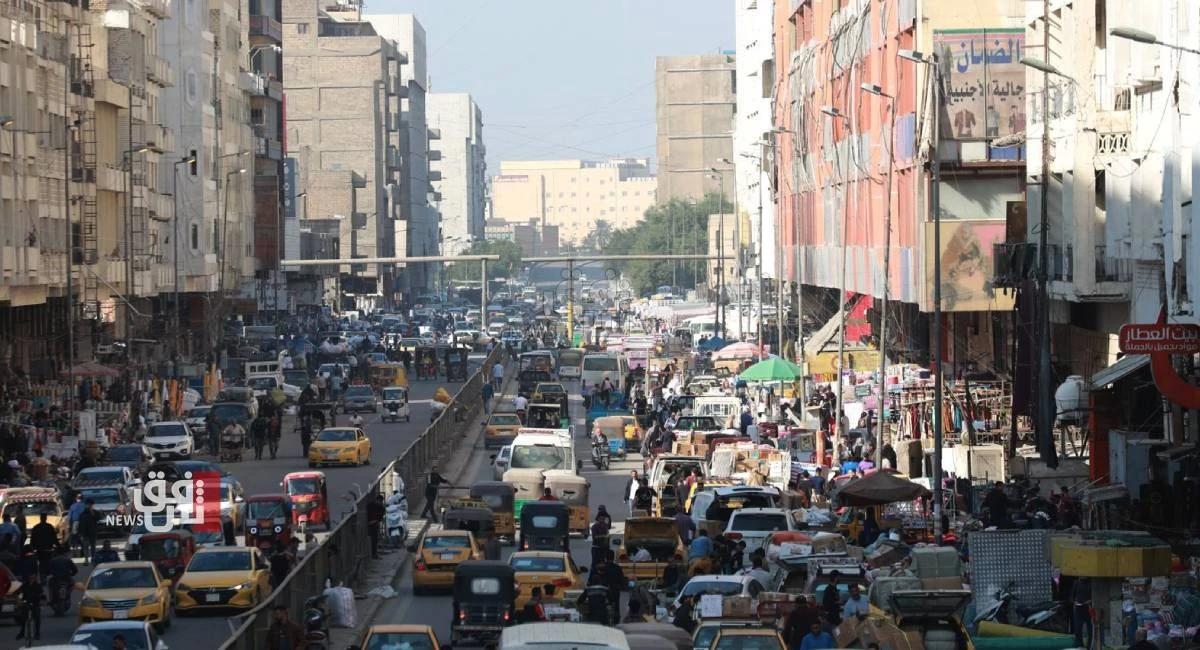
Iraqi markets are experiencing economic stagnation and sluggish trade activity due to delayed salary payments and rising import costs linked to shipping disruptions, according to Rasheed al-Saadi, spokesperson for the Baghdad Chamber of Commerce.
Daily market monitoring conducted by the chamber (covering food, construction materials, chemicals, gold and jewelry, and produce) shows a clear decline in commercial activity and a drop in citizens' purchasing power, al-Saadi told Shafaq News. Government salaries, he explained, serve as the primary driver of Iraq's market activity, with the state injecting roughly 7.8 trillion dinars (approximately $5.95 billion) monthly in wages; delays in disbursing these funds have directly affected buying and selling.
Read more: Iraq can fund salaries, but oil sets the limits
Distributing only about 3.2 trillion dinars (approximately $2.44 billion) so far is insufficient to move markets at a normal pace, particularly given that government spending forms the backbone of Iraq's economic cycle, al-Saadi added, pointing to the suspension or reassessment of some government projects due to rising costs as a contributing factor in the economic slowdown. “Shipping disruptions have pushed traders to alter import routes, raising transport costs and affecting commodity prices.”
Some merchants have been forced to sell goods at a loss to recover capital amid weak demand, al-Saadi noted, adding that the Baghdad Chamber of Commerce is engaging relevant authorities to ease customs procedures and border crossing operations, though the persistent slowdown continues to limit traders' ability to offset their losses.
At a market in Baghdad, grocery store owner Abu Mohammed described a noticeable drop in sales over recent weeks, as customers now focus on purchasing only essentials, with demand falling for many goods that previously moved more briskly.
Consumption patterns have shifted markedly, he explained: customers who once bought a week's or a month's worth of supplies now purchase smaller quantities or single items to preserve what liquidity they have left. Some shop owners have turned to offering credit to longtime customers, Abu Mohammed said, though this practice has become limited given traders' own financial obligations, adding that many business owners have cut orders from suppliers to avoid inventory buildup.
Continued crisis could push up prices for some goods, he warned, particularly as transport costs rise or supply quantities shrink, stressing that any broad financial crisis quickly affects both ordinary citizens and small traders.
For Umm Ghadeer, a mother of five from Karbala province, the delayed salary has made daily life increasingly difficult, since her family's salary represents its sole source of income for covering daily needs.
She has had to postpone paying several bills and obligations, relying on borrowing from relatives to secure food and medicine, she told Shafaq News. “What worries me most is the approaching school year; I have two daughters in university and three children in school, and I will need to cover books, stationery, bags, transportation, and tuition-related costs.”
Rising prices combined with delayed salaries have made life harder for families dependent on government income, she noted, adding that purchasing necessities now requires careful calculation, and that postponing many needs has become unavoidable. She called on the government to speed up resolution of the salary crisis, stressing that continued delays threaten not only living conditions but also family stability and children's education.
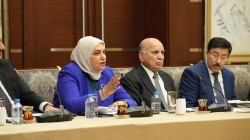
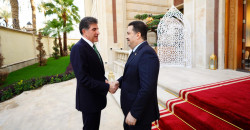
Finance Minister Faleh al-Sari presented proposals during a meeting with the parliamentary Finance Committee regarding a possible salary payment schedule should the financial crisis persist, according to MP Hussein Arab. The proposal would prioritize the most vulnerable groups, including social welfare beneficiaries, retirees, and lower-tier employees earning no more than 1 million dinars (approximately $763), Arab told Shafaq News.
Resolution of the crisis may hinge on a US-Iran agreement over reopening the Strait of Hormuz, Arab added, arguing that such a deal could help stabilize Iraqi oil exports and restore revenue to its normal trajectory. “The government may not need to implement salary scheduling at all,” he concluded, predicting that if a breakthrough on the strait materializes soon and oil export activity resumes.