Iraq’s vanishing wetlands: Maysan marshes declared long dead


Shafaq News – Maysan
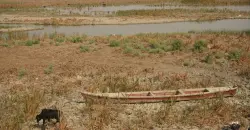
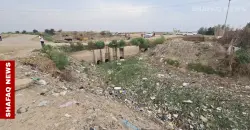
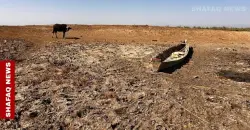
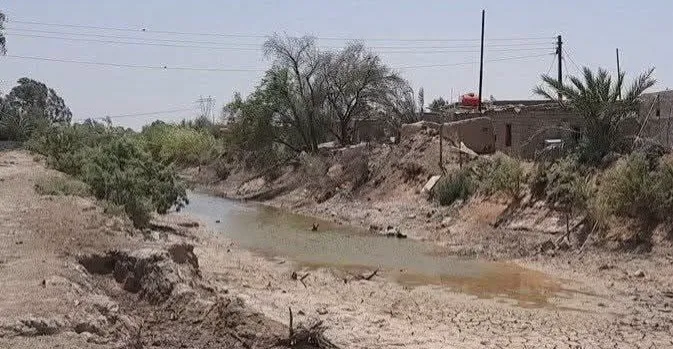
Despite new media reports of shrinking water levels, Maysan’s marshes have in fact been entirely dry for years, environmental activist Mortada Al-Janubi said on Monday.
Al-Janubi told Shafaq News that Al-Sanaf is a seasonal marsh fed by rainfall and floodwaters from Al-Tayyib and Al-Dawarij, and traditionally supplies the Hawizeh Marsh, one of Iraq’s most important wetlands. Hawizeh itself has now dried after water releases from the Musharrah and Kahla rivers, as well as Iran’s Karkheh River, were cut off. Part of the former marsh area has since been turned into an oil field under Iraq’s fifth licensing round.
He added that other Maysan wetlands, including Al-Awda and Al-Erq, have “vanished,” leaving “no remaining marshes in Amara” and making the province’s desiccation “total.”
The collapse of the marsh ecosystem has displaced most residents, whose livelihoods relied on buffalo herding, fishing, and reed gathering. Livestock numbers have fallen by about 70 percent, Al-Janubi said, noting that although official statistics are lacking, field visits show a complete absence of life in areas once populated by thousands of families.
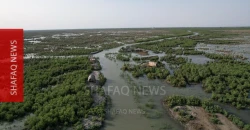
Southern marshes, as a whole, have faced one of the region’s worst environmental and humanitarian crises in recent years. Repeated droughts and reduced upstream water releases have shrunk Iraq’s historic wetland system from 15,000–20,000 square kilometers to fewer than 2,000, according to the Eco Iraq Observatory. Large parts of the Central, Hammar, and Hawizeh marshes are now barren, triggering widespread migration.
Up to 90 percent of marsh waters have dried in other provinces as well, threatening natural and cultural heritage sites designated by the United Nations Educational, Scientific and Cultural Organization (UNESCO) in 2016. The ecosystem never fully recovered from former dictator Saddam Hussein’s drainage campaign in the 1990s, which destroyed over 90 percent of the wetlands by 2000. Post-2003 restoration succeeded temporarily, but environmentalists say the decline has now returned “worse than before.”
Dams in Turkiye, Syria, and Iran, along with climate change, have sharply reduced flows in the Tigris and Euphrates. Domestic decisions have further aggravated the crisis: authorities diverted water from Maysan to Basra, raising outflow from 65 to 95 cubic meters per second while Hawizeh levels dropped; agricultural quotas were halved in 2022; and oil exploration and border construction have disrupted fragile habitats.
As a result, aquatic life has collapsed, migratory birds have disappeared, fish die-offs have increased due to oxygen depletion, and uncontrolled marsh fires have become common. In July 2025, more than 90 percent of Hawizeh reportedly burned.
The marshes once cooled surrounding districts by up to 4 degrees Celsius, filtered pollutants from the Tigris and Euphrates, and protected coastal ecosystems. Their disappearance has removed a critical environmental buffer and intensified local heat.
Read more: Legacy of the ‘Two Rivers’: Iraq races to save the remains of Mesopotamia