Iraq’s Kirkuk revives its shared rhythms as Ramadan nears


Shafaq News- Kirkuk
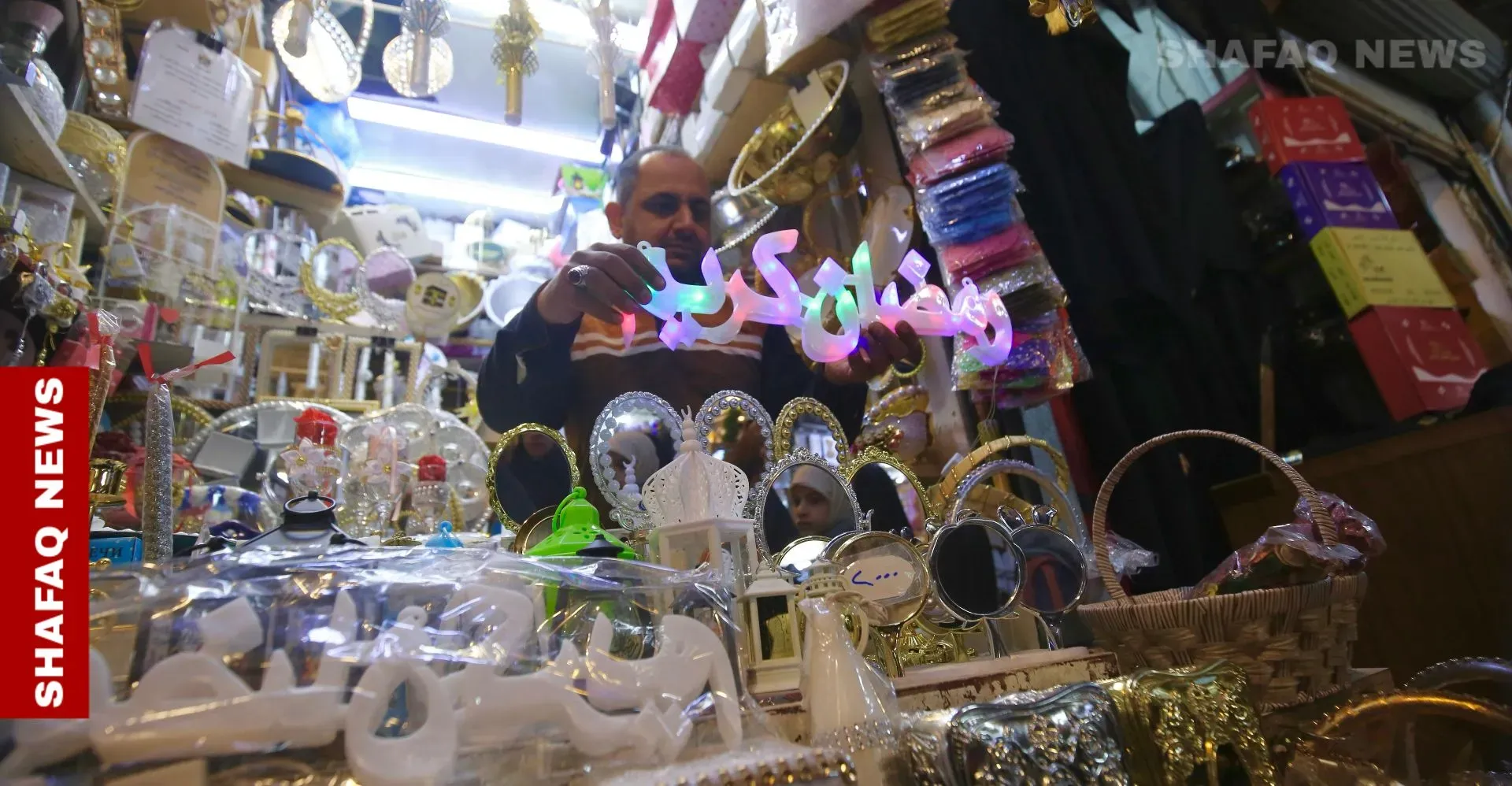
As the Muslims’ fasting month of Ramadan approaches, daily life in Iraq’s Kirkuk province begins to shift. Markets grow livelier, streets glow with lanterns and colored lights, and mosques prepare for long nights of prayer. In a city long defined by its ethnic and religious diversity, the holy month once again becomes a shared social space, where worship, tradition, and community life intersect.
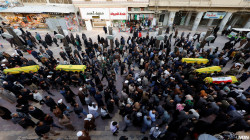
In the evenings, Kirkuk’s markets take on a festive rhythm. Shopfronts are lined with Ramadan decorations, from traditional lanterns to illuminated signs, while families move between small stalls and larger stores to stock up for the month ahead. The scene reflects more than seasonal shopping; it signals a collective readiness for a period that blends spiritual discipline with social connection.
Market Oversight
Local authorities say the seasonal rush is being closely monitored. Kirkuk district commissioner Falah Khalil Yayjli said the local government has put strict measures in place to prevent unjustified price hikes during Ramadan. Speaking to Shafaq News, he noted that inspection teams will also monitor licensed restaurants to ensure compliance with health regulations and enforce rules against public eating during fasting hours, out of respect for those observing the fast.
Yayjli added that security agencies are coordinating with local officials to regulate market activity, manage crowd movement, and maintain a safe environment for residents throughout the month.
Mosques at the Center
As night falls, attention shifts from the markets to the mosques. Ramadan brings a marked rise in attendance, with the holy Quran recitations, religious lessons, and communal prayers filling the city’s places of worship. Taraweeh prayers, held after the evening prayer, stand out as a defining feature, drawing large congregations that often include entire families.
Salah Majid Wali, head of the Sunni Endowment in Kirkuk, said Ramadan consistently sees a surge in mosque attendance, particularly for Taraweeh, which holds deep spiritual significance. He told Shafaq News that the endowment works to prepare mosques and organize guidance programs aimed at reinforcing social values, tolerance, and solidarity.
After prayers, mosque courtyards often become informal gathering spaces, where residents exchange greetings and news, “small rituals that underscore the city’s social cohesion during the holy month."
Games After Prayer
In Kirkuk, Ramadan is not limited to worship alone. Long-standing popular traditions continue to play a central role, especially in the evenings. One of the most familiar is mheibes, a traditional game played after iftar and Taraweeh prayers. Groups of young men and neighbors divide into teams, hiding and guessing the location of a small ring, with matches stretching late into the night.
Citizen Jatin Mohammed said playing mheibes after prayers brings a sense of joy and reinforces bonds among friends and neighbors. “Ramadan strengthens our sense of unity and connection,” he told Shafaq News.
“Siniya”: Game and Table
Another enduring tradition is siniya, a popular game played nightly during Ramadan. Using a large copper tray fitted with metal cups concealing a ring, two teams compete to find it, earning points with each successful guess. Matches can last until dawn, with the losing team traditionally offering sweets to both sides.
Beyond the game, siniya also refers to a communal Ramadan meal. Families gather around a large shared platter featuring traditional dishes such as rice, stew, pastries, samosas, salads, and appetizers. These meals often extend beyond the household to include neighbors and relatives, alongside communal iftar tables and charitable initiatives that provide food to those in need.
In Kirkuk, Ramadan unfolds as more than a religious observance. It is a season where markets and mosques, prayer and play, private homes and public spaces all converge. Beneath the glow of lanterns and the echoes of night prayers, the city renews a rhythm of shared life, one that reflects both its diversity and its enduring social fabric.