Rubio's "Balkanization" warning links Iraq's armed factions to the country's unity


Shafaq News- Baghdad
US Secretary of State Marco Rubio has linked Iraq's armed factions to what he called the “Balkanization” of the country, arguing that bringing all weapons under government control would end the presence of independent forces operating outside a unified state command. The warning ties the fate of Iraq's armed factions to the integrity of the Iraqi state more explicitly than Washington has before, and it comes days before September 30, the scheduled end of the Global Coalition's military mission in Iraq.
Until now, Washington had framed disarmament largely as a question of sovereignty and Iranian influence. Rubio's language moves it into the territory of state survival. In Baghdad, politicians and analysts who spoke to Shafaq News broadly accept that the country's many sources of arms threaten a unified security decision. They disagree sharply on how close Iraq is to breaking apart, and several argue that the more realistic danger is not partition but a confrontation over who controls the state.
Read more: Iraq caught between US-Iran war and September 30 deadline
A Deadline That Moved
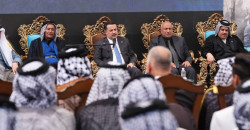
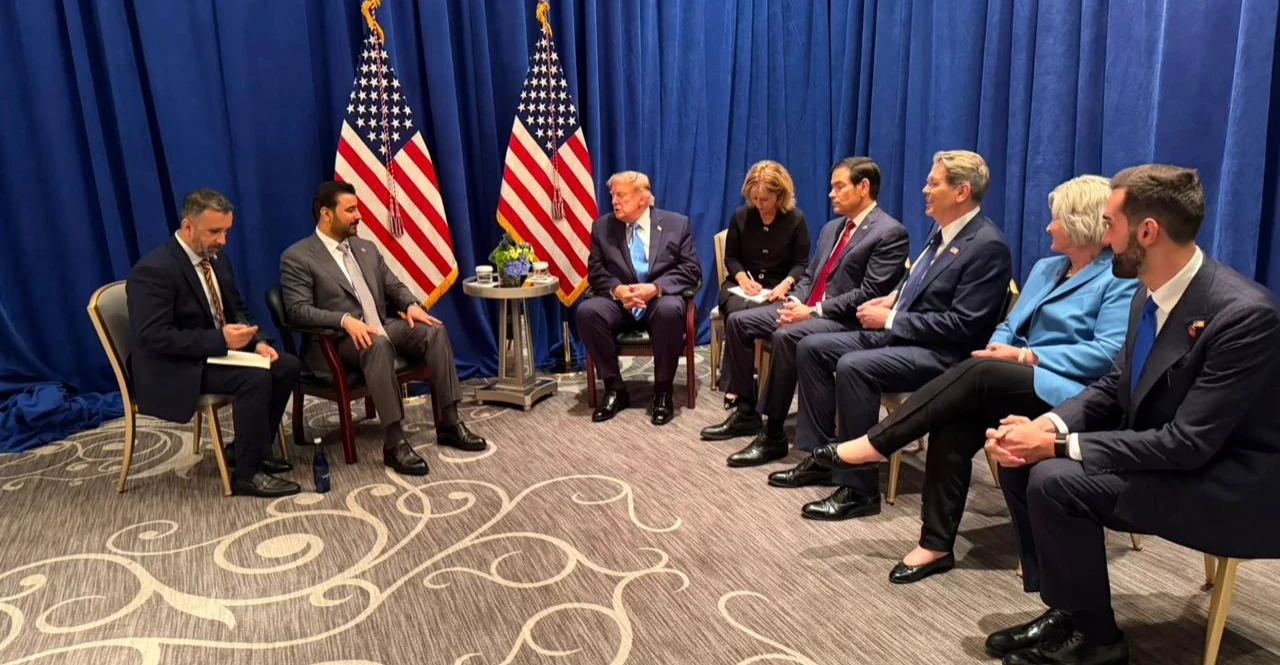
Rubio spoke to reporters in New York on Wednesday on the sidelines of the UN General Assembly, after he and President Donald Trump each met Iraqi Prime Minister Ali al-Zaidi. He said Washington had no doubt about al-Zaidi's commitment to disarming the factions but described the task as massive and difficult.
By his count, at least three armed groups had disarmed and joined state institutions, while at least one had been far less cooperative. Completing the process, he said, would mean Iraq no longer had "independent forces operating and balkanizing the country."
Read more: Iraq factions resist disarmament as coalition exit nears
That timetable has since changed. Sept. 30 remains the scheduled end of the coalition's military mission and is now expected to mark the announcement of a weapons-control program, while al-Zaidi has set June 30, 2027, as the target for completing the disarmament process.
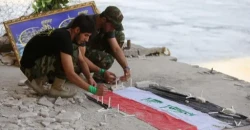
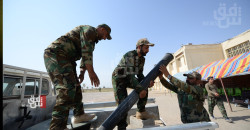
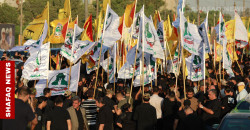
The factions at the center of the debate are mostly Shia groups within the Popular Mobilization Forces (PMF). At least five of them also hold seats in parliament through political wings. Their responses to disarmament have varied. Some have pledged to hand over their weapons, Kataib Hezbollah has offered to take custody of drones and missiles rather than surrender them, and Harakat Hezbollah al-Nujaba has rejected the process outright.
The term Rubio chose carries a specific memory. The Balkans became shorthand for violent fragmentation after Yugoslavia broke apart in wars between 1991 and 1999, leaving seven states where there had been one. In Iraq, the word evokes a long-standing fear that the country could split along Shia, Sunni, and Kurdish lines.
Too Many Centers Of Force
Khalid Sido, a member of the Iraqi parliament's Security and Defense Committee, said that the problem extends beyond the factions. The presence of multiple armed actors, including the US-led coalition and Turkish forces, “weakens the state's monopoly on force and creates space for competition over influence and political pressure.” Turkiye maintains military bases in northern Iraq for its campaign against the Kurdistan Workers' Party (PKK), a Kurdish militant group it has fought for decades.
Multiple centers of force, Sido said, "reduce the value of a unified security decision" and weaken Iraq's position with its neighbors and the international community. He backed al-Zaidi's efforts to regulate weapons so that security decisions rest with the government alone. He also warned against underestimating the risk of fragmentation, while noting that Baghdad and the Kurdistan Regional Government (KRG), which administers the semi-autonomous Kurdish north, share intelligence and coordinate on security.
Division Before Fragmentation
Political and strategic researcher Ziad al-Arar ranks the threats differently. Political division comes first, he said, particularly when factional interests override the public good. Rising sectarian rhetoric follows, then weapons outside state control and foreign interference.
Uncontrolled weapons, in al-Arar's analysis, have become a regional and international concern that can deter investment and turn Iraq into a target for military and political strikes. He sees the competing influence of Washington and Tehran as a separate pressure, pulling the country between opposing external interests.
He stops short of Rubio's conclusion. Iraq, he argued, is not at the point of Balkanization, because tribal networks, security capabilities, and a judiciary that protects the state and the constitution still act as brakes. “Rubio's warning is a message to Iraq's political class about its responsibility to fix the situation, not as a forecast that partition is imminent.”
A Contest Over The State
Security expert Ahmed al-Sharifi rejects the Balkanization framing more firmly. Iraq faced a graver test in 2014, he said, when army units collapsed, and ISIS seized large areas, and the country recovered. He sees no direct risk of partition.
The more likely scenario, in his view, is a political and security clash over the shape of the state and control of its decisions, especially if some factions keep refusing to hand over their weapons or if talks break down. “Should dialogue fail, the dispute could lead to confrontation between state institutions and armed groups, with social and political constituencies mobilizing behind either side.”
Al-Sharifi links the outcome to factors beyond Iraq's borders, particularly negotiations between the United States and Iran, arguing that any understanding between them could lower the temperature across the region.
He also shifts the focus from the weapons to the people who will command the reorganized security institutions. Those institutions, he argued, must be freed from muhasasa, the post-2003 system that distributes state posts among parties along sectarian and ethnic lines. Reproducing those divisions inside the security services would weaken command and control, a failure he identifies as a cause of their collapse in 2014.
Security expert Sarmad al-Bayati also considers partition unlikely, pointing out that Iraq has survived harder periods without breaking apart. The balances and pressures among Shia, Sunni, and Kurdish forces, he said, work against any scenario of division. His concern lies with what follows the coalition's exit, which could invite “greater interference from various parties seeking to shape Iraq's politics.” The government's ability to keep control, al-Bayati said, will determine whether disputes stay political or become a security conflict.
Read more: Establishing a Sunni Region in Iraq based on Kurdistan's model
Unity On Map, Division In Chain Of Command
The Iraqi voices in this debate reject Rubio's word, but none expects Iraq to split into separate states. Each describes a risk inside the state itself: rival centers of force, security institutions divided by party quotas, and decisions on war and peace made in more than one place.
That distinction sharpens the issue facing Baghdad. Bringing the factions into state institutions could end their independence, or it could carry their loyalties into the institutions that absorb them.
Written and edited by Shafaq News staff.