Kinship over Policy: Iraqi tribes shape November vote


Shafaq News
In Iraq’s intricate political landscape—still defined by sectarian, ethnic, and regional divides—one institution continues to steer the nation’s course: the tribe. As Iraq heads toward the November 11, 2025, parliamentary elections, kin-based alliances once grounded in protection and honor have evolved into potent tools of negotiation and electoral leverage.
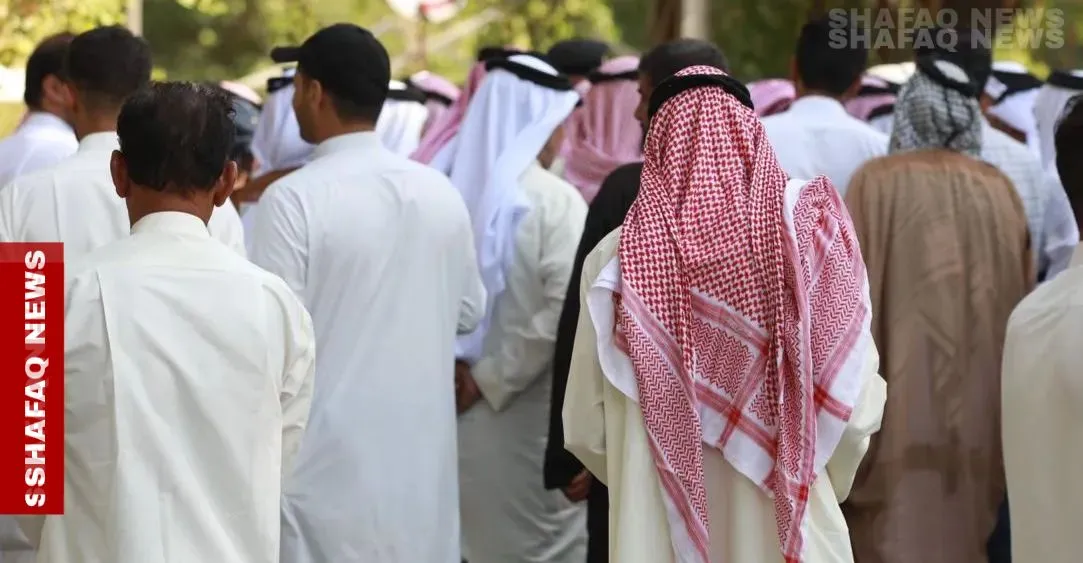
From Al-Anbar’s plains to Baghdad’s alleys and Basra’s waterfronts, clan gatherings now serve as centers of political outreach. For many Iraqis, these networks still provide what the state often fails to deliver: mediation, welfare, and belonging. Two decades after Saddam Hussein’s fall, Iraq’s paradox endures—modern governance remains inseparable from traditional loyalties. Elections may be digitized and legally regulated, yet they unfold within enduring hierarchies of kinship and personal allegiance.
From History to Political Instrument
The bond between lineage and authority dates back to Ottoman times, when tribal leaders were entrusted with local administration. Successive powers—from the British Mandate to the Baathist regime—preserved this structure, and Saddam Hussein later institutionalized it to consolidate control, particularly after the Iran–Iraq War.
Following the 2003 US invasion, these social frameworks—not state institutions—absorbed the shocks of transition. Today, roughly 200 major tribes and over 2,000 sub-clans remain central to Iraq’s social fabric, often transcending sectarian boundaries. As campaigning began on October 3, the Independent High Electoral Commission (IHEC) approved 7,768 candidates competing for 329 parliamentary seats. Yet the real contest unfolds beneath tribal tents, where elders’ endorsements frequently outweigh party manifestos.
Candidates pursue legitimacy through kinship rather than policy, as councils still mediate disputes, administer customary justice, and wield authority forged through decades of conflict. Governance by lineage has thus evolved into a political mechanism deeply embedded in Iraq’s patronage economy.
Read more: How does political conflict fuel tribal disputes in Iraq?
Power, Patronage, and Political Strategy
Tribal influence now lies at the intersection of finance and politics. Parties and armed factions exchange contracts, funds, and appointments for allegiance—turning endorsement into a transactional currency that blurs the line between representation and clientelism.
Speaking to Shafaq News, Sheikh Hamid al-Shawka, spokesman for the Al-Anbar Council of Elders, warned that “political parties have turned tribes into electoral battlegrounds,” adding that “the power of cash outweighs the freedom of choice.” He urged fellow sheikhs to shield their councils from “political infiltration” and reclaim their moral authority.
Such tensions are visible across several provinces, where rival clans within the same tribe back competing candidates, sometimes sparking local clashes. Elders in Al-Anbar and Saladin have intervened to prevent escalation.
Prime Minister Mohammed Shia al-Sudani has tried to balance these dynamics. During his June 2025 visit to Al-Anbar—a Sunni stronghold—he avoided partisan imagery, meeting independent tribal figures to project neutrality. Earlier, at February’s General Tribal Conference, he called tribes “a cornerstone of the national project,” urging them to support the rule of law and reconciliation. His Reconstruction and Development Alliance includes tribal leaders, reflecting a pragmatic bid for grassroots legitimacy.
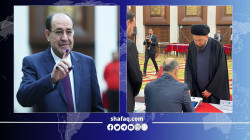
Former Prime Minister Nouri al-Maliki continues to rely on entrenched tribal blocs to reinforce his State of Law Coalition. At a rally in Babil last September, he invoked themes of order and continuity to appeal to conservative voters.
Sunni political leaders also lean heavily on tribal structures as engines of electoral mobilization—especially in Al-Anbar, Nineveh, Saladin, and Diyala, where tribal affiliations remain deeply rooted in social and political life. Figures like Khamis al-Khanjar, leader of the Sovereignty Alliance (Al-Siyada), and Mohammed al-Halbousi, former parliament speaker and head of the Taqadum alliance, have consistently courted tribal sheikhs through visits, public gatherings, and development pledges. While framed as consultations or outreach, such encounters are in practice vital components of electoral strategy.
Tribal leaders, in turn, act as power brokers capable of securing collective votes for specific candidates or lists—particularly in rural districts where clan loyalty outweighs party ideology. In recent election cycles, both al-Khanjar and al-Halbousi have strengthened their influence by cultivating ties with key tribal figures who can deliver turnout in strategically important constituencies. This has produced a transactional model in which promises of services, reconstruction projects, and government positions are exchanged for electoral endorsement.
Different methods, same reality: no Iraqi politician can afford to ignore tribal allegiance.
Read more: TRIBES, POLITICAL PARTIES, AND THE IRAQI ELECTIONS: A SHIFTING DYNAMIC
Reformist Voices and Analytical Insight
Amid this transactional landscape, some leaders call for a moral reset. Sheikh Shia Mohammed al-Bahadli, head of the Bahadil tribe, told Shafaq News that tribal power “can serve as a moral compass when directed toward capable and honest candidates,” stressing that “the tribe should support those who serve the nation, not those who exploit it.”
Analysts interpret these appeals through a structural lens. Political analyst Sabah al-Uqaili told Shafaq News that tribal power “dilutes the agency of individual voters,” noting that some sheikhs treat ballots as pre-secured, discouraging merit-based competition and sidelining qualified candidates lacking kinship backing. He emphasized that reform depends on civic awareness to “prioritize competence and integrity over lineage,” warning that until then, “parliament will mirror identity more than performance.”
Political researcher Ghalib al-Daami offered a complementary perspective, describing tribal and sectarian voting as “a mirror of Iraq’s enduring social composition.” He observed that “rarely does an Arab vote for a Kurd, or a Turkmen for an Arab,” reflecting identity politics that empower entrenched elites.
“Coalitions are formed along sectarian and ethnic lines, not reformist ones,” al-Daami said. “Power in Iraq is negotiated, not legislated.”
Read more: Financial muscle: How money shapes Iraq's upcoming elections
Beyond political patronage, economic insecurity sustains this system. Where the state fails to provide jobs or services, the tribe becomes the safety net, and voters view loyalty as an investment in survival.
Together, these perspectives show that while tribalism provides social stability, it also constrains democratic development. Tribes remain essential mediators where the state falters and, for many Iraqis, the most trusted institution in a system marred by corruption. Yet that trust allows elites to exploit tribal loyalties, perpetuating dependency over reform.
As al-Uqaili summarized, “The goal is not to dismantle the tribes, but to channel their influence toward civic responsibility rather than clientelism.”
Ultimately, the 2025 elections are not only about who governs next, but about how Iraq defines governance itself: as a republic of citizens or a federation of clans negotiating coexistence. The tribe will undoubtedly shape the outcome—but whether it advances or restrains Iraq’s democratic journey remains the country’s defining test.
Read more: Elections stir ghosts of Iraq’s sectarian past
Written and edited by Shafaq News staff.