Iraq’s elections under a shrinking lens: international oversight fades away


Shafaq News
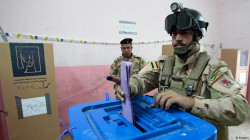
Days before Iraq holds its sixth parliamentary elections, a paradox looms over its democratic scene: the practice continues, but the watchers have vanished.
For the first time since 2003, Iraq is heading to the polls with the weakest international and regional monitoring presence — and without the hallmark European missions that once lent credibility and balance to the process.
In past elections, Iraq’s ballot boxes were observed by European, Arab, and UN missions.
The 2021 vote, for example, brought dozens of delegations, including the European Union Election Observation Mission (EU EOM), whose head, Viola von Cramon-Taubadel, stressed at the time that “the mission will observe, not intervene.”
That distinction remains central to Iraq’s current debate. Locally, “observation” (al-muraqaba) means following the process and reporting findings without the right to intervene, while “supervision” (al-riqaba) implies direct interference — a practice usually seen in states lacking effective institutions.
The same year, Iraq hosted a UN mission under Security Council Resolution 2576, mandating the United Nations Assistance Mission for Iraq (UNAMI) to “monitor election day with as broad a geographic coverage as possible.”
Together with Arab League observers and G7 backing, these efforts gave Iraq’s vote a rare international stamp of credibility.
That web has now unraveled.
Read more: Arab League to monitor Iraq’s elections
No EU observation mission will deploy for the 2025 elections, and no major Arab or international delegations have arrived. Monitoring is instead confined to a domestic coalition of three Iraqi NGOs — Ain, Tammuz, and Shams — representing the EU but operating with limited resources and visibility.
“The international representation is almost absent,” said Zainab Shebr, coordinator at the Information Center for Research and Development, a member of the coalition. “Our center was denied registration because it’s an Arab organization not licensed inside Iraq. Most Arab and international groups faced the same restriction.”
Shebr added that the EU has redirected attention and funding toward the crises in Syria and Gaza, “suspending support for many Iraq-based organizations. As a result, its presence here is no longer strong.”
Read more: Iraq’s 2025 Parliamentary Elections — What You Need to Know
A Narrowing Window
Under current rules, Iraq’s Independent High Electoral Commission (IHEC) requires every monitoring organization to obtain an updated registration certificate from the Non-Governmental Organizations Department — even if previously accredited.
IHEC official Hassan al-Zair told Shafaq News that the measure ensures “only active, legitimate organizations participate,” noting that “thousands of inactive NGOs have been suspended.”
He said international delegations from the UN, Arab League, and EU remain “in contact” with the Commission but acknowledged weak media coverage of their activities.
According to him, more than 300 international representatives and 1,000 local organizations have been accredited — a number still far below the engagement seen in 2021.
Critics argue that the rule, while valid on paper, effectively excludes most foreign missions, since the process can take months, and many international NGOs already hold embassy-issued credentials.
IHEC’s website still lists observer guidelines from 2021, with no new manual published for 2025 — despite major changes such as the abolition of indelible ink and a record 800 candidates disqualified, more than double 2021 levels.
Lost Continuity
Observers say Iraq’s monitoring has become episodic and reactive, limited mainly to election day, whereas international standards define observation as a continuous process that begins with drafting and amending election laws.
Former IHEC deputy chairman Saad al-Rawi said, “Monitoring exists in most Arab countries but rarely meets professional standards. In Tunisia, the election law was posted online for public comment. In Iraq, most parties don’t even have a copy of the law.”
He pointed to persistent confusion over Iraq’s framework: “Is the election law in force Law No. 12 of 2018 as amended, or Law No. 4 of 2023? Even this is unclear.”
Al-Rawi recalled that the EU mission’s 2021 report offered 21 recommendations across 90 pages, yet “no one knows whether any of them were implemented.”
This erosion of oversight coincides with a record 8,000 candidates competing for 329 parliamentary seats, including Iraq’s top political figures — all listed as candidate (1) on their ballots in Baghdad, a trend that has spread online under #واحد_بغداد (#One_Baghdad).
Yet the louder the campaign, the quieter the scrutiny.
The absence of impartial monitoring also intersects with Iraq’s restored Sainte-Laguë electoral system, which favors established blocs over independents.
Without outside observers, smaller candidates — already constrained by the system’s arithmetic — lose another safeguard for fairness.
Iraq’s 2025 elections may proceed peacefully and appear technically sound, as in 2021, but their legitimacy will rest on trust rather than testimony.
With minimal external oversight and outdated procedures, Iraq’s democracy risks becoming a performance seen only by those who stage it.
Read more: Iraq’s 2025 Elections: Revised law reshapes the path to power
Written and edited by Shafaq News staff.