Ancient Tar Springs of Hit: Iraq’s eternal flames still burn


Shafaq News
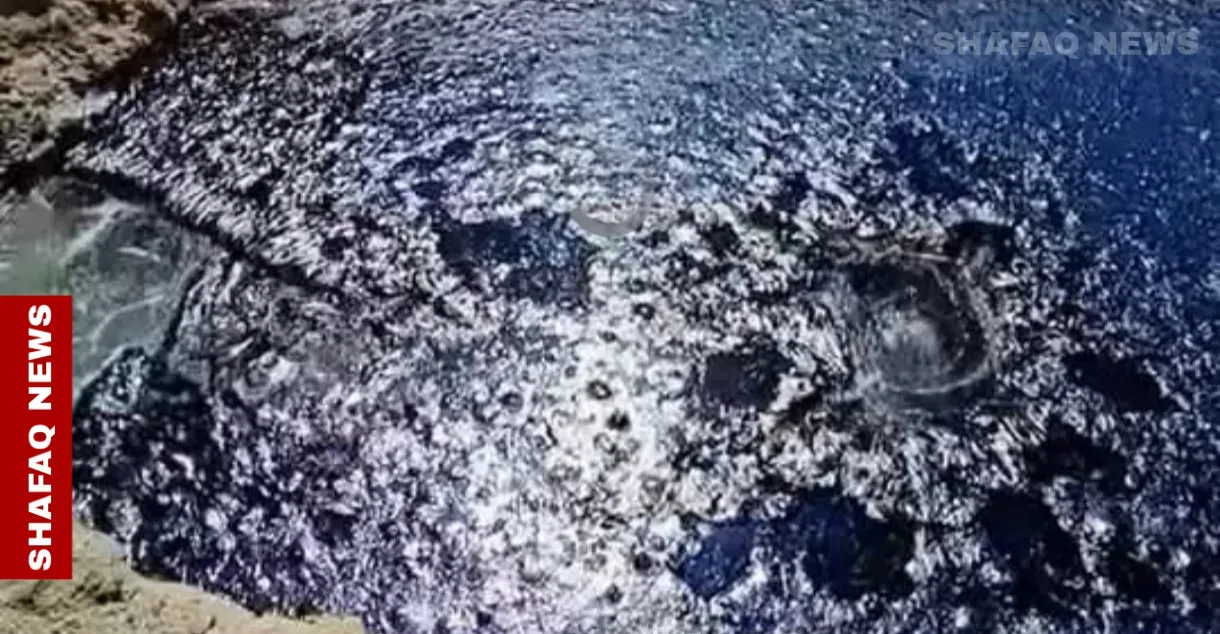
From the banks of the Euphrates in the city of Hit, black, viscous springs have bubbled for thousands of years — a rare natural phenomenon where earth, fire, and history converge.
Known locally as the “Tar Springs,” these vents continue to exhale smoke and heat, preserving the memory of ancient civilizations that once thrived on this land.
A Geological Marvel Beneath the Desert
Geologists describe Hit as one of the world’s rare sites where oil, gas, and groundwater intersect near the surface. “The tar emerges through rock fractures from deep hydrocarbon reservoirs,” Geologist Akram al-Rawi told Shafaq News, noting that the springs’ temperatures exceed 80°C and emit thick vapors at dawn.
Scientific studies by Iraq’s Geological Survey confirm that the region contains natural seeps enriched with hydrogen sulfide and trace radioactivity linked to oil-bearing formations. Researchers believe the phenomenon dates back millions of years, making it one of the oldest continuously active bitumen springs on Earth.
The Substance That Built Civilizations
Long before modern drilling, the tar of Hit built empires. French chemical engineer Jacques Connan traced the composition of ancient Mesopotamian bitumen to this region, showing that its use in construction and ritual extended across Sumer, Akkad, Babylon, and Assyria.
At the Ziggurat of Ur — one of Mesopotamia’s oldest temples — bitumen from Hit was used as waterproof mortar for baked bricks, and excavations revealed the same material sealing royal tombs and mosaic inlays. Reed boats coated in tar once sailed the Euphrates between Hit and Nippur, carrying goods and pilgrims.
Greek historian Herodotus recorded the town of Is (ancient Hit) as the source of asphalt used in building Babylon’s walls. Tablets even list “tar shipments from the Euphrates region” among the empire’s state-regulated trades — alongside salt and sulfur.
Historians trace the modern name “Dhi Qar” (the Iraqi province) to the Akkadian phrase for “the land of tar,” underscoring its role in the ancient economy. “Hit’s history predates writing itself,” Historian Mahmoud Khalil al-Hiti told Shafaq. “It was the heart of early trade routes, where natural wealth met human ingenuity.”
A Living Flame Through the Ages
Local elder Abdullah al-Hiti said the springs “have never stopped flowing — summer or winter,” calling them a living emblem of the city. “Our ancestors used the tar to seal homes and waterproof boats. It has protected our houses for generations."
Retired teacher Hassan Zidan added that small amounts are still collected for repairs. “The tar is part of our living heritage,” he told our agency. “Its story has been handed down from father to son for centuries.”
Calls for Protection and Recognition
Environmental expert Ahmed Awad al-Issawi described the Hit tar springs as “a geological treasure that deserves international heritage status," warning that the site “lacks any formal protection” and faces pollution from nearby activity.
Additionally, studies published on Save the Tigris note that Iraq’s natural heritage sites — including Hit — are endangered by neglect and urban encroachment. Al-Issawi urged Iraq’s Ministries of Environment, Tourism, and Antiquities to designate the site as a national geopark and develop it as an eco-tourism and educational destination.
Local youth groups have begun organizing volunteer heritage tours to revive awareness of Hit’s history. “There’s a growing sense of pride,” historian Qassem al-Hamdani explained. “If supported, Hit could become a showcase of Iraq’s geological and cultural continuity.”
"Hit is an open-air geological museum where fire, water, and oil meet,” geologist al-Rawi stressed, calling for its formal registration as a national heritage site.
For the people of Hit, these ever-burning springs are more than a geological wonder — they are witnesses to Iraq’s deep past. As locals often say, “Here, where fire met water, civilization began — and the flame still tells the tale.”
Written and edited by Shafaq News staff.