Al-Sadr shockwave: New uncertainty ahead of Iraq’s parliamentary poll


Shafaq News
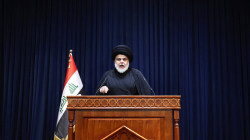
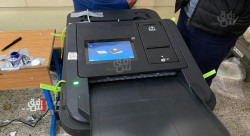
Iraq’s political landscape entered a new phase of uncertainty following Muqtada al-Sadr’s renewed call to boycott the upcoming parliamentary elections, scheduled for November 11, 2025 — a move that has once again unsettled alliances and revived questions over voter turnout and legitimacy.
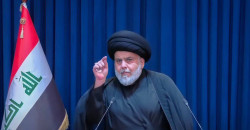
Al-Sadr, leader of the Patriotic Shiite Movement (PSM), reiterated his decision earlier this week, arguing that elections “will not bring genuine change” and that “one cannot aid the corrupt in their corruption.” His remarks, in his words, echoed a fatwa by his late father, Grand Ayatollah Mohammad Mohammad Sadiq al-Sadr, reaffirmed his long-standing disillusionment with Iraq’s political class.
A Boycott With Broader Intent
For observers close to the movement, al-Sadr’s stance is less a tactical withdrawal and more a strategic statement.
Manaf al-Moussawi, head of the Baghdad Center for Strategic Studies and a researcher known for his proximity to the PSM, explains that the boycott is not confined to one region or community; “it represents a comprehensive rejection of a political process that has failed to produce reform,” noting that the decision stems from repeated attempts—both domestic and foreign—to derail al-Sadr’s reformist project.
According to al-Musawi, “the next elections would merely reproduce the same elite,” making the boycott a form of political pressure aimed at forcing systemic change rather than a retreat from the arena.
Still, he anticipates limited shifts in parliamentary balance, arguing that the absence of the PSM bloc may “undermine transparency and credibility, but the overall sectarian distribution of seats will remain largely unchanged,” and downplaying speculation that Sunni representation could significantly increase.
Read more: Iraq's political enigma: The unpredictable maneuvers of Muqtada al-Sadr
Voter Turnout At Stake
Analyst Mujashaa al-Tamimi considers the PSM boycott a potential turning point in public engagement. He expects a visible decline in participation, especially in provinces where the Al-Sadr wields influence—Najaf, Maysan, Dhi Qar, and Baghdad among them. “This will expose the depth of alienation between voters and the political class,” he remarks, adding that “elections dominated by patronage and money cannot restore public trust.”
Yet al-Tamimi does not view the withdrawal as permanent, pointing out that the movement’s absence from the ballot box remains “a protest tool—one that could reshape future power dynamics if electoral rules are reformed.”
Shifting Ground And New Players
Political researcher Aed al-Hilali interprets the call for boycott as a disruptive force that may redraw Iraq’s electoral map, particularly in mixed provinces like Baghdad, Diyala, Babil, and Kirkuk. The PSM base, he notes, “is one of the most disciplined in the country,” making their withdrawal especially consequential.
“Lower turnout could erode the traditional balance among blocs,” al-Hilali explains. “Smaller or independent groups might seize unexpected gains as votes scatter.” But, he warns, “al-Sadr’s nonparticipation does not equal disengagement. He still holds powerful levers of social and grassroots influence that could be activated after the elections, potentially leading to a more fragmented and unstable parliament.”
Unease Within The Coordination Framework
Within the ruling Shiite alliance, anxiety is growing. Lawmaker Mukhtar al-Mousawi from the Fatah Alliance, led by Hadi Al-Ameri, acknowledges that Al-Sadr’s absence “will have a one-hundred-percent impact on Coordination Framework parties,” particularly in Baghdad’s Al-Sadr City, Shaab, and Kadhimiya districts, as well as across the southern provinces.
He warns that the resulting imbalance could weaken Shiite representation within Iraq’s informal tripartite system. “If the turnout gap widens, the political equilibrium between Shiites, Sunnis, and Kurds will be disrupted, risking instability across the governing structure.”
Sunni Calculations
Among Sunni politicians, there is little expectation of direct benefit, as Mohammad Qutaiba al-Bayati, a member of parliament from the Taqaddum Party led by former Speaker Mohammad al-Halbousi, sees, dismissing the notion that a PSM withdrawal would translate into Sunni gains. “The PSM electorate is ideological and cohesive…Their absence diminishes the overall legitimacy of the process, not just one component’s share.”
Political researcher Abdul-Qader al-Nayel suggested that the boycott “will elevate abstention rates across all communities.”
Under Iraq’s quota-based system, established since the early Governing Council, seat distribution is largely pre-set—around 90 seats and six ministries for Sunnis regardless of turnout. “The idea that Sunni blocs could fill the Sadrist vacuum is misleading,” al-Nayel concludes. “In fact, the likely beneficiaries will be armed or pro-Framework lists that mobilize through organized patronage networks.”
Read more: Iraq's political crossroads: Al-Sadr's boycott, Al-Hakim's mediation
A Test of Legitimacy and Leverage
The coming months will test whether al-Sadr’s strategy of abstention translates into meaningful leverage or further marginalization. For now, his call resonates beyond his movement, reflecting widespread fatigue with a political order many Iraqis see as resistant to reform.
While the Coordination Framework may gain short-term electoral advantage, the analysts caution that legitimacy—not seat count—will determine Iraq’s next phase. If the boycott succeeds in depressing turnout, the next parliament could emerge weaker, less representative, and more fragmented than ever, deepening the very crisis al-Sadr says he sought to expose.
Written and edited by Shafaq News staff.