$10K per kilo: The new fee killing Iraq’s gold trade


Shafaq News
A quiet shift in how Iraqi authorities calculate customs fees on imported gold has recently disrupted the country’s gold market, trapped shipments at airports, and pushed domestic prices to record levels.
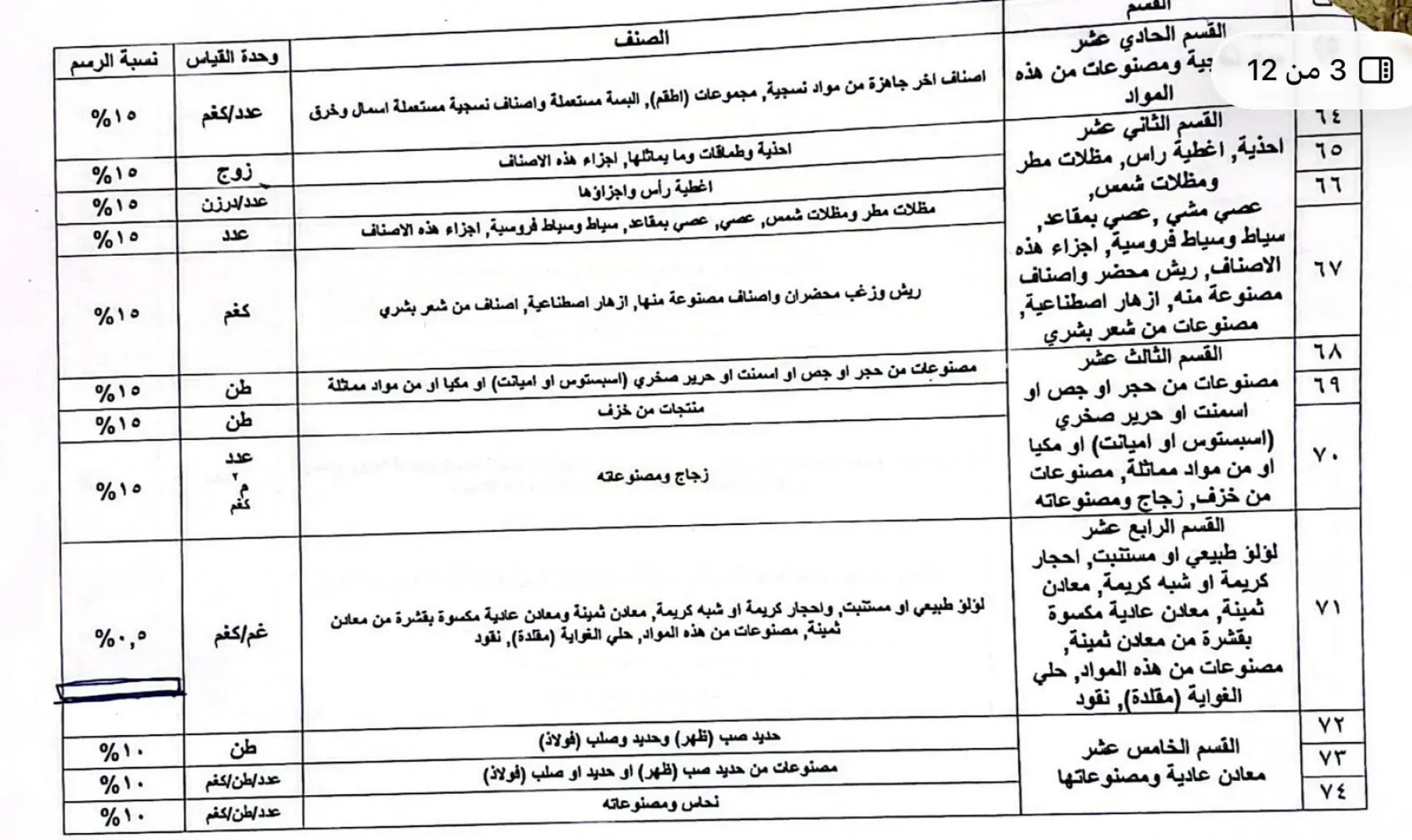
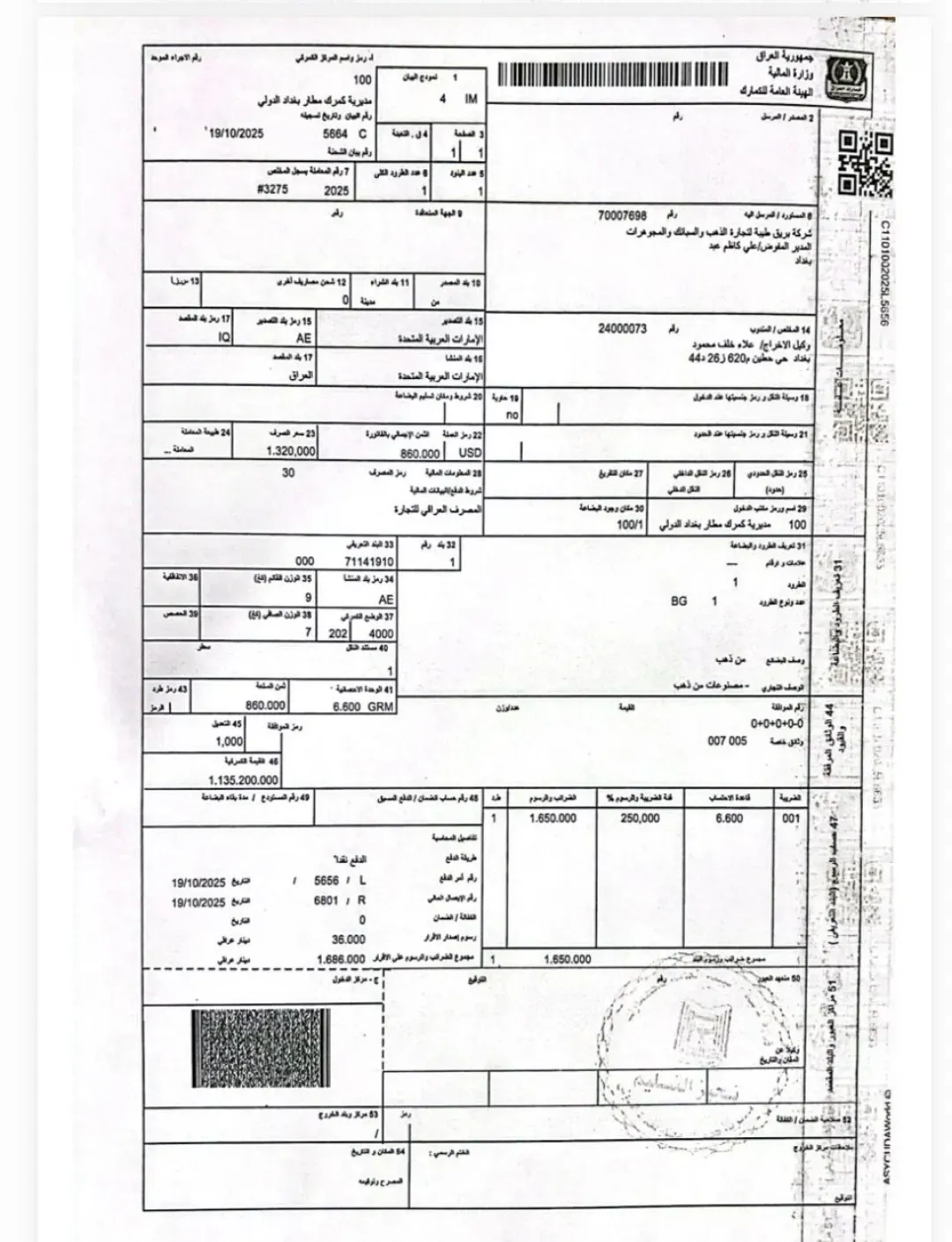
At the center of the disruption is a Ministry of Finance circular issued in November 2025, replacing a long-standing five-per-thousand customs fee with a 5% levy on the value of imported gold. Traders interviewed by Shafaq News described the change as multiplying costs more than twentyfold, effectively halting imports at Iraq’s airports since January 1, 2026, and creating a sharp gap between government assurances of “no new taxes” and the reality on the ground.
The timing of this shift coincides with Iraq facing a widening fiscal deficit, estimated at around 10 trillion dinars ($6.85B) and projected to reach nearly 15 trillion dinars ($10.27B) by the end of the year. Analysts warn this could strain the government’s ability to meet salary and essential spending obligations, making the gold market crisis not only a commercial issue but also a symptom of deeper economic fragility.
Trade Hits Zero
According to the 2025 Iraqi gold traders syndicate report, the country typically receives roughly 50–70 kilograms of gold per month through official channels. Ali Al-Akili, an Iraqi gold trader, explained that the new fee calculation —5% of the value of the gold rather than the previous flat rate— has effectively stopped imports.
“Gold is not a consumer commodity; it is a monetary metal with a globally fixed price,” Al-Akili told Shafaq News. “The international ounce price is not locally determined.”
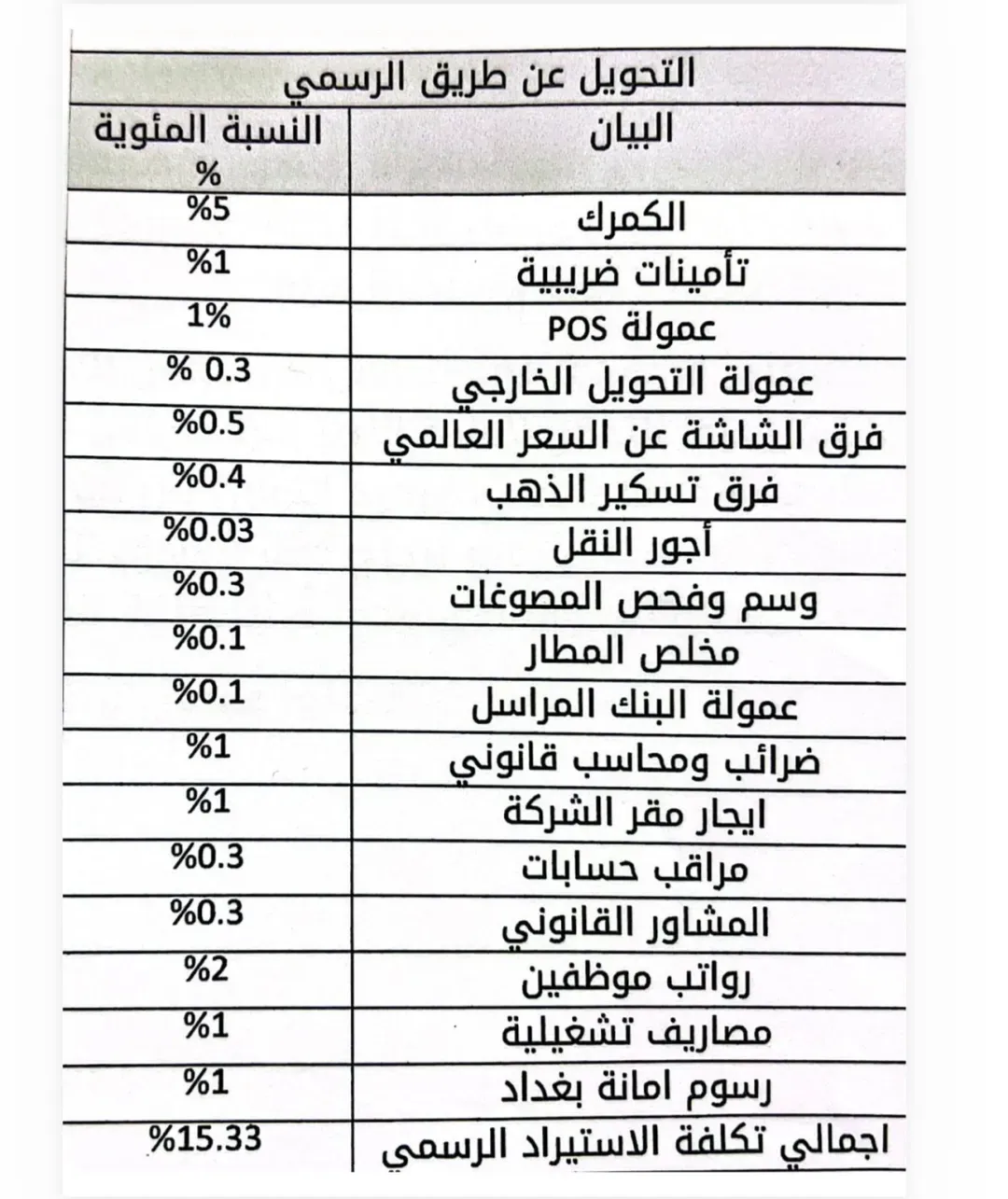
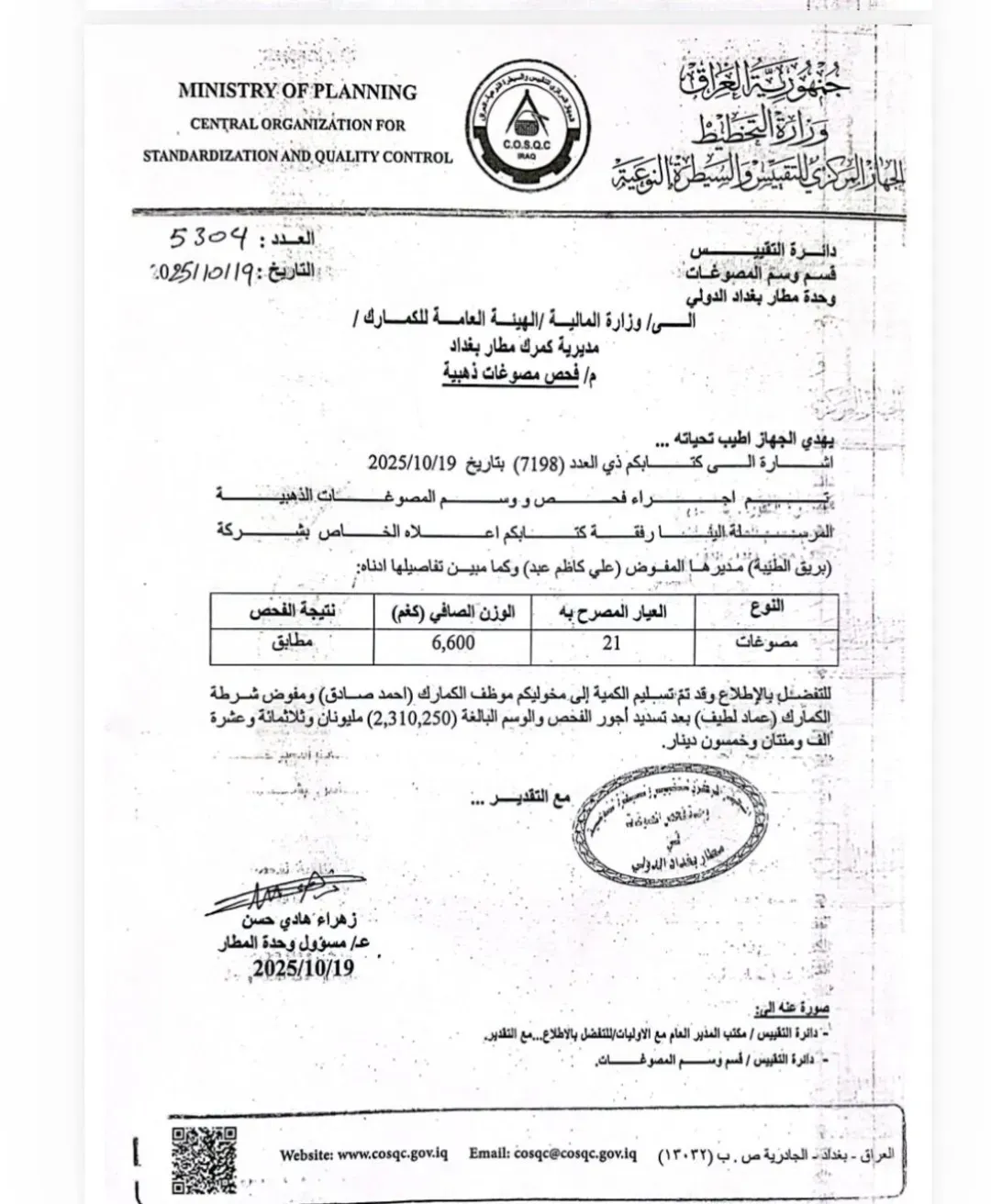
Since 2010, traders operated under a mechanism based on a rate of five per thousand, not 5 percent. Under an arrangement introduced with the launch of the government platform in 2023, authorities imposed a flat fee of 250,000 dinars per kilogram ($171), plus a similar amount for evaluation and quality control, bringing total charges to about 500,000–600,000 dinars per kilogram ($342–$411). Traders accepted that structure without objection.
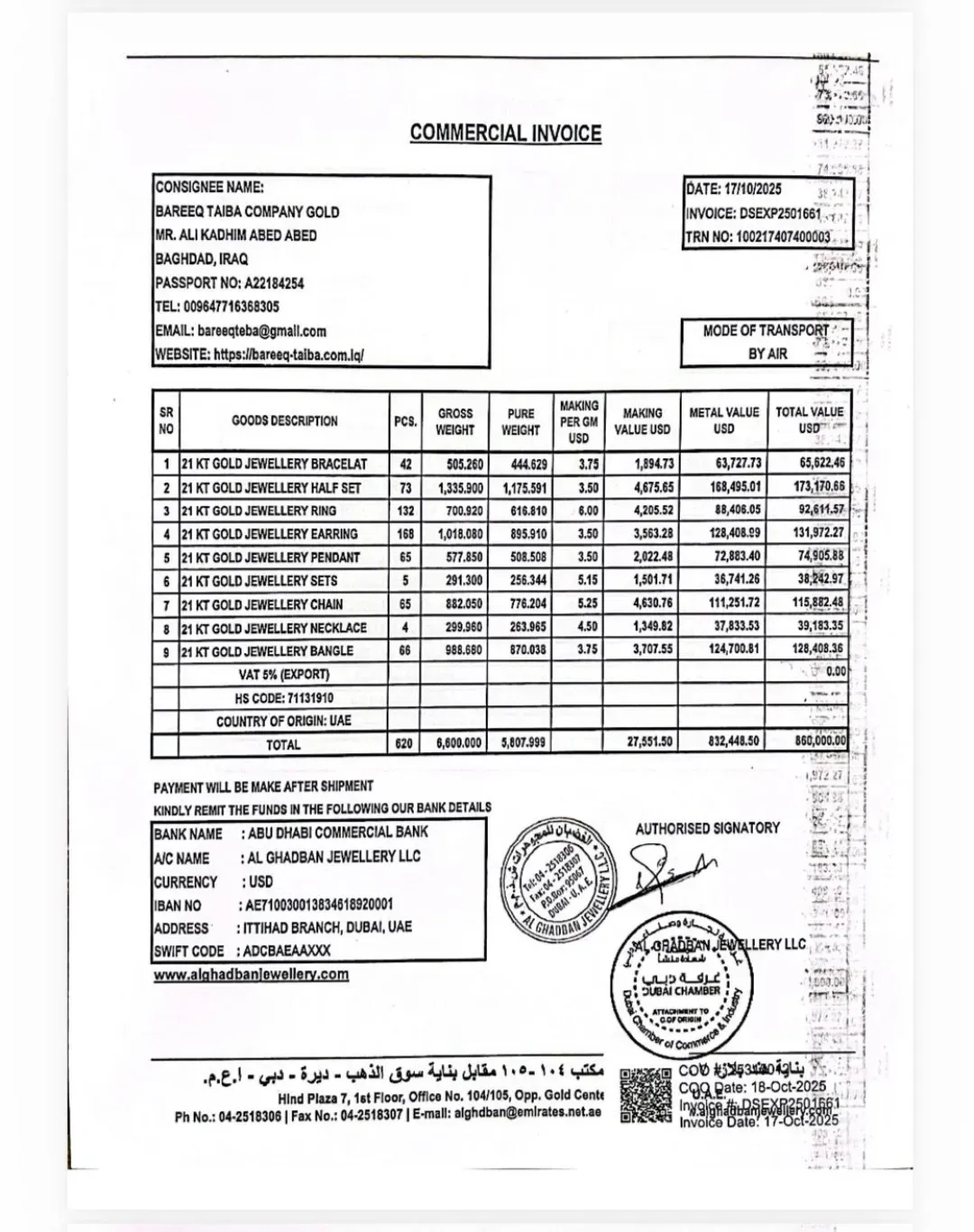
Yet, the new calculation produced a sharply different result. At current prices, 5% of a kilogram’s value amounts to about 12.5 million dinars ($8,561) in customs alone. After transport, clearance, and other costs, total charges reach about 15 million dinars per kilogram ($10,274) —more than twenty times the previous amount.
Al-Akili noted that shipments have now been stuck at Baghdad International Airport for more than 18 days because of unclear and conflicting customs instructions and differing interpretations among relevant authorities. He even described the current situation as one of discretionary and unstable decisions, with no definitive written framework explaining how the new tariff is to be applied, leaving traders in uncertainty and exposed to potential financial losses.
This disruption, he added, represents a potential loss of government revenue of up to 1 billion dinars monthly ($685,000), based on the new fee calculation.
Read more: Delayed reform or fiscal shock? Iraq’s tax measures test state capacity
Customs in Chaos
As imports stalled, domestic gold prices increased sharply. On January 20, the 21-carat gold surpassed 1 million dinars (≈ $685) for the first time in Baghdad and Erbil, the capital of the Kurdistan Region.
The domestic spike coincided with global gold trends, which recently reached $4,600 an ounce for the first time, driven by geopolitical uncertainty and expectations of US interest rate cuts. Spot gold rose about 1.5% to $4,478.79 per ounce by the end of last week, after touching $4,600.33 earlier in the session, while US gold futures for February delivery advanced 2% to $4,591.10 per ounce, according to Reuters.
Al-Akili projected that the higher fees will translate directly into retail price increases of 150,000–200,000 dinars per mithqal ($103–$137), potentially affecting tens of thousands of buyers and pushing the market toward a steep decline due to weak purchasing power.
Shattering Records
Speaking to Shafaq News, Prime Minister’s adviser Mudhir Mohammed Saleh framed the issue as more than a market problem, stressing that integrating gold into Iraq’s economy requires a comprehensive policy framework distinguishing between gold as a store of value and as a commercial commodity.
“Gold should be managed through selective customs conditions aligned with Iraq’s gold-management policy,” Saleh explained. “Such measures should not be considered tools for fiscal collection but as a way to regulate demand and protect national wealth.”
He also warned against allowing gold to become a channel for draining a scarce national resource, noting that gold primarily concerns wealthier segments of society, meaning that regulating it does not directly affect the consumer price basket, and therefore remains relatively neutral in terms of overall price stability.
Read more: Deficit soars, projects freeze: Iraq heads into 2026 with NO BUDGET
Stagnant Reserves
Despite the domestic disruption, Iraq’s gold reserves remain unchanged. A 2025 report from the World Gold Council noted that the country maintained more than 170 tons of gold, ranking 29th globally and fourth in the Arab world after Saudi Arabia, Lebanon, and Algeria.
Data further indicated that Iraq purchased more than 8 tons of gold in 2025, including 8.2 tons by August, lifting total reserves to 170.9 tons. Monthly purchases included one ton in March, 1.6 tons in June, 3.1 tons in July, and 2.5 tons in August.
While reserves remain secure, Saleh cautioned that revenue and confidence risks could increase if imports continue to be blocked and prices remain unstable.
Paperless Mandates
Economist Nabil Al-Tamimi analyzed the broader economic implications, arguing that the new tariffs may fail to generate the expected revenue without full control over border crossings and effective anti-smuggling measures.
“Restrictions could divert a measurable portion of gold imports into smuggling channels,” Al-Tamimi noted, “potentially reducing government revenue by hundreds of millions of dinars monthly (hundreds of thousands of dollars).”
Adding that gold is a key asset underpinning confidence in the Iraqi dinar, he stressed that tightening access, alongside similar restrictions on dollars, could weaken trust in the currency, further highlighting that confidence depends on the availability of backing in the form of monetary assets or precious metals.
Despite the scale of disruption, Al-Tamimi reported that no publicly available legal text defines the new tariff calculation, the authority behind it, or any mechanism for appeal.
It remains unclear which official inside the Finance Ministry authorized the change, whether the cabinet approved it, or whether parliament was notified. No explanation has been provided for why a system in place since 2010 was altered, or how authorities plan to prevent a prolonged shutdown of imports.
For now, the gold market remains largely frozen, shipments remain trapped, and prices continue to rise. At stake is not only the future of Iraq’s gold trade but broader confidence in the country’s economic management amid fiscal stress.
Read more: Delayed reform or fiscal shock? Iraq’s tax measures test state capacity
Written and edited by Shafaq News staff.