Kurdish Aspirations: From statehood dreams to the pursuit of peace


Shafaq News/ As geopolitical dynamics continue to shift across the Middle East, the Kurdish question is undergoing a notable transformation. Once defined by dreams of independence, the Kurdish narrative is increasingly centered on securing peace and preserving hard-won autonomy.
A recent comprehensive report published by The National under the title “The future of the Kurds: from dreams of independence to settling for peace” offers a timely and in-depth reflection on this shift.
Across Iraq, Syria, Turkiye, and Iran — where Kurdish populations are spread — aspirations for a sovereign Kurdish state have often clashed with complex regional realities.
But today, as The National notes, “the Kurdish dream of independence [has] transform[ed] into one of peace.” This recalibration is rooted not in resignation but in pragmatism, driven by lessons learned from a century marked by conflict and fragmentation.
In Iraq’s Kurdistan Region, where Kurds have enjoyed a level of autonomy unmatched elsewhere, leaders are increasingly positioning themselves as advocates for regional stability.
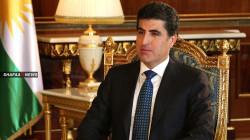
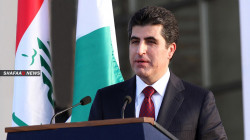
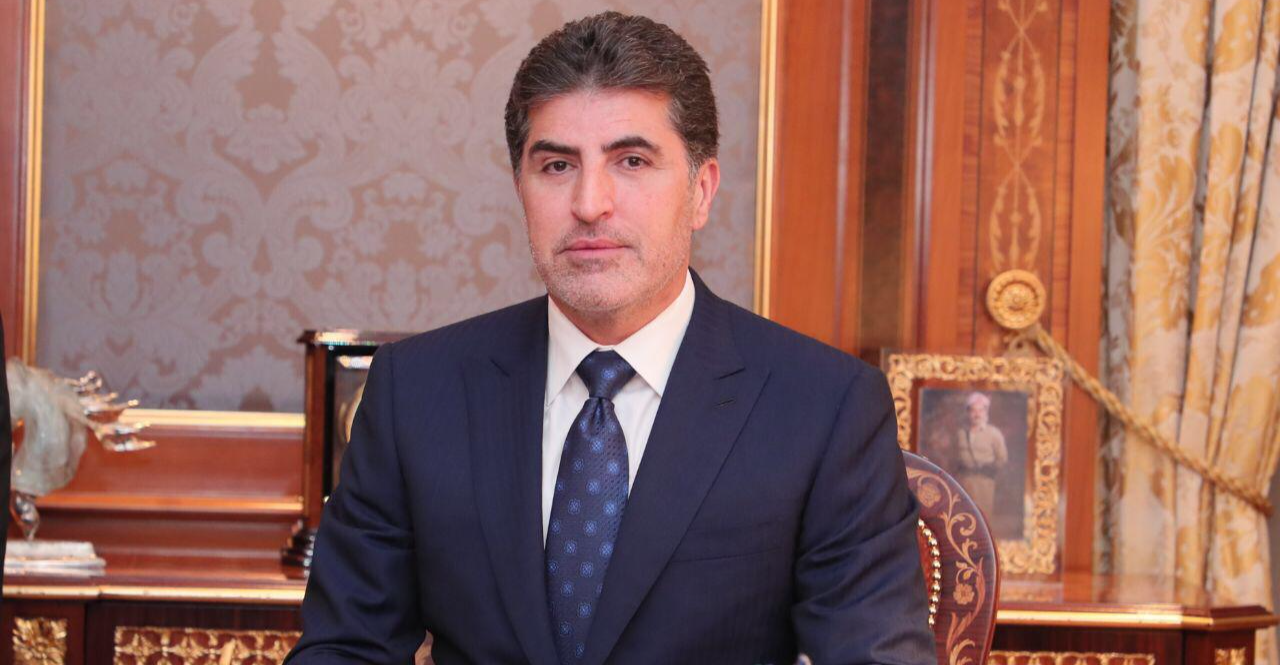
Speaking at the recent Sulaimani Forum, Kurdish President Nechirvan Barzani encapsulated this shift: “The power of peace is greater than the power of all wars.” The National observes that this sentiment is now broadly shared across the Kurdish political spectrum — a marked contrast from the more assertive rhetoric that preceded the ill-fated 2017 independence referendum.
That referendum, once seen as a potential watershed moment, ultimately triggered a harsh regional backlash and brought a sobering dose of reality. Since then, Baghdad has gradually reasserted authority through legal and political channels, eroding aspects of the Kurdistan Region’s autonomy.
As The National rightly points out, a series of supreme court rulings have tilted the balance of power away from Erbil, while ongoing internal divisions between the Kurdistan Democratic Party (KDP) and the Patriotic Union of Kurdistan (PUK) have further complicated the political landscape.
Yet Kurdish leaders remain undeterred in their commitment to play a constructive role. Prime Minister Masrour Barzani emphasized this vision, telling The National, “If we can play an effective role in mediating between the parties involved in regional hostilities and improving the security of the region, that would be a positive contribution.”
President Nechirvan Barzani reinforced this outlook, asserting that “the Kurds and the people of Kurdistan are inherently peaceful… whenever there has been a hint of peace, the people of Kurdistan embraced it with optimism.”
The shift in tone and strategy is also linked to recent events in neighboring Syria. Following the collapse of the Al-Assad regime, the newly formed government in Damascus has clashed with the de facto autonomy long maintained by Kurdish groups in the northeast.
The National highlights how Iraqi Kurds have expressed solidarity with their Syrian counterparts, offering political support and practical guidance. “Our brothers and sisters in Syria can benefit from the Kurdistan Region’s experiment,” Prime Minister Barzani said, pointing to the possibility of a decentralized governance model that could help preserve Kurdish rights without demanding outright independence.
The idea of decentralization is now gaining traction as a realistic and peaceful path forward. Ilham Ahmed, co-chair of the Syrian Democratic Council (SDC), told The National that Syrian Kurds are not seeking statehood but rather constitutional guarantees for autonomy.
“What we are proposing now… is a model to be used in other areas,” she said, citing regions like Deraa, Idlib, and Suwayda as examples where localized self-administration has already taken root. She added that this proposal could offer a stable framework for post-conflict Syria, as long as it includes the rights of all communities.
This renewed Kurdish approach is not limited to Syria. In Turkiye, a glimmer of hope emerged earlier this year when imprisoned PKK leader Abdullah Ocalan called for the group to disarm and disband. The National reports that this unprecedented move raised “hopes of a renewed peace process” in a conflict that has cost more than 40,000 lives. Kurdish leaders in Iraq welcomed the announcement.
“Developments in Turkey aimed at fostering peace represent a significant historical opportunity. We wholeheartedly endorse and support these efforts,” President Barzani declared.
Prime Minister Barzani echoed this sentiment, emphasizing that peace cannot be achieved unilaterally. He acknowledged the involvement of nationalist parties in Turkiye and stressed that dialogue must be mutual.
Despite the announcement of a ceasefire, the framework for a lasting peace has yet to be defined. Still, the gesture was widely interpreted as a signal that regional actors — including Kurdish groups — are ready to pursue new strategies grounded in diplomacy rather than armed struggle.
Even as Kurds across the region pivot toward peace, internal challenges remain. In Iraq, the long-delayed parliamentary elections held in October failed to produce a government. As The National points out, “parties have yet to reach a consensus,” raising concerns that the stalemate could drag on until Iraq’s general elections in November. While both the KDP and PUK participated in a high-level meeting during the Sulaimani Forum, no major breakthroughs were announced.
Despite these complications, Kurdish leaders continue to stress the importance of unity — not just within the Kurdistan Region but across the broader Kurdish diaspora. “The solution of the Kurdish issue in Syria is not easy,” admitted senior KDP official Hoshyar Zebari, “but the Kurdistan Region [of Iraq] is ready to provide support in this regard.”
His comment, quoted by The National, reflects a growing consensus that Kurdish interests are best served through cooperation and careful statecraft rather than unilateral moves.
This emphasis on unity and peace is not merely rhetorical. As The National underscores, the Kurdish Region has become a model of governance and coexistence. “We are one of the major partners in the Middle East,” said Rebar Ahmed, KRG Interior Minister, adding that Kurds have a duty to safeguard the rights of all communities. “From the Kurdish perspective, we have to take care of the future of all the constituents here in the Middle East,” he said.
In the background of all these developments lies the memory of a painful past: decades of persecution, cultural erasure, and military conflict. President Barzani, in remarks cited by The National, warned that “the last century has unequivocally shown that the disregard and rejection of the rights of the Kurds and the people of Kurdistan have led to ongoing conflict, chaos, destruction, suffering, and stagnation in the region.”
Today, with that history in mind, Kurdish leaders are turning the page — not by abandoning their identity or rights, but by recalibrating their goals in light of new realities. As The National insightfully concludes, the Kurdish focus is shifting from secession to stability, from maximalist demands to sustainable solutions. And in doing so, the Kurds may be charting a new course not just for themselves, but for the region as a whole.