Storks return to Kirkuk skies after decades-long absence


Shafaq News- Kirkuk
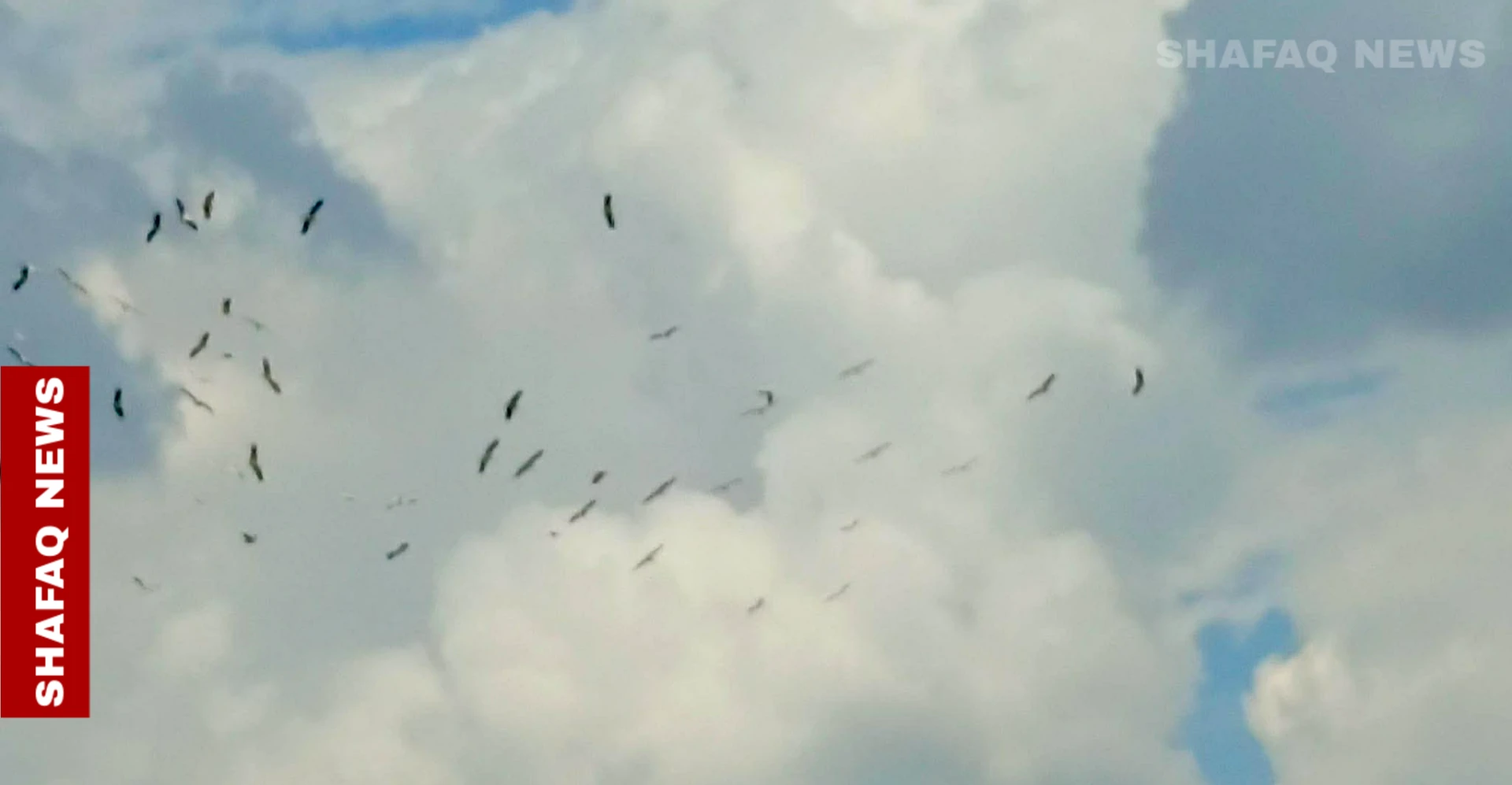
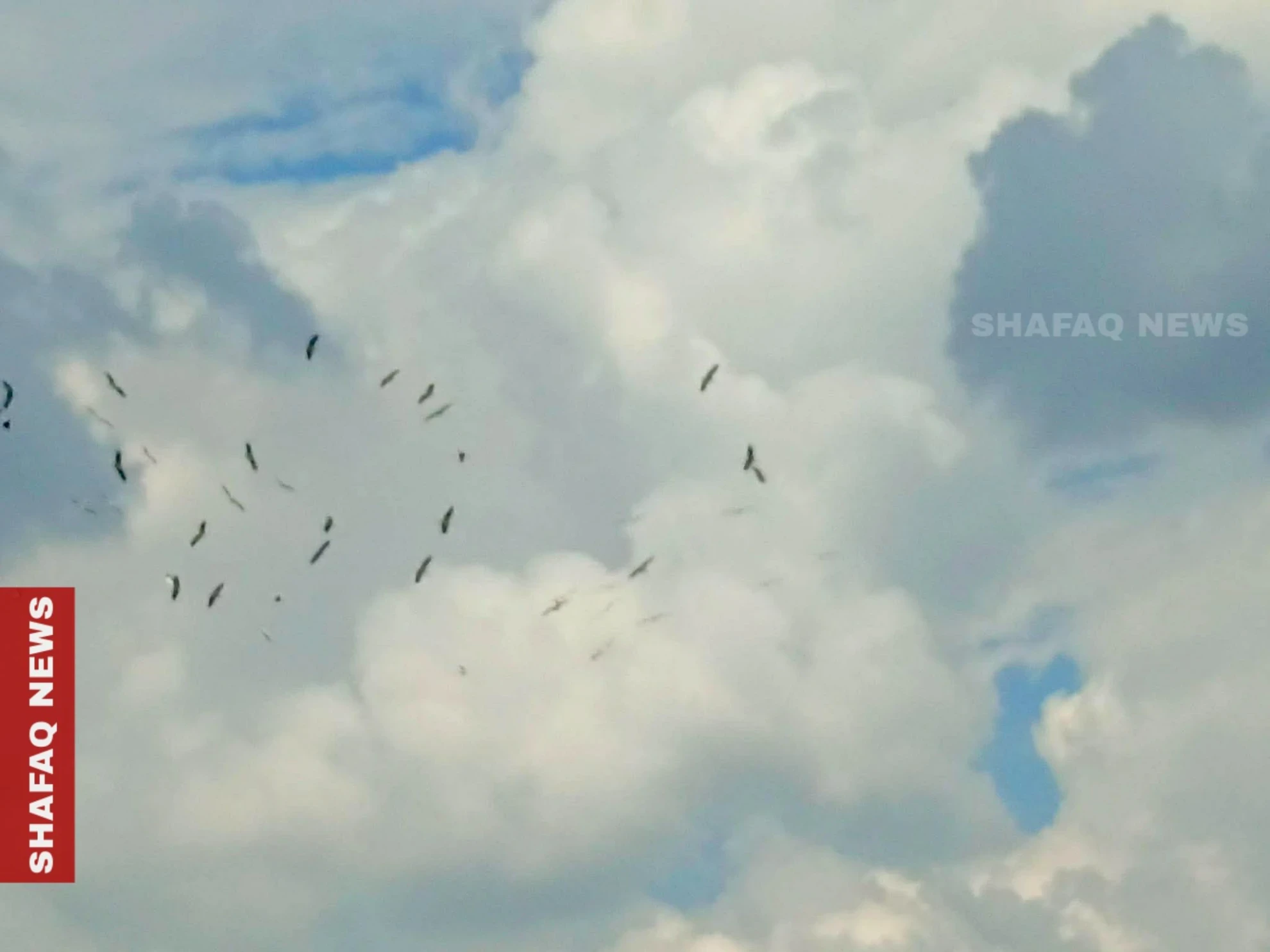
Flocks of storks have reappeared in the skies of Kirkuk province after an absence of more than five decades, drawing widespread attention from residents.
The stork is a large migratory bird known for its long legs, elongated body, and sharp beak used for catching food. It is typically white with black wings, giving it a distinctive appearance in flight. These birds usually inhabit open areas such as agricultural plains, wetlands, and riverbanks, where water and food are readily available. Their diet mainly consists of insects, frogs, small fish, and occasionally reptiles.
Storks are known for their long seasonal migrations, traveling across continents in search of suitable climates and food sources. They often pass through the Middle East during journeys between Europe and Africa, using air currents to glide over long distances with minimal effort. Their presence is widely considered an important environmental indicator, often signaling the availability of water and food resources, and reflecting improved ecological conditions.
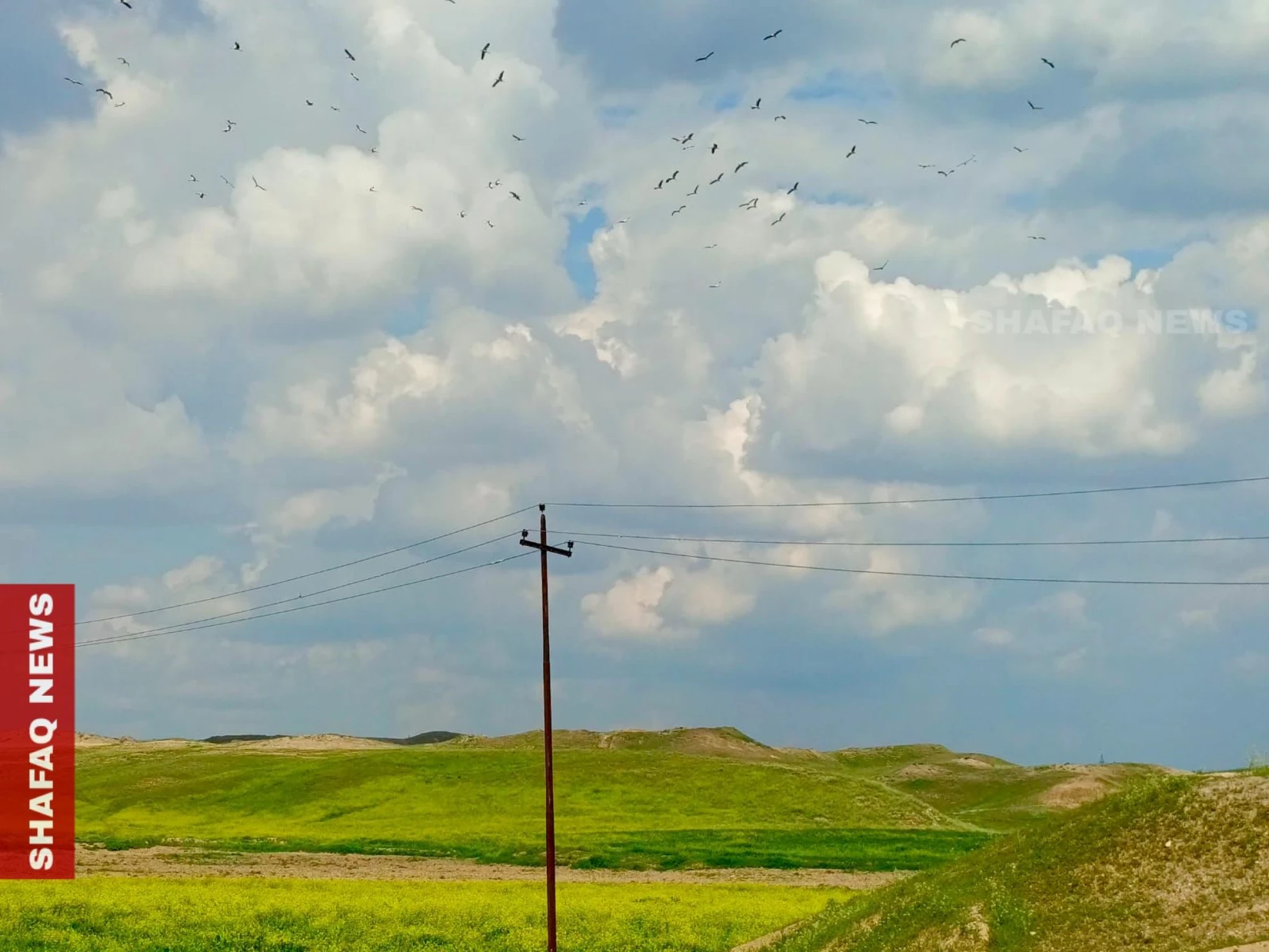
In southern Kirkuk, particularly in the Lilan subdistrict, dozens of storks were seen flying at low altitudes before landing in agricultural fields, a phenomenon not observed by residents for decades.
Ali Abbas, a resident of Lilan, told Shafaq News that the large number of storks came as a surprise. “We have not seen them for a long time, and now they are flying in large groups as if they have returned to settle again,” he said, adding that many residents went out to observe the birds and take photos, with some viewing their return as a sign of improving environmental conditions.
Lilan district director Mohammed Wais said the return of the birds reflects positive changes, particularly in terms of water availability and suitable open spaces that support their habitat and reproduction.
He noted that local authorities are closely monitoring the phenomenon, as it may indicate changes in migration patterns or improvements in the ecosystem after years of decline. He added that Lilan and the surrounding areas have experienced relative stability, encouraging the return of wildlife and migratory birds. A similar scene was reported in Tuz Khurmatu, where resident Youssef Ali Akbar said large flocks of storks were seen flying over homes and fields, something not witnessed for many years.
He said the sight revived memories of the region’s natural landscape, where such birds were once common before gradually disappearing due to security conditions and climate change.
Environmental specialist Ahmed Amer told Shafaq News that the return of storks may be linked to several factors, including relative environmental improvement, increased food availability, and shifts in global migration routes influenced by climate change. He explained that storks are sensitive to environmental changes, and their return may reflect a safer and more stable habitat compared to previous years. He added that the presence of shallow water and abundant insects in parts of Kirkuk may be contributing factors.
He also noted that Iraq was once an important station for migratory birds, but wars, desertification, and shrinking water bodies led to the disappearance of many species. The return of storks, he said, could signal a gradual comeback of other species if environmental conditions continue to improve.
Observers say the phenomenon goes beyond its visual appeal, pointing to possible shifts in ecological balance and highlighting the need for measures to protect wildlife and preserve biodiversity in Iraq.