HRW slams Iraq’s new Jaafari law as ‘discriminatory against women’


Shafaq News – Baghdad
On Wednesday, Human Rights Watch urged Iraq to repeal its newly adopted Jaafari Personal Status Code, calling it “deeply discriminatory” and a legal framework that reduces women to second-class citizens.
The law, approved by Iraq’s parliament on August 27, was drafted by Shiite religious authorities following amendments to the country’s Personal Status Law in February 2025. It allows couples to choose whether their marriage, divorce, child custody, and inheritance are governed by the 1959 Personal Status Law or by Jaafari jurisprudence, which reflects Shiite Islamic legal principles.
Read more: Quotas without a cause: Iraqi Women counted, rights discounted
In its report, HRW explained that the code grants men broad privileges in marriage, divorce, and guardianship, while curbing women’s rights to custody and inheritance. “The Jaafari code entrenches gender inequality and strips women and girls of their autonomy, handing control of their lives to men,” stated Sarah Sanbar, Iraq researcher at Human Rights Watch.
Read more: Iraq's Women: Fighting for rights in a patriarchal stronghold
The organization cited multiple clauses it says undermine hard-won protections, including provisions allowing a husband to shift his marriage to Jaafari jurisdiction without his wife’s consent, divorce her unilaterally without notification, and automatically assume custody of children above age seven—regardless of the child’s best interest.
HRW quoted an Iraqi judge in Baghdad who said the code violates key constitutional principles, including Article 14, which guarantees equality before the law, and Article 88, which ensures judicial independence. “Most Iraqi laws are built on the idea of citizenship,” the judge said. “The new code replaces that with sectarian identity.”
According to the report, under the Jaafari code, Shiite wives are denied inheritance rights to property and assets—entitlements still protected for Sunni wives under the existing civil framework. The judge described the code as “patriarchal, sectarian, and clearly skewed in favor of male dominance.”
When the draft amendments first reached parliament in August 2024, they triggered nationwide protests and condemnation from women’s rights groups, forcing lawmakers to drop several controversial clauses, including one that would have lowered the legal marriage age for girls to nine.
Read more: Iraq’s Controversial Personal Status Law: The future of girls at a crossroads
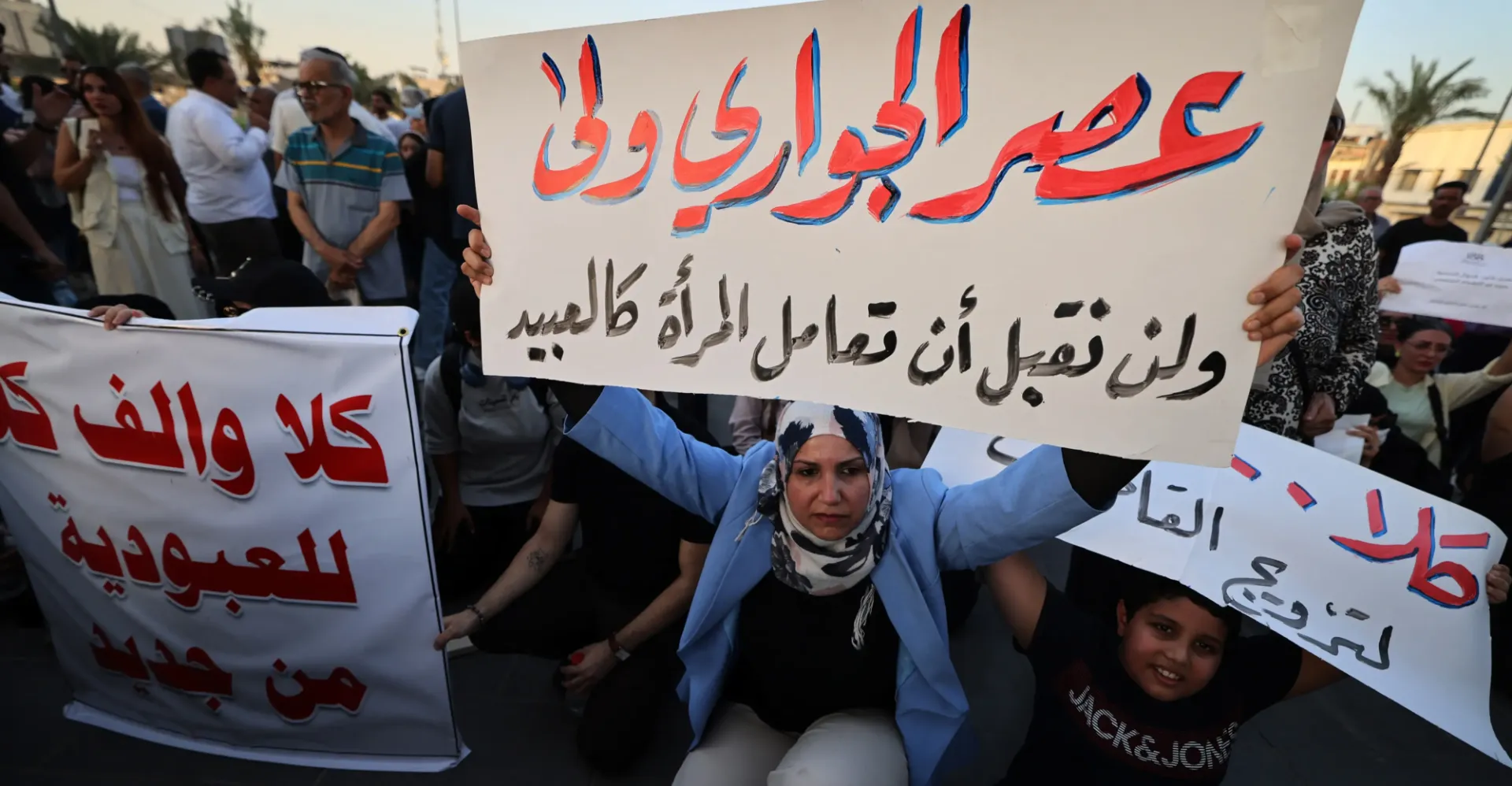
Women’s organizations continue to protest the new code, demanding its repeal. Nadia Mahmoud, co-founder of the Aman Feminist Alliance, told Shafaq News that the law reflects “the ideology of Islamist parties that refuse to recognize women as equals, viewing them instead as subservient to men.”
Sanbar warned that unless the code is revoked, it will “create long-term social harm that will burden Iraq for generations.”