President Barzani at MERI Forum 2025: A vision of stability built on dialogue and institutions


Shafaq News – Erbil
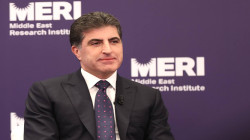
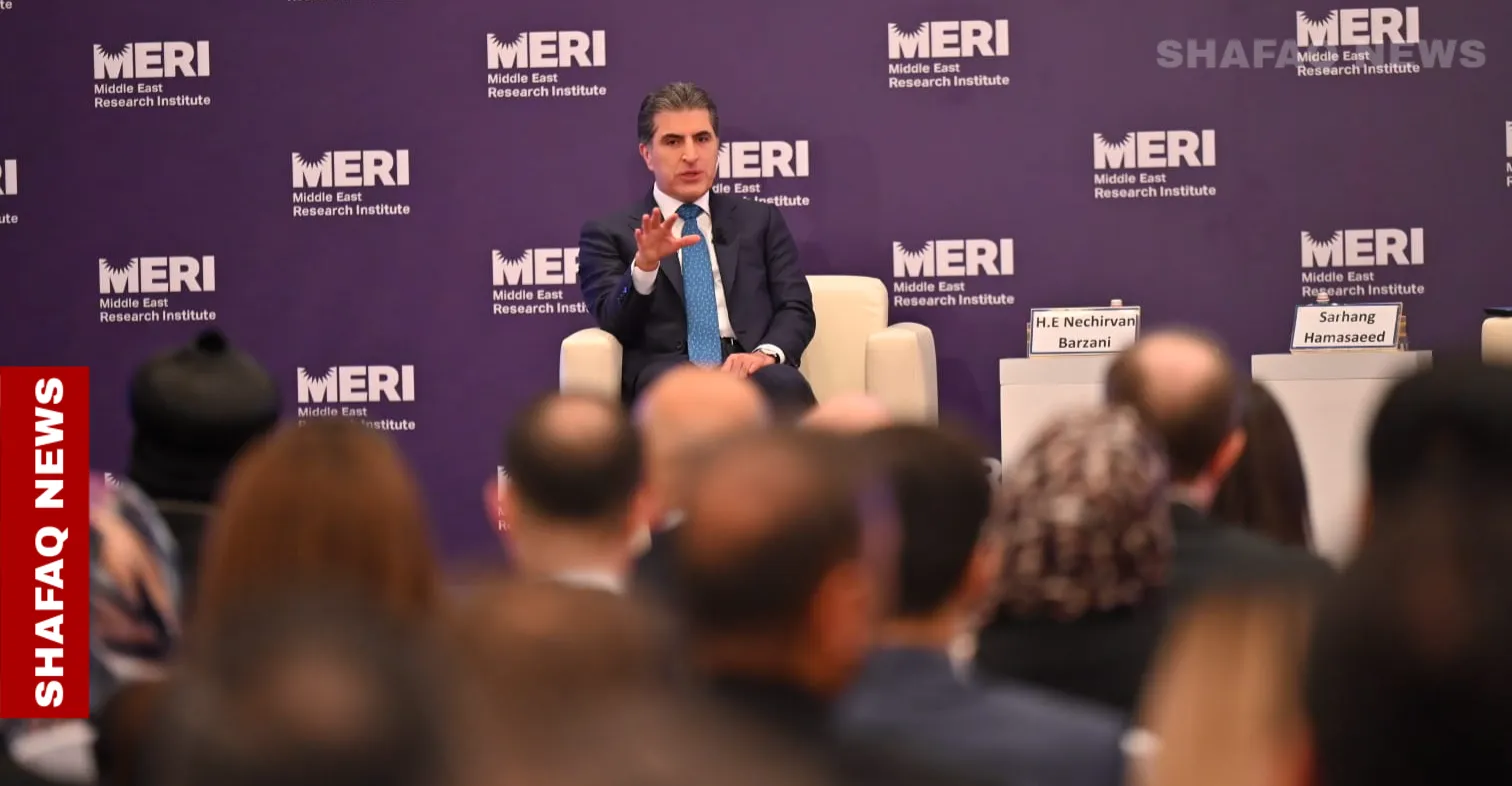
At the MERI Forum 2025 in Erbil, held under the theme “Shaping the Future: Visions for Peace and Prosperity,” President Nechirvan Barzani delivered one of his most comprehensive addresses in recent years, outlining his vision for Iraq’s democratic future, regional relations, and the Kurdish role in shaping stability.
Iraq at a Crossroads: Institutions over Individuals
Barzani portrayed Iraq’s current stage as one of historic consequence, drawing a parallel between the country’s post-2003 transition and the Kurdistan Region’s experience of limited autonomy before that year. The upcoming November 11 parliamentary elections, he noted, would be “the most decisive since 2005.”
He urged Iraqis to approach the vote as a civic duty rather than a contest of personalities, stressing that meaningful change must emerge through institutional reform, not individual charisma. “The focus in Iraq should not be on personalizing institutions but on building them,” he remarked, warning that overreliance on personalities undermines state legitimacy and feeds public disillusionment.
Barzani described Iraq’s democracy as still evolving yet cautioned against cynicism. In his view, visible improvements—particularly in security and services—show that governance can work when priorities are aligned. “In Baghdad now, there are no major security problems. Six years ago, there were,” he observed. He also credited Prime Minister Mohammed Shia al-Sudani’s focus on public services.
Still, he warned that reforms would falter without adherence to the constitution, accusing the federal government of pursuing “very strong centralism” in dealings with the Kurdistan Region. Full constitutional implementation, he argued, is indispensable for sustainable stability.
Within the Region itself, Barzani acknowledged the delay in forming a new government, noting a developing common vision between the Kurdistan Democratic Party (KDP) and the Patriotic Union of Kurdistan (PUK), though final cabinet arrangements remain under discussion.
Security and the Challenge of Unchecked Arms
A central concern in Barzani’s speech was the proliferation of armed factions beyond state control. He condemned drone attacks on Erbil’s airport and energy infrastructure as “a blow to all of Iraq,” questioning the silence surrounding such incidents when they occur in the Kurdistan Region. He accused some groups of drawing on public funds while simultaneously undermining the state.
Barzani called for all weapons to fall under the authority of Iraq’s constitutional command, represented by the prime minister as commander-in-chief. While affirming the Kurdistan Region’s right to self-defense, he underscored that any action must remain lawful and coordinated with Baghdad.
Turning to domestic movements, he addressed the Tishreen protests that began in 2019, acknowledging the legitimacy of popular frustrations but rejecting calls to dismantle political parties. “Every party represents a segment of the population,” he said. “Erasing parties deepens national fault lines rather than healing them.”
Relations with the United States
Reflecting on ties with Washington, Barzani referred to US President Donald Trump's administration as a “window of opportunity” for regional stability. He praised US support for the Peshmerga in the fight against ISIS and implied that continued American engagement remains essential for balance and security across the Middle East.
Iran, Turkiye, and the PKK: Balancing Neighbors and Interests
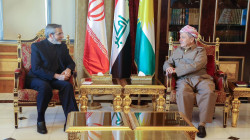
Barzani described current relations with Iran as entering “a different and more positive phase.” He cited his own visit to Tehran last year and a reciprocal trip by Iran’s president to Erbil, noting that bilateral trade has now reached around $11 billion annually. After his meeting with Supreme Leader Ayatollah Ali Khamenei, he said, “The nature and tone of our relations changed for the better.”
He emphasized, however, that this cooperation does not imply submission. “The Kurdistan Region poses no threat to Iran and will not permit its territory to be used against neighboring states.” Its policy, he insisted, aims to foster regional peace.
On relations with Turkiye, Barzani described them as “very friendly” and rooted in both political and economic interests. He mentioned recent meetings with President Recep Tayyip Erdogan, pointing to a “serious intent” on both sides to resolve long-standing issues—though patience, he cautioned, remains essential. “This is a longstanding issue that cannot be resolved overnight.”
He also delivered a pointed message to the Kurdistan Workers’ Party (PKK), urging it to stop “playing games that will harm the Kurds.” Progress, he argued, requires proactive commitment. “Our brothers must take this matter more seriously,” he said, stressing that the PKK’s reluctance to engage constructively only weakens Kurdish interests.
Barzani reiterated that the Kurdistan Region’s role in any peace process with the PKK would be supportive rather than leading, helping to facilitate dialogue once the organization takes genuine steps toward disarmament.
Syria’s Turning Point: Dialogue or Decline
Addressing Syria, Barzani warned that the country faces a “last opportunity” to move toward political reconciliation. He urged Syrian Kurds to engage directly with Damascus, participate in the national political process, and establish representation in the capital. “The best solution is an agreement with Damascus…They should open an office there and see themselves as hosts, not guests.”
He rejected the notion of a fully centralized Syria under transitional President Ahmad al-Sharaa's vision, arguing that a plural, multi-layered system would better reflect the country’s social and ethnic diversity.
Barzani emphasized that the era of armed struggle for Kurdish movements is over. “We have said that Syrian Kurds can manage their own affairs, and the PKK should not interfere,” he cautioned, warning that such interference obstructs the resolution of Syria’s Kurdish question.
His remarks coincided with ongoing talks between Syria’s new administration under Ahmad al-Sharaa and the Kurdish-led Syrian Democratic Forces (SDF), which reached a preliminary agreement in March 2025 to integrate Kurdish security and administrative institutions into national structures. Despite progress, localized clashes have continued.
A Call for Balance and Institutional Renewal
Barzani closed without grand declarations, but his message was unmistakable: Iraq and the Kurdistan Region stand at a decisive juncture. Democracy, he argued, must be strengthened through enduring institutions, not personalities; security must rest solely with the state; regional relations require pragmatic balance; and Syria’s stability depends on inclusion, not isolation.
Written and edited by Shafaq News Agency.