PM Barzani champions coexistence with new church, al-Azhar institute in Erbil


Shafaq News – Erbil
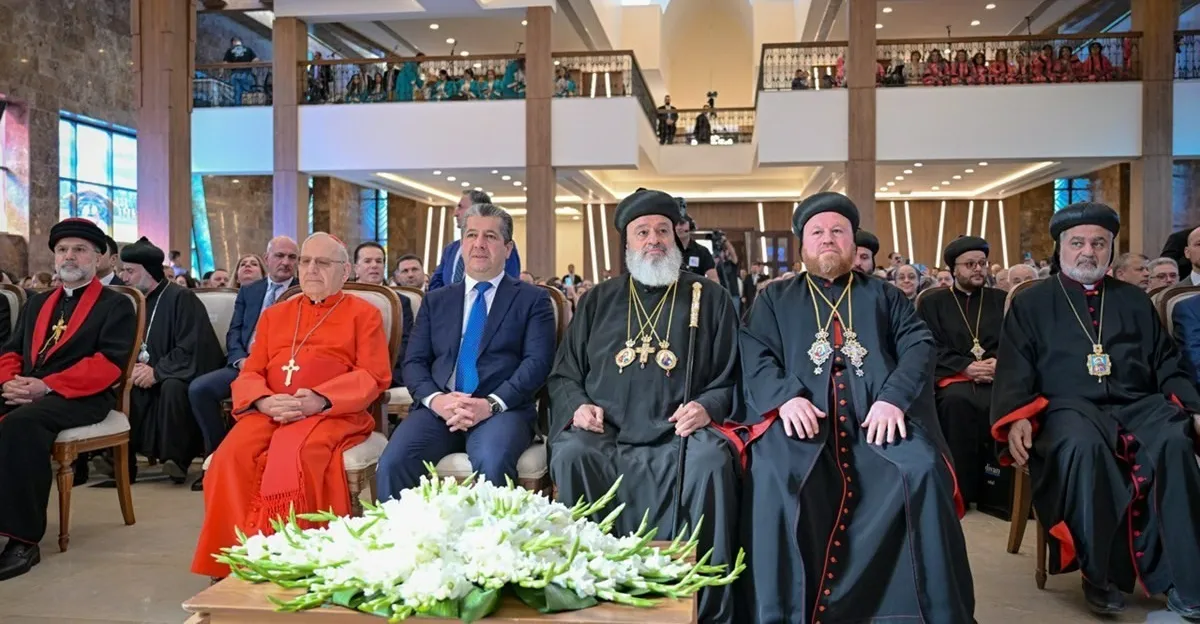
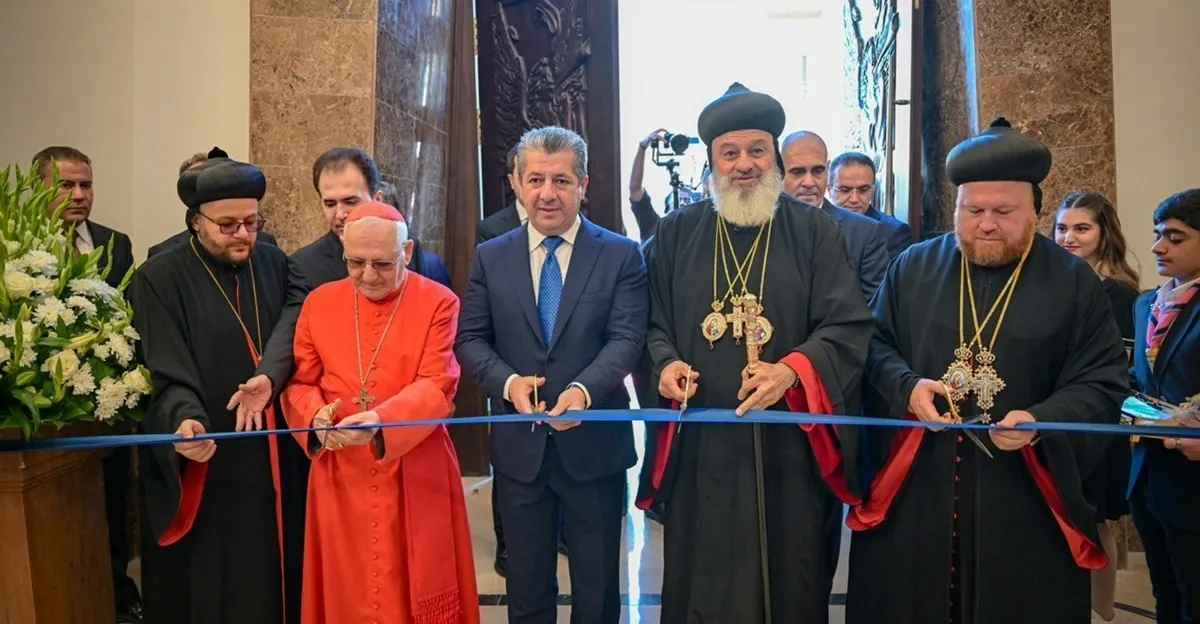
Kurdistan Region Prime Minister Masrour Barzani inaugurated the Our Lady of Light Church in Ankawa on Sunday, underscoring what he called “Kurdistan’s enduring commitment to unity through faith.”
He also laid the foundation stone for al-Azhar Institute and attended the graduation ceremony of Islamic preachers and clerics in Erbil.
The event drew senior Christian and Muslim leaders, including Patriarch Ignatius Aphrem II, head of the Syriac Orthodox Church of Antioch, and Cardinal Louis Raphael Sako, Patriarch of the Chaldean Catholic Church, alongside government officials and community figures.
Barzani noted that the church, funded by the Kurdistan Regional Government, is a gift to thousands of displaced Christian families from Mosul and the Nineveh Plains who found refuge in Ankawa after the ISIS onslaught. “They have lived here in peace when much of the region knew only war,” he remarked, pledging continued efforts to restore stability in Nineveh and enable displaced families “to return home with dignity.”
Read more: Christians of Iraq: Where did they go?
The Kurdistan Region is home to around 150,000 Christians, making it one of the last strongholds of Iraq’s ancient Christian presence. Nearly 99% of them live in Erbil and Duhok, where churches and community schools have expanded with government support. By contrast, Iraq’s Christian population nationwide has declined from about 1.5 million before 2003 to less than 250,000 today.
Read more: Sanctuary under strain: Minorities hold on in Iraq’s Kurdistan
Islam remains the region’s majority faith, but interfaith relations are actively cultivated through education and public policy. The al-Azhar Institute, modeled on the renowned Cairo university, aims to train moderate scholars and promote dialogue among faiths. “Many of Kurdistan’s greatest poets, thinkers, and reformers were religious figures,” Barzani said, adding that the new institute would prepare “a new generation of voices for tolerance.”