Lablabi fades, corn rises: A different winter in Baghdad


Shafaq News– Baghdad
Winter evenings in Baghdad have long unfolded around carts selling Lablabi — boiled chickpeas — and Baqila, fava beans prepared to warm passersby during the cold months. These foods shaped everyday routines and street gatherings, turning brief stops into shared moments of warmth and conversation. This winter, that familiar scene is quietly changing as another offering takes over spaces once defined by those staples.
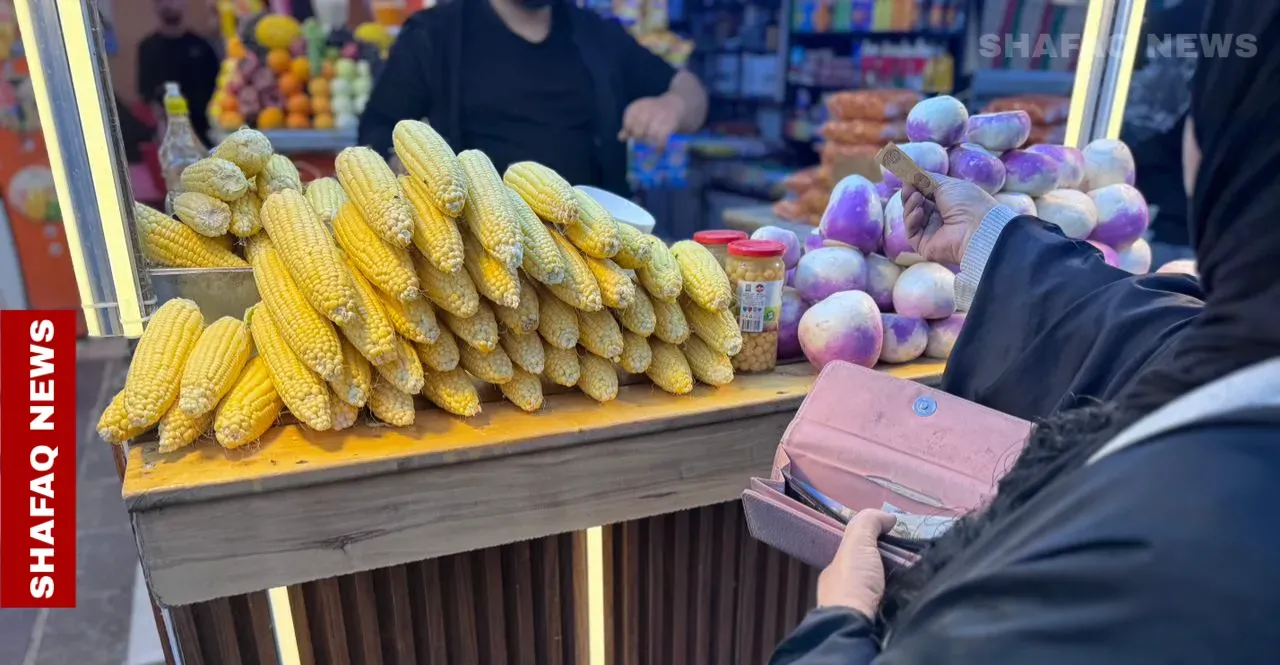
Across the Iraqi capital’s streets and residential neighborhoods, corn carts now dominate sidewalks where chickpea sellers once stood. Residents searching for traditional winter fare often pass dozens of vendors without finding it, encountering instead cups of boiled corn served as a quicker, more modern alternative that has steadily become the most visible option.
Ali Hamid, a 30-year-old vendor in Al-Saydiya, told Shafaq News that corn offers clear advantages for sellers because it requires only minutes to prepare, unlike Lablabi, which can take hours to cook. He explained that a small cup sells for 2,000 Iraqi dinars (about $1.38), and consistent demand allows vendors to earn higher daily returns than they would from traditional winter foods.
In Dora, vendor Zahir Rashid explained to Shafaq News that corn attracts children and young customers because it can be served with a range of flavors, including ketchup, chicken seasoning, and pomegranate molasses. He contrasted this with Lablabi, whose taste is typically limited to lemon or bitter orange, noting that such flavors are less appealing to younger customers.
Sajjad Hamid, 52, from Al-Saydiya, recalled to our agency that after years of selling Lablabi in winter and yogurt in summer, switching to corn brought noticeably better income. Corn carts, he added, are smaller and easier to move between neighborhoods, a practical advantage in crowded areas. Laughing, he acknowledged that the compact size also allows vendors to leave quickly when municipal teams arrive to restrict street stalls.
Among customers, younger residents have largely embraced the shift. Ali Jabbar, 22, from Karrada, described corn as flavorful and enjoyable, saying he prefers it even when other winter foods are available. Umm Yasmine, 30, agreed, noting that while some still favor Lablabi, corn’s variety of flavors makes it more appealing.
For older residents, the spread of corn carts carries a sense of loss. Samir Al-Khazraji, 64, said that Lablabi vendors have become far fewer than corn and coffee sellers. He recalled winter nights spent standing around chickpea carts, sharing warmth, hot water, and everyday conversation, describing those moments as part of Baghdad’s collective memory rather than a simple eating habit.
Despite long-held beliefs in the warming and health benefits of Lablabi and its deep association with winter, many vendors have moved away from it in favor of corn’s stronger profits. The shift reflects a quiet transformation in Baghdad’s street life, where convenience increasingly reshapes tradition, even as memories of steaming chickpeas remain tied to the season.