Concrete over crops: Urban sprawl eats into Iraq’s farmland


Shafaq News - Baghdad
Iraq is losing some of its most productive farmland as expanding cities push deep into agricultural belts that once sustained local markets and rural livelihoods. The shift is accelerating under rising demand for housing, shrinking water supplies, and weakened oversight.
Population movements and changing settlement patterns have intensified this pressure, with official figures showing Iraq’s urban share rising from 66 to more than 71 percent between 2000 and 2020—an increase of six million city residents that has drawn development toward the edges of cultivated zones.
The legal framework governing farmland is clear. Mahdi Damad Al-Qaisi, adviser to the Ministry of Agriculture, told Shafaq News that Agricultural Land Lease Law No. 24 of 2024 affirms that farmland belongs to the Ministry of Finance and is managed by the Agriculture Ministry. Reclassifying any plot for residential or service use requires a multilayered review culminating in a Cabinet Secretariat committee that includes representatives from finance, agriculture, defense, interior, and antiquities. “No land changes status without that committee’s approval,” he stressed.
Enforcement, in practice, has lagged behind the pace of construction. Unauthorized building has appeared across several provinces, with agriculture directorates documenting violations and referring them to governors for removal—an effort often slowed by limited administrative capacity.
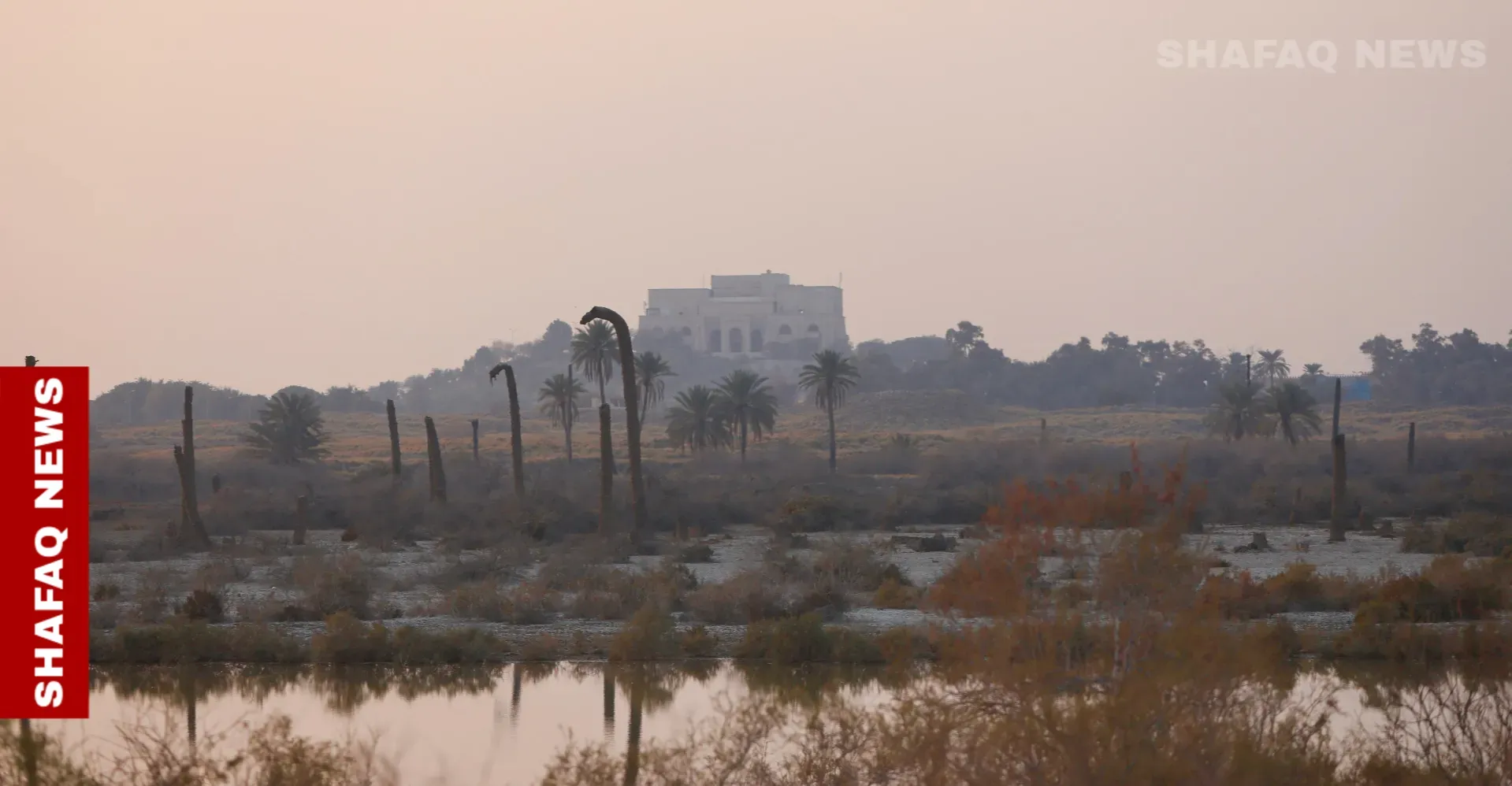
In Babil, the consequences are immediate. Speaking with our agency, farmer Abu Hussein said nearby fields are being subdivided into housing lots, fragmenting cultivated land and worsening water shortages that now damage his date orchards. “If this continues, cultivation here will collapse,” he warned.
Economist Ahmed Eid described Iraq’s outward urban growth as a double-edged trend: it answers housing demand but undercuts food security by consuming thousands of dunams of fertile land. “Weak planning and unchecked horizontal expansion,” he explained, “are shrinking the agricultural belt, reducing local production, and increasing reliance on imports,” urging a shift to vertical development, stronger land-protection laws, and modern, smart-irrigation systems to prevent further loss.
Environmental stresses compound the strain. Iraq has forfeited nearly 30 percent of its productive farmland over the past three decades due to drought, reduced river flows, and extreme heat. Recent seasons have been among the driest in modern history, with crop yields in Nineveh, Babil, and Diyala falling by 40–70 percent. The Central Statistics Office reported in November that 96,500 square kilometers of Iraq are now classified as desert or at risk of desertification, including 40,400 square kilometers that are fully desertified.
Read more: Iraq burns: Dust, drought ravage the nation's core
Demographic pressure is rising in parallel. Iraq’s first census in 37 years recorded a population of 46.1 million. Former Planning Minister Nouri Al-Dulaimi cautioned that approaching 50 million people will widen gaps in services and land management unless development accelerates.
Read more: Census shock: Can Iraq’s system absorb its population explosion?
With farmland shrinking under urban and environmental pressures, Iraq’s agricultural base is nearing a critical threshold—one that will require strict enforcement, strategic urban planning, and targeted investment to prevent irreversible loss.