Ancient sculpture in UK to be returned to Iraq


Shafaq News / An ancient sculpture is to be returned to Iraq after it was secretly smuggled out of the country and offered for sale in the UK – only to be seized by the Metropolitan police, The Guardian reported.
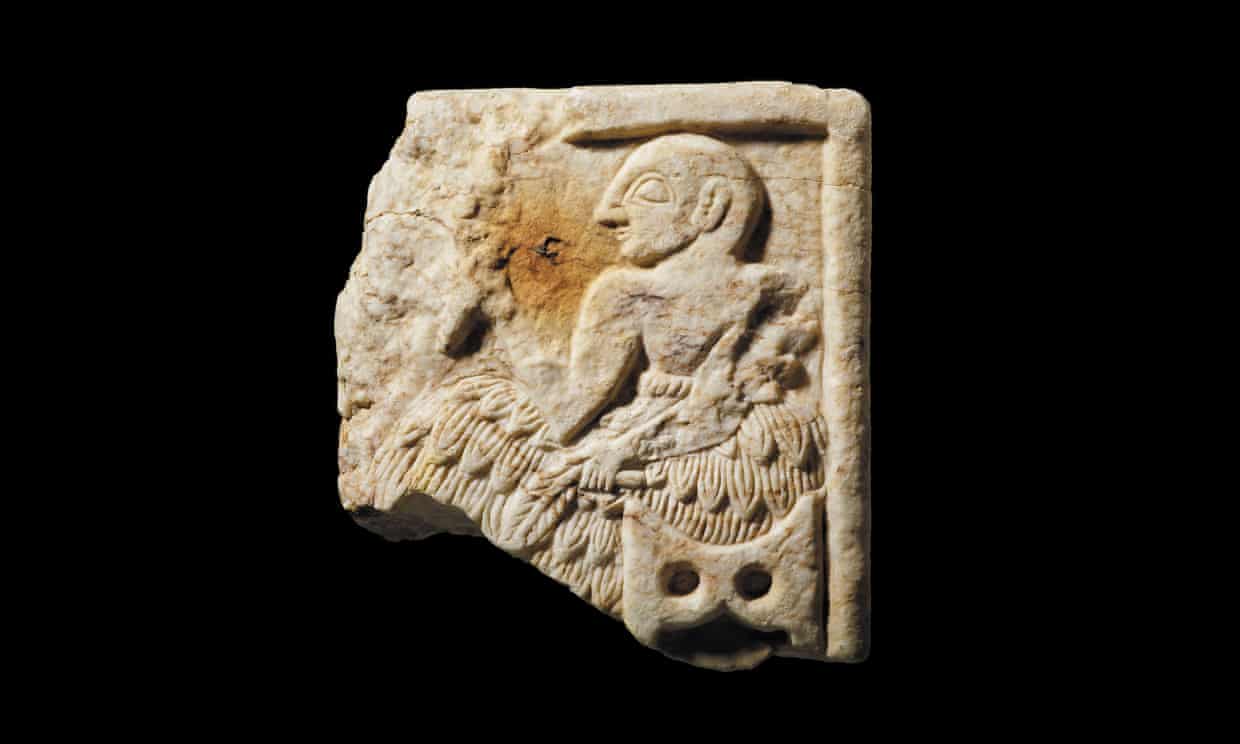
The previously unknown Sumerian temple plaque, dating from about 2400BC, is being repatriated with the help of the British Museum, which first tipped off the police after spotting its planned sale in 2019.
“We’re used to coming across tablets, pots, metalwork, seals and figurines on the art market or in seizures that have been trafficked. But it’s really exceptional to see something of this quality,” said Dr St John Simpson, the British Museum’s senior curator. Neither published nor listed in any museum inventory, it is thought the plaque was looted from the Sumerian heartland in modern-day southern Iraq.
Simpson said: “There are only about 50 examples of these known from ancient Mesopotamia. So that immediately places it on the high-rarity scale. We can be fairly sure that this object comes from the Sumerian heartland. That is the area that got very badly looted between the 1990s and 2003.”
As by "The Guardian", The plaque was offered for sale in May 2019 by TimeLine Auctions, an online auctioneer, which described it as a “western Asiatic Akkadian tablet” that had come from a private collection formed in the 1990s.
Simpson said its date, description and provenance were incorrect: “It’s Sumerian, not Akkadian, and definitely not a tablet. They also assumed it was 200 years later.”
It was in fact part of a votive wall plaque belonging to the Early Dynastic III period of southern Iraq. Carved from local limestone, it depicts a large seated male figure in a Sumerian form of long skirt, known as a kaunakes, with a tufted pattern.
Such is the plaque’s importance that, if it were sold on the legitimate market, it would fetch tens of thousands of pounds.
Simpson said it appeared to have been intentionally burned: “The scorch mark was aimed at this important figure and then the plaque has been smashed. Where we have been working at Tello, the looting holes are heaviest in some of the religious precinct areas. I strongly suspect that, with luck and time, someone may find the adjoining fragments.”
Although Tello has been excavated by French teams from the late 19th century until the early 1930s, and then by the British Museum, only a fraction of the site has been investigated. It is now heavily guarded until archaeologists can resume work.
Simpson said his colleague, Sébastien Rey, curator of ancient Mesopotamia at the British Museum and lead archaeologist at Tello, had first spotted its planned auction: “We contacted the police, who immediately took it seriously and went to the auction house, who relinquished it when they realized what it was".